

Engagement Ring Terminology: Master Diamond & Setting Terms

Engagement Ring Terminology Guide: Master the Language of Love
Shopping for an engagement ring can feel overwhelming, especially when jewelers start throwing around terms like "pavé," "cathedral setting," and "brilliant cut." But here's the thing—understanding engagement ring terminology isn't just about sounding knowledgeable. It's about making confident decisions that'll help you find the perfect ring for your partner.
Whether you're considering a lab diamond engagement ring, exploring nature-inspired botanical designs, browsing modern minimalist styles, or dreaming up a custom creation with our master jewelers, this guide will give you the vocabulary you need to bring your vision to life.
Understanding Precious Metals
The metal you choose for an engagement ring affects everything from durability to appearance. Here's what you need to know about the most popular options.
Yellow Gold
Yellow gold has been a traditional favorite for generations. It's available in 10K, 14K, or 18K—the higher the karat, the purer the gold content. While 18K offers rich color, 14K strikes a beautiful balance between durability and luxury, making it ideal for everyday wear.
White Gold
White gold is created by mixing pure gold with metals like palladium or nickel, then plating it with rhodium for that brilliant white finish. It's stronger than yellow gold and complements both lab-grown diamonds and traditional stones beautifully. Keep in mind that white gold may need occasional re-plating to maintain its luster.
Rose Gold
Rose gold gets its romantic pink hue from copper alloys mixed with pure gold. This trendy metal has made a major comeback and looks stunning on various skin tones. However, if your partner has copper allergies, you'll want to choose another option. View our full collection to see rose gold options.
Platinum
Platinum is the premium choice for engagement rings. This naturally white metal is incredibly durable, hypoallergenic, and won't tarnish or change color over time. While it's more expensive than gold, platinum's density and purity make it worth the investment for many couples. Check out our Paris Ring available in platinum.
Pro Tip:
Not sure which metal to choose? Our Toronto showroom offers the chance to see and try on rings in different metals. Book an appointment to discover which option feels right for you.
Diamond & Stone Essentials: The 4Cs and Beyond
Before you start looking at rings, you'll need to understand the 4Cs—the universal standard for evaluating diamond quality.
The 4Cs of Diamonds
-
Cut: The quality of a diamond's proportions, symmetry, and polish. This is the most important factor affecting brilliance and sparkle.
-
Color: The presence or absence of color in a diamond. The scale runs from D (colorless) to Z (light yellow or brown).
-
Clarity: The absence of internal inclusions and external blemishes. Most imperfections aren't visible to the naked eye.
-
Carat: The weight of the diamond, with one carat equal to 200 milligrams.
Key Diamond Terms You'll Hear
Brilliance: The bright, white light that reflects from the center of a diamond. A well-cut diamond maximizes brilliance.
Fire: Those beautiful rainbow flashes you see when light hits a diamond at different angles. Technical term for light dispersion.
Crown: The top portion of the diamond above the girdle (the widest part). The crown's angles affect how light enters the stone.
Pavilion: The lower portion of the diamond below the girdle. Proper pavilion depth is crucial for light return.
Culet: The tiny facet at the very bottom point of the diamond, designed to protect the tip from chipping.
Table: The large, flat facet on top of the diamond. Table size affects the balance between brilliance and fire.
Eye-Clean: A diamond with no visible inclusions when viewed without magnification—often the sweet spot for value.
Fluorescence: Some diamonds emit a soft glow under UV light. Mild fluorescence can actually make slightly yellow diamonds appear whiter.
Lab-Grown Diamonds
Lab-grown diamonds are real diamonds—they share the exact same physical, chemical, and optical properties as mined diamonds. Created in controlled laboratory environments using advanced technology, these stones offer an ethical, sustainable, and more affordable alternative without compromising on quality or beauty.
Lab-Grown Diamonds
Lab-grown diamonds are real diamonds—they share the exact same physical, chemical, and optical properties as mined diamonds. Created in controlled laboratory environments using advanced technology, these stones offer an ethical, sustainable, and more affordable alternative without compromising on quality or beauty.
At Lovelri, we're proud to offer an extensive collection of lab diamond engagement rings that let you get a larger, higher-quality stone for your budget while supporting responsible sourcing practices.
Moissanite
Moissanite is a brilliant gemstone with even more fire than diamonds. Originally discovered in meteorites, today's moissanite is lab-created and offers exceptional sparkle, durability (9.25 on the Mohs scale), and affordability. It's an excellent choice for couples who want a show-stopping center stone without the diamond price tag. Explore our moissanite ring options.
Diamond Shapes: Finding Your Perfect Silhouette
The shape of the center stone dramatically affects the ring's overall look and feel. Here are the most popular options:
Round Brilliant: The classic choice and most popular shape. Its 58 facets maximize brilliance and sparkle. Round diamonds are incredibly versatile and look beautiful in any setting style.
Oval: An elegant elongated shape that creates the illusion of longer, slender fingers. Oval diamonds offer excellent brilliance with a unique, modern twist on the classic round. Browse our collection of oval engagement rings for stunning examples.
Princess Cut: A square or rectangular shape with sharp corners and brilliant-cut facets. Princess cuts offer a contemporary look with impressive fire. See our Geneva Ring featuring a princess cut.
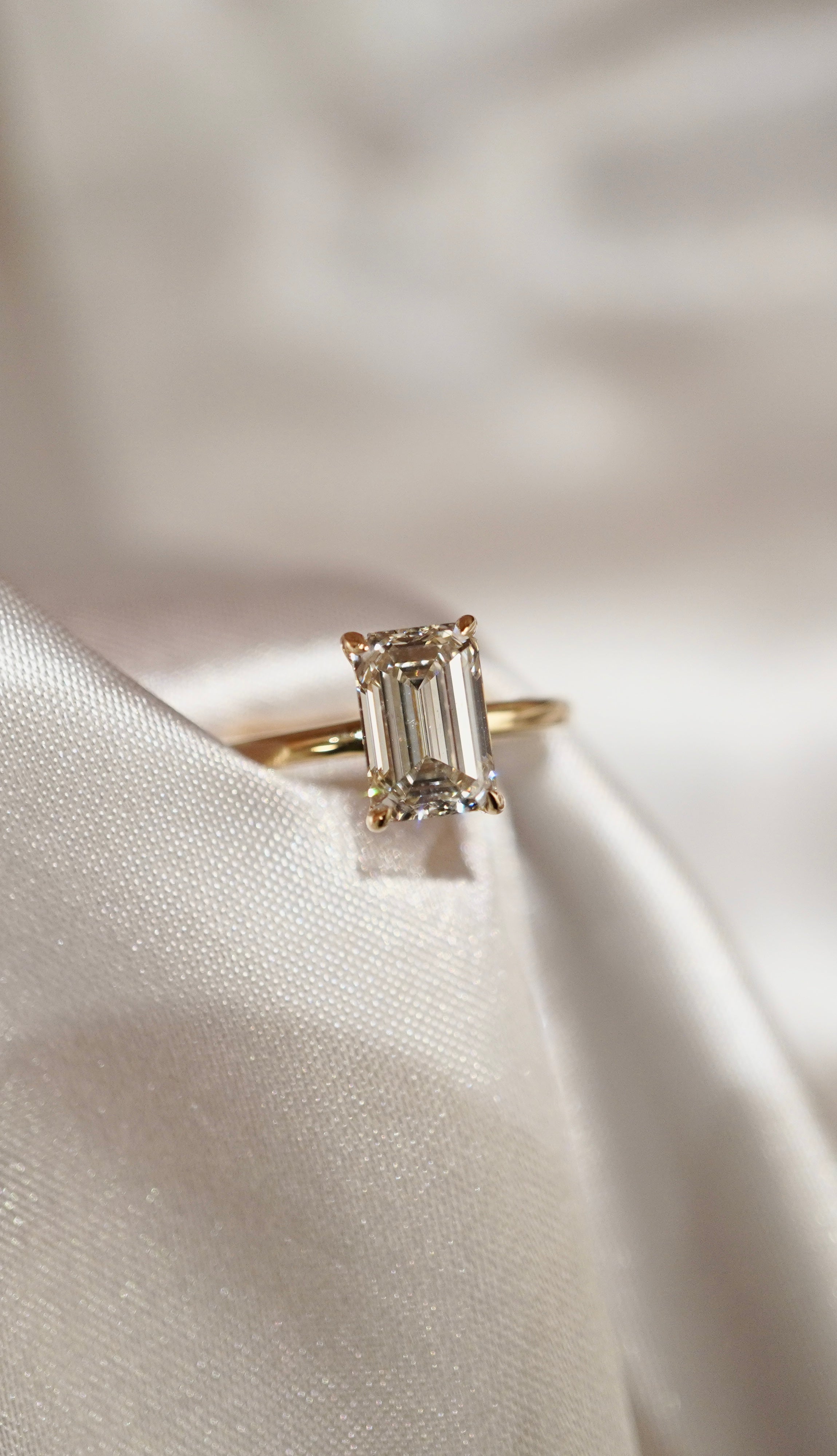
Emerald Cut: Featuring long, rectangular facets arranged in steps, emerald cuts showcase clarity over sparkle. This sophisticated shape offers a vintage-inspired elegance. Discover our emerald cut designs.
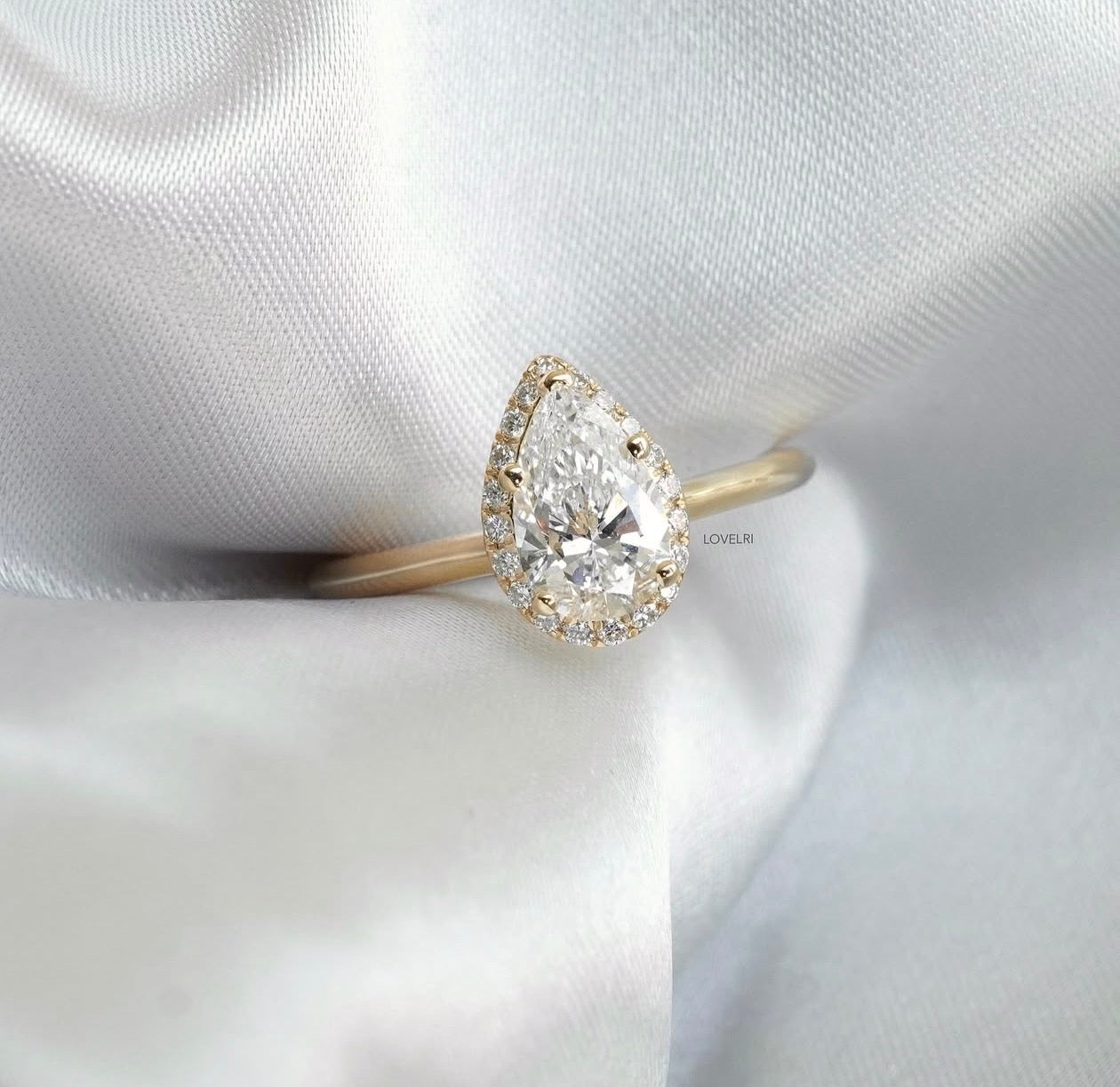
Pear: Combining the best of round and marquise shapes, pear-shaped diamonds are teardrop-shaped and create a feminine, unique look. View our pear-shaped rings.
Cushion Cut: Featuring rounded corners and large facets, cushion cuts offer a soft, romantic appearance with excellent brilliance.
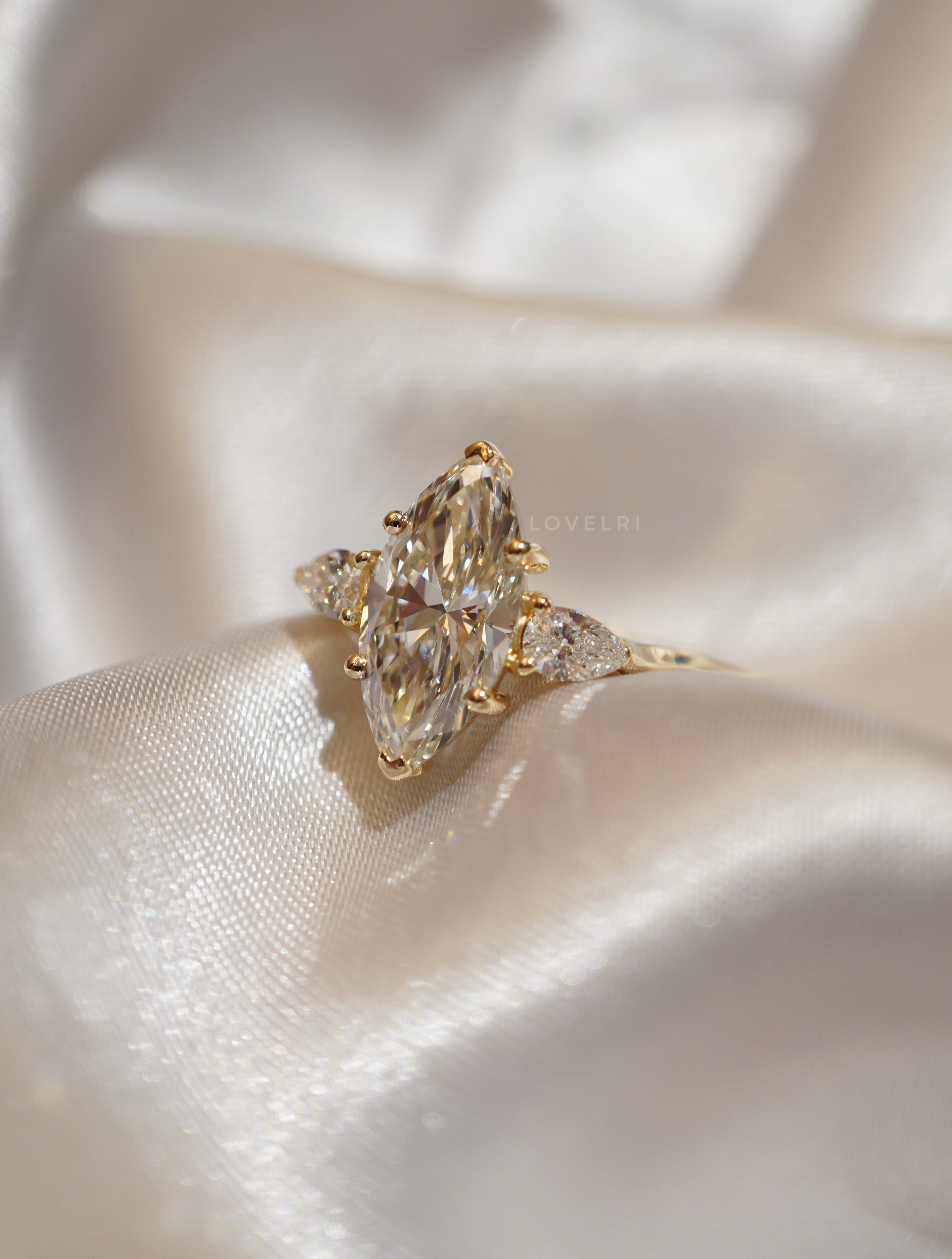
Marquise: An elongated shape with pointed ends that maximizes carat weight and creates a dramatic, elegant look. Explore our marquise cut collection.
Style Insight:
Your partner's personal style can guide your shape choice. Love vintage vibes? Consider emerald or cushion cuts. Prefer modern minimalism? Oval or princess cuts might be perfect. Our modern engagement rings collection showcases contemporary settings for various shapes, while our cathedral collection offers timeless elegance.
Style Insight:
Your partner's personal style can guide your shape choice. Love vintage vibes? Consider emerald or cushion cuts. Prefer modern minimalism? Oval or princess cuts might be perfect. Our modern engagement rings collection showcases contemporary settings for various shapes.
Engagement Ring Settings: Where Style Meets Security
The setting is how your diamond is mounted to the ring. It affects both the appearance and security of the stone.
Prong Setting
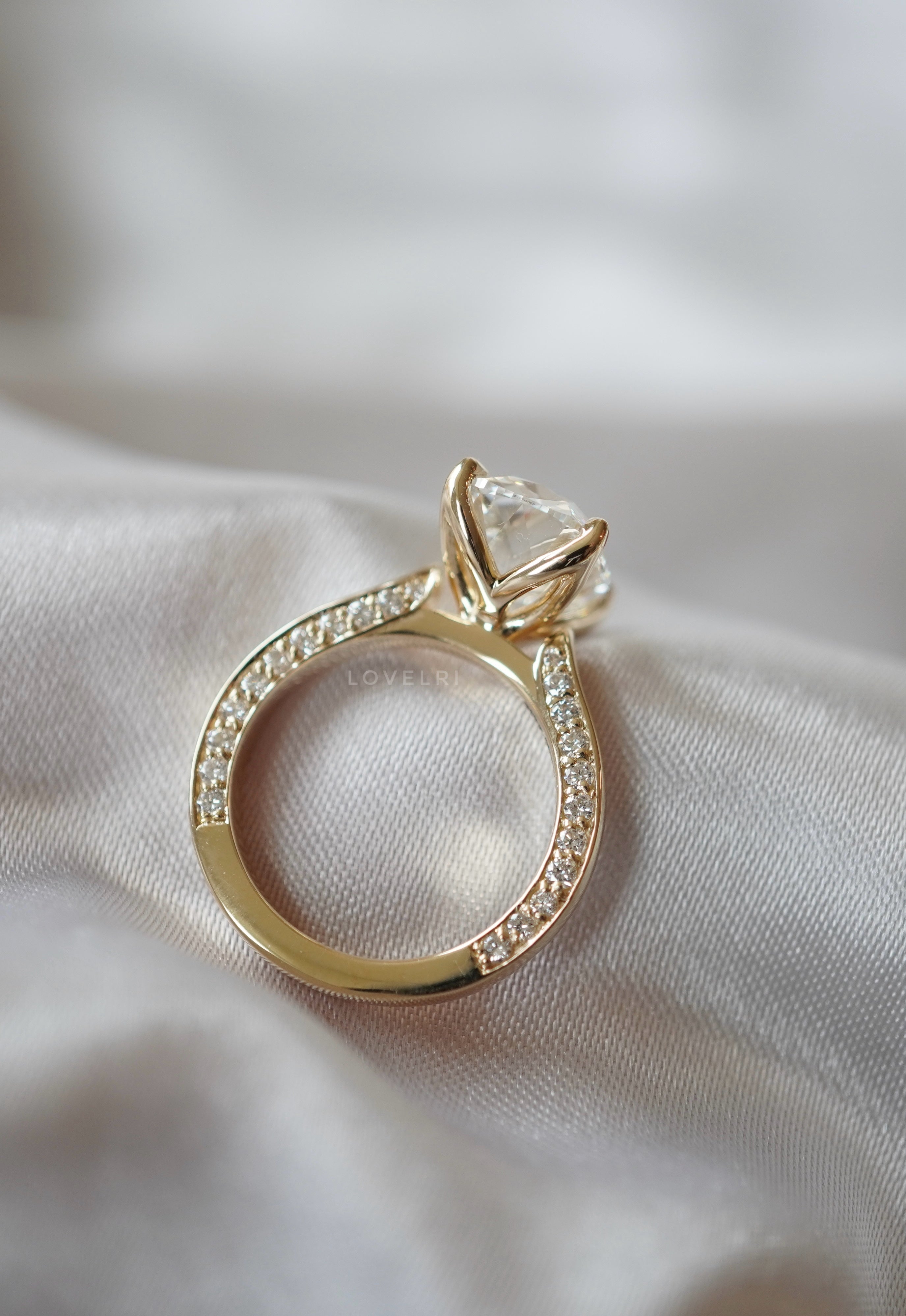
The most popular setting style uses small metal claws (typically 4-6 prongs) to hold the center stone. Prong settings maximize light exposure to the diamond, creating maximum brilliance. Four-prong settings offer a modern look, while six-prong settings provide extra security for active lifestyles.
Bezel Setting
A thin band of metal surrounds the entire perimeter of the stone, holding it securely in place. Bezel settings offer excellent protection for the diamond and create a sleek, contemporary look. They're perfect for people who work with their hands.
Pavé Setting
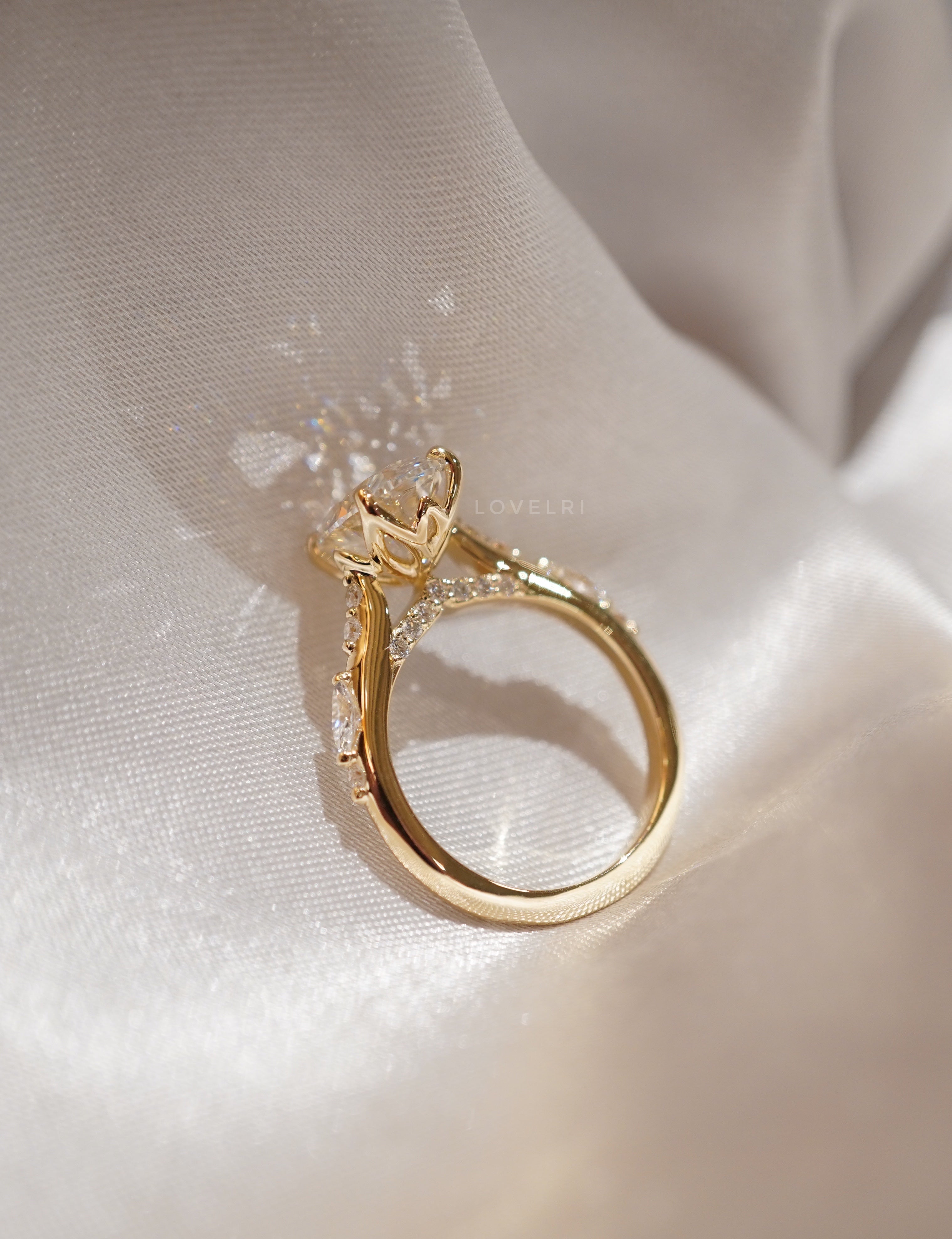
Small diamonds are set closely together along the band using tiny beads of metal to hold them in place. The name comes from the French word for "paved," as the diamonds create a continuous sparkle reminiscent of a paved road. Check out stunning examples in our pavé engagement rings collection.
Channel Setting
Diamonds or gemstones sit in a metal channel with no metal between each stone. The diamonds are held in place by the channel walls, creating a smooth, snag-free surface that's practical for everyday wear.
Halo Setting
A circle of smaller diamonds surrounds the center stone, making it appear larger and adding extra sparkle. Halos can be single or double, and they work beautifully with various center stone shapes. Explore our halo engagement rings for inspiration.
Cathedral Setting
The band arches upward on either side of the center stone, resembling the graceful arches of a cathedral. This setting elevates the diamond, creates beautiful side profiles, and offers excellent protection for the stone. Browse our cathedral engagement rings collection for elegant examples.
Tension Setting
The diamond appears to float, held in place by pressure from the metal band. This modern, minimalist setting requires precise craftsmanship but creates a stunning, contemporary look.
The diamond appears to float, held in place by pressure from the metal band. This modern, minimalist setting requires precise craftsmanship but creates a stunning, contemporary look.
Band & Shank Terminology
The band (also called the shank) is the part of the ring that encircles the finger. Understanding these terms helps you describe exactly what you're looking for.
Shank: The technical term for the portion of the ring band that runs along the finger. The shank connects to the setting that holds the center stone.
Split Shank: The band divides into two or more strands as it approaches the center stone, creating visual interest and a delicate, romantic appearance. View beautiful side stone rings with split shanks.
Tapered Shank: The band gradually narrows as it approaches the center setting, drawing attention to the diamond and creating an elegant profile.
Twisted Shank: The band features an intertwining or twisted design that adds movement and visual interest. See our Osaka Ring with a twisted band design.
Knife-Edge: The band features a sharp angle running along its center, creating a sleek, modern look with distinct edges.
Comfort Fit: The inside of the band is slightly rounded rather than flat, making the ring more comfortable for everyday wear. Highly recommended for anyone who's not used to wearing rings.
Euro Shank: The bottom portion of the band is flat rather than rounded, preventing the ring from spinning on the finger. Great for rings with larger center stones.
Euro Shank: The bottom portion of the band is flat rather than rounded, preventing the ring from spinning on the finger. Great for rings with larger center stones.
Design Elements & Decorative Details
These finishing touches add character and personality to your engagement ring.
Milgrain: Tiny metal beads along the edges of the band or setting, creating a delicate, vintage-inspired texture. Milgrain adds detail without overwhelming the design.
Engraving: Decorative patterns or personal messages etched into the metal. Inside engraving is popular for adding secret, meaningful details, while outside engraving creates vintage appeal.
Filigree: Intricate, delicate metalwork featuring lace-like patterns. This traditional technique adds vintage romance and requires skilled craftsmanship.
Gallery: The decorative space between the finger and the bottom of the center stone. Some designs feature intricate gallery work with patterns or additional small diamonds.
If you're drawn to ornate, detailed designs, you'll love our Botanical Garden collection, featuring nature-inspired elements like leaves, vines, and floral motifs. For those who prefer clean lines, explore our modern collection with sleek, minimalist designs.
If you're drawn to ornate, detailed designs, you'll love our Botanical Garden collection, featuring nature-inspired elements like leaves, vines, and floral motifs.
Custom Design Terminology
Thinking about creating something completely unique? Here are terms you'll encounter in the custom design process.
CAD (Computer-Aided Design): Digital 3D modeling technology that allows you to see exactly what your ring will look like before it's made. This ensures your vision translates perfectly to reality.
Casting: The process of creating the metal ring structure by pouring molten metal into a mold created from your CAD design.
Setting: The process of placing and securing diamonds or gemstones into the metal mounting. This requires precision and expertise to ensure stones are secure.
Finishing: The final steps including polishing, cleaning, and quality inspection. Proper finishing ensures your ring looks flawless and will last a lifetime.
Prototype: A physical sample or 3D-printed model of your custom design. Seeing and feeling a prototype helps confirm proportions and overall aesthetic before final production.
Care & Maintenance Terms
Understanding these terms helps you keep your engagement ring looking beautiful for years to come.
Rhodium Plating: A thin layer of rhodium applied to white gold rings to enhance their white color and durability. Most white gold rings need re-plating every 1-2 years.
Prong Re-tipping: Rebuilding worn prongs to ensure they continue to hold your diamond securely. Regular inspections catch wear before stones become loose.
Sizing: Adjusting the ring band to fit your finger properly. Most rings can be sized up or down 1-2 sizes, though some designs have limitations.
Ultrasonic Cleaning: Professional cleaning using high-frequency sound waves to remove dirt and oils. Most effective for diamonds and hard gemstones.
Lovelri's Lifetime Care:
Every Lovelri ring comes with a Limited Lifetime Warranty against manufacturing defects, plus a complimentary one-time resize within a year of purchase. We're committed to ensuring your ring stays as beautiful as the day you first saw it.
Explore Rings by Style & Setting
Now that you understand the terminology, here are some of our most popular collections organized by the terms you've learned:
Shop by Setting Type:
Pavé Bands: Browse pavé engagement rings featuring continuous diamond sparkle along the band.
Halo Settings: Explore halo and hidden halo styles that make your center stone appear larger.
Cathedral Settings: View cathedral engagement rings with elegant arched details.
Solitaire Settings: Shop classic solitaire rings that let the diamond take center stage.
Side Stone Settings: Discover side stone designs featuring accent diamonds flanking the center stone.
Putting It All Together: Speaking Ring Fluently
Now that you've mastered the vocabulary, you can confidently describe your dream ring. For example:
"I'm looking for a 14K white gold ring with a 1.5-carat oval lab-grown diamond in a four-prong cathedral setting, with a pavé band and milgrain detailing."
See how much clearer that is than saying, "I want a pretty ring with sparkly stuff on the sides"?
Understanding engagement ring terminology empowers you to:
- Communicate effectively with jewelers and designers
- Compare different options with confidence across our solitaire, halo, and side stone collections
- Make informed decisions about quality and value
- Create a truly custom design that matches your vision
- Understand what you're paying for and why
- Choose between lab diamonds, moissanite, and other stone options
Ready to Find Your Perfect Ring?
Armed with this knowledge, you're ready to explore Lovelri's collections with confidence. Whether you're drawn to timeless solitaire designs, eye-catching halo settings, romantic pavé styles, or our distinctive Botanical Garden pieces, you'll now understand exactly what makes each design special.
Visit our Toronto showroom to see these styles in person, try on different options, and work with our master jewelers to bring your vision to life. You can also explore our complete engagement ring collection online, with detailed specifications and high-quality images for every ring.
And if you're dreaming of something completely unique? Our custom design service lets you use all this new terminology to create a one-of-a-kind engagement ring that tells your love story perfectly.
Ready to Find Your Perfect Ring?
Armed with this knowledge, you're ready to explore Lovelri's collections with confidence. Whether you're drawn to timeless solitaire designs, eye-catching halo settings, or our distinctive Botanical Garden pieces, you'll now understand exactly what makes each design special.
Visit our Toronto showroom to see these styles in person, try on different options, and work with our master jewelers to bring your vision to life. You can also explore our complete collection online, with detailed specifications and high-quality images for every ring.
And if you're dreaming of something completely unique? Our custom design service lets you use all this new terminology to create a one-of-a-kind engagement ring that tells your love story perfectly.
Start Your Ring Journey
Book a consultation with our expert jewelers or explore our collections online. We're here to help you find or create the perfect engagement ring.
Frequently Asked Questions
What's the difference between lab-grown diamonds and natural diamonds?
Lab-grown diamonds are real diamonds with identical physical, chemical, and optical properties to natural diamonds. They're created in controlled laboratory environments, making them more affordable and ethically sourced while offering the same beauty and durability as mined diamonds.
What is a prong setting?
A prong setting uses small metal claws (typically 4-6 prongs) to hold the center stone in place. This classic setting maximizes light exposure to the diamond, enhancing its brilliance and sparkle.
What does pavé mean in engagement rings?
Pavé (pronounced pah-vay) is a setting style where small diamonds are set closely together on the band using tiny metal beads. This creates continuous sparkle that resembles a paved surface, adding extra brilliance to the ring.
Which metal is best for an engagement ring?
The "best" metal depends on your priorities. Platinum offers maximum durability and is hypoallergenic. 14K white gold provides excellent strength at a lower price point. Yellow and rose gold offer warm, traditional aesthetics. Consider lifestyle, budget, and personal preference when choosing.
Can I resize my engagement ring later?
Most engagement rings can be sized up or down 1-2 sizes, though certain designs (like full eternity bands or tension settings) may have limitations. At Lovelri, we include one complimentary resize within the first year to ensure perfect fit.


