
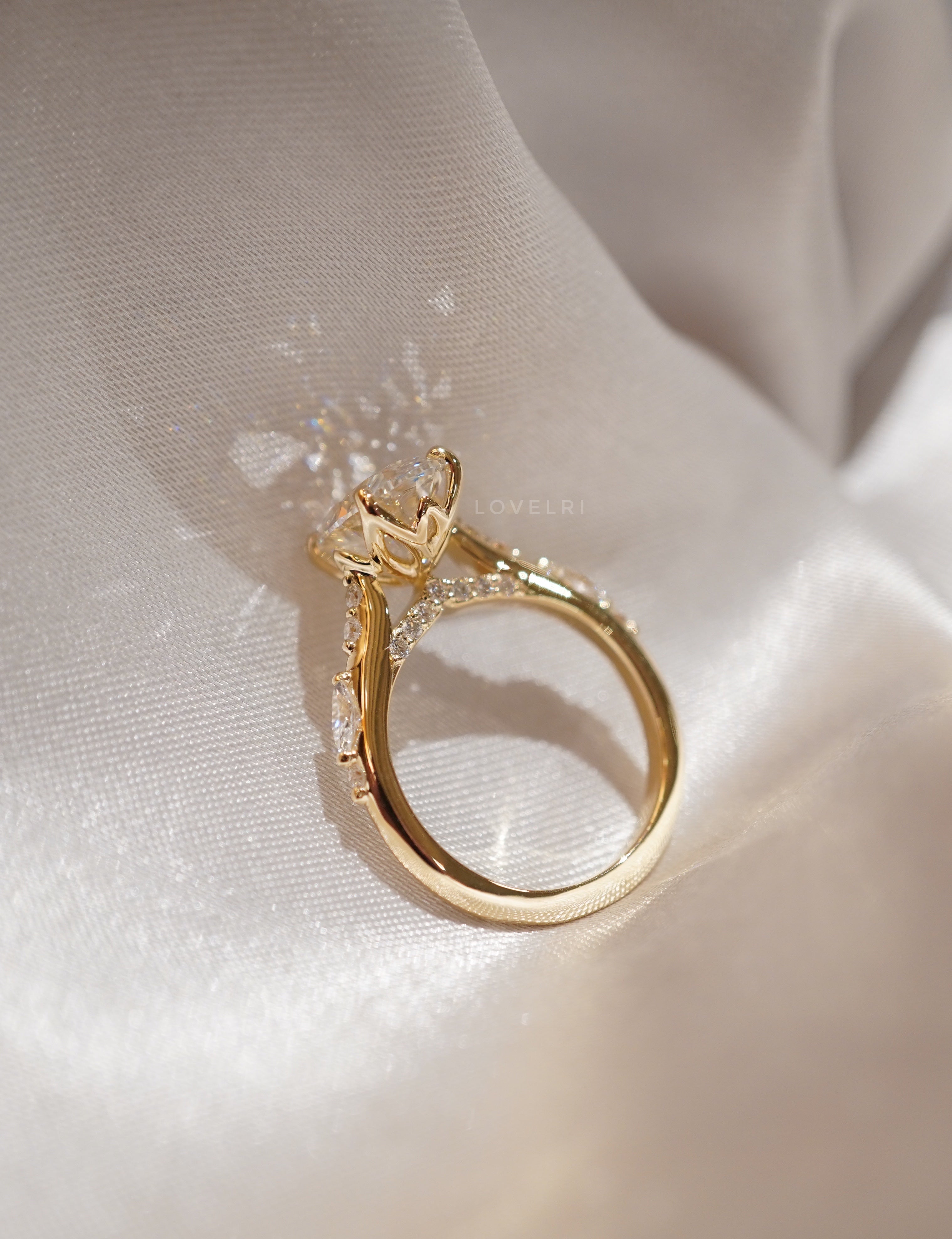
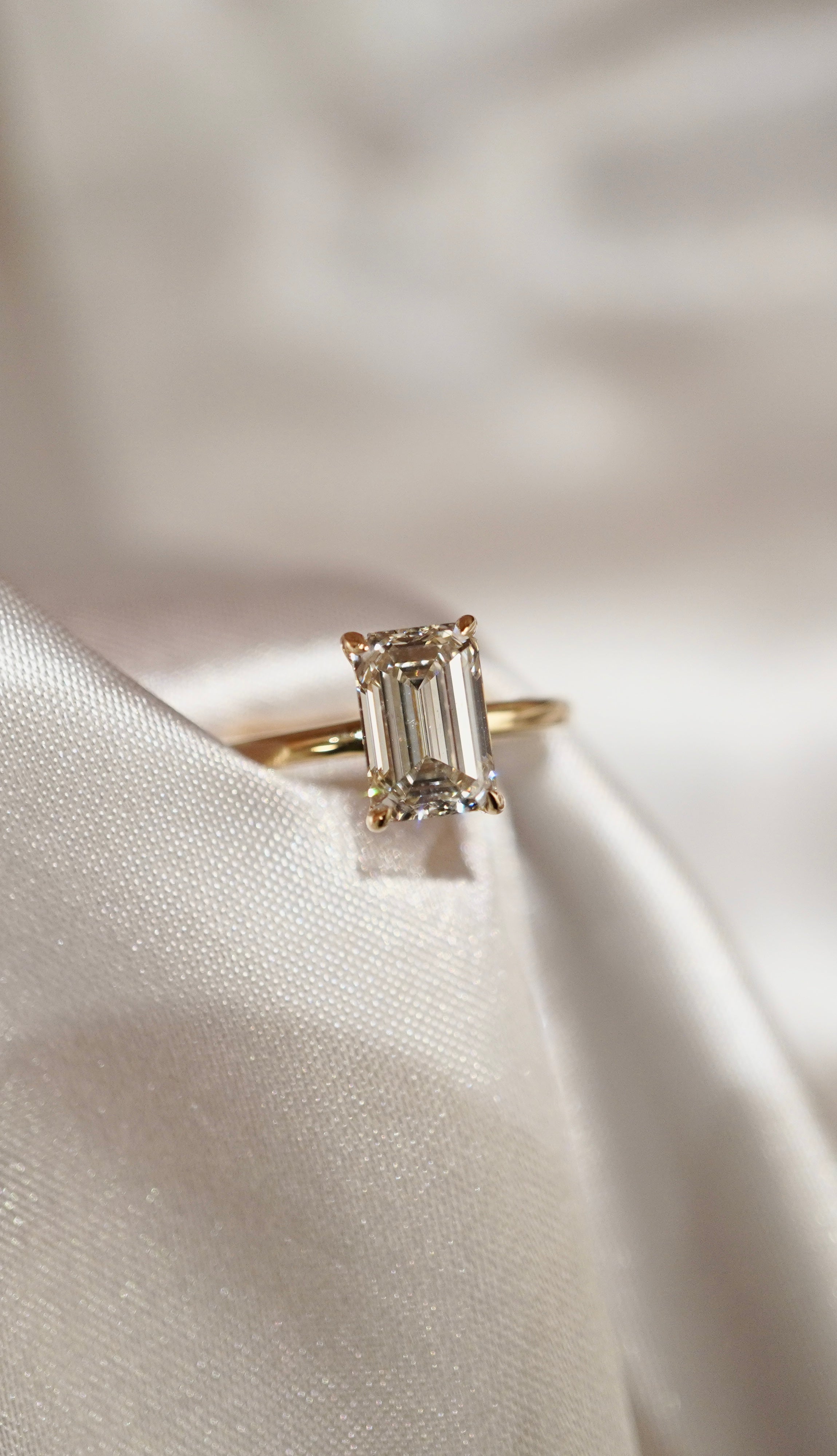
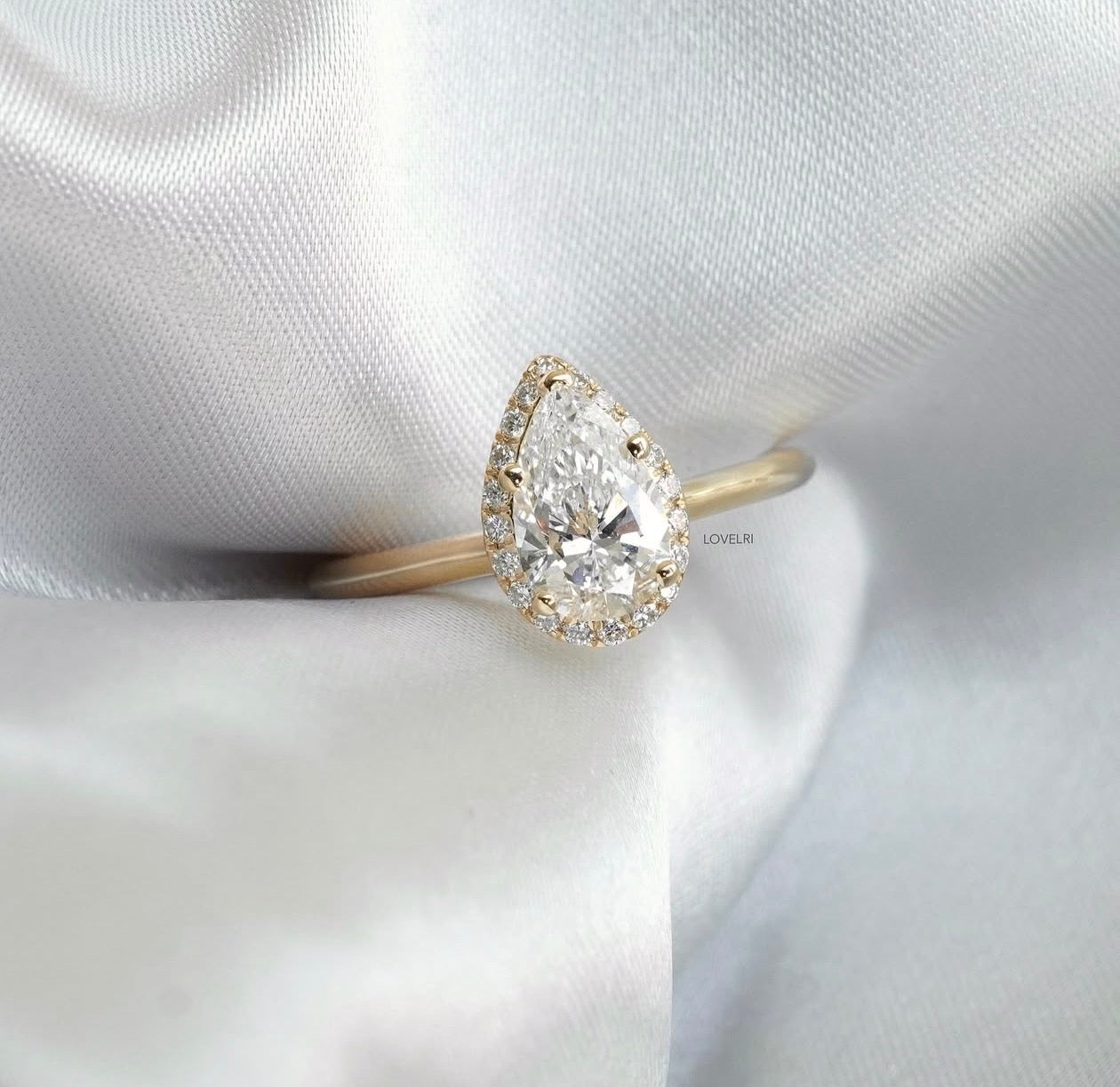
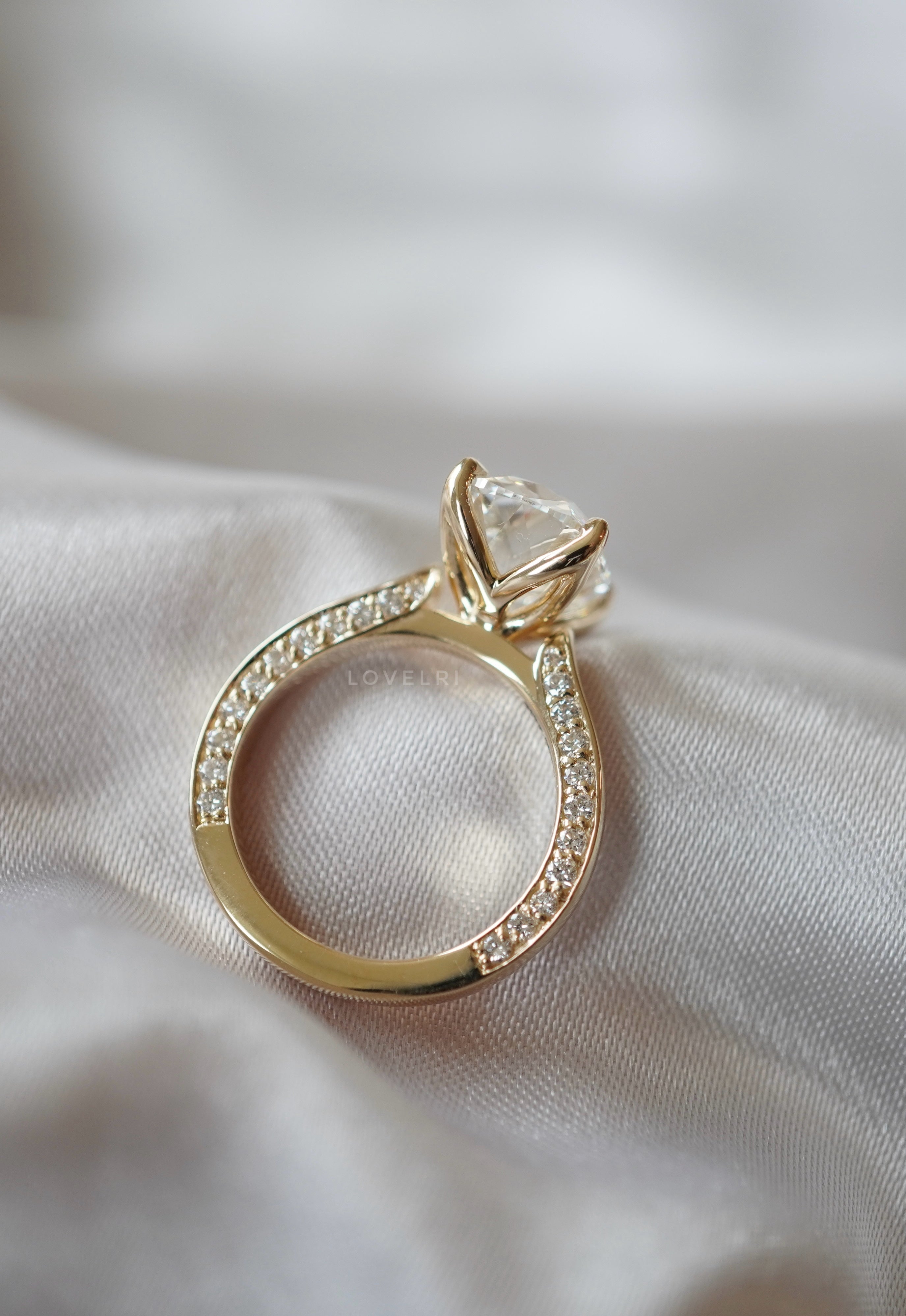
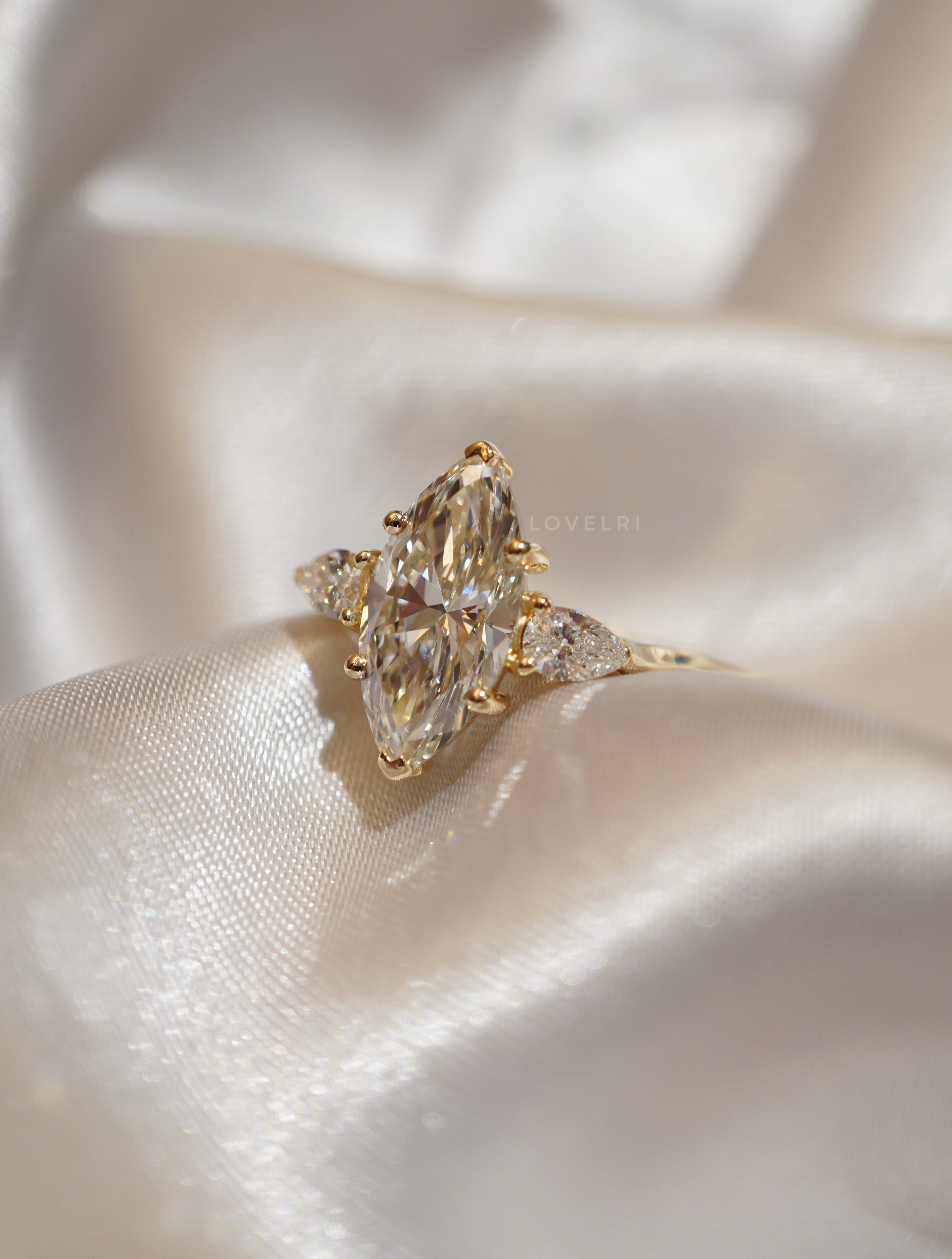

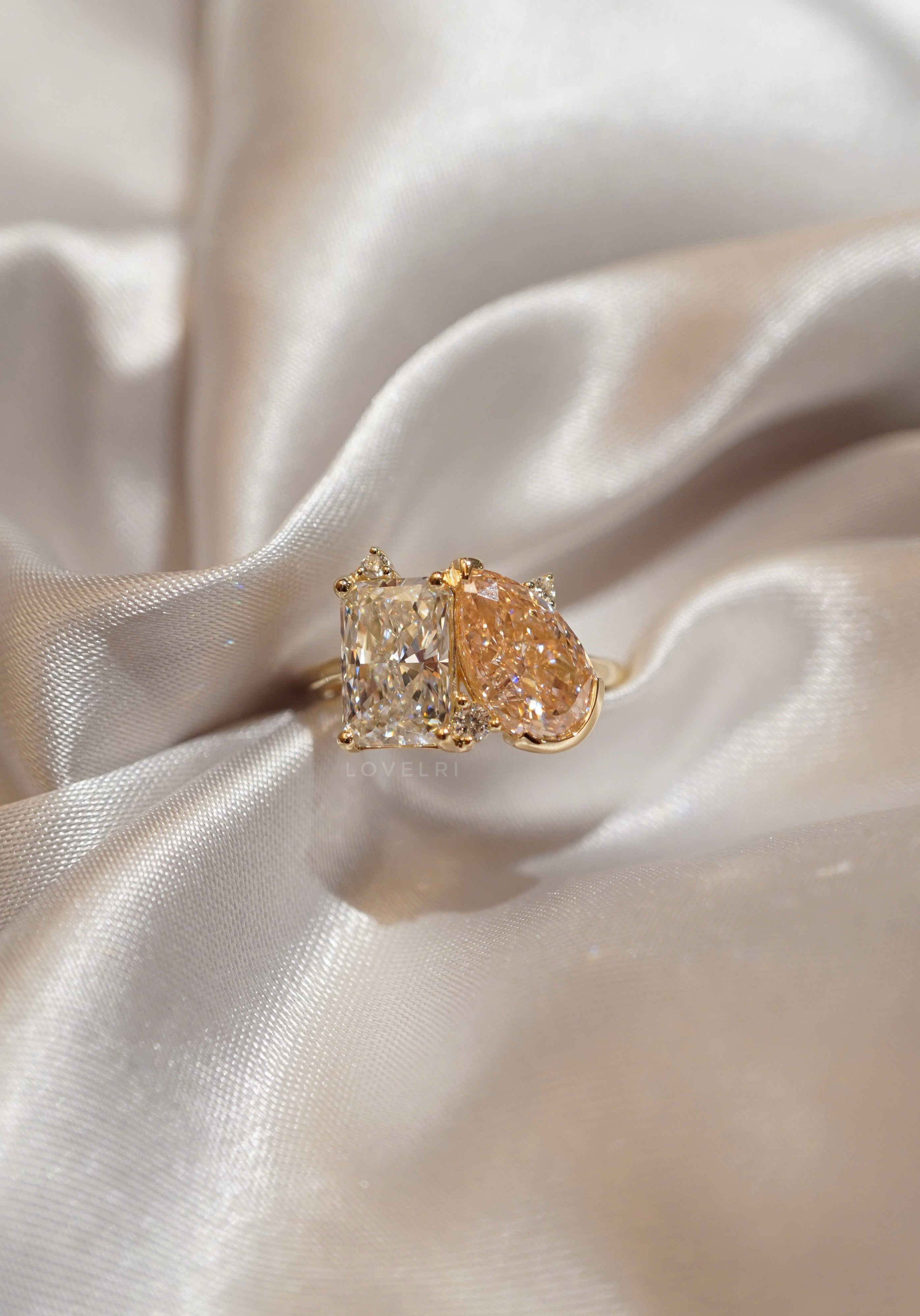

Shopping for an engagement ring can feel overwhelming, especially when you're faced with technical terms like "VVS clarity" or "excellent cut grade." But here's the truth: understanding diamonds doesn't have to be complicated. The 4Cs—Cut, Color, Clarity, and Carat—are the universal language of diamond quality, and once you grasp them, you'll shop with confidence.
Whether you're considering a lab diamond engagement ring, a natural stone, or even a moissanite ring, these four characteristics will guide every decision you make. At Lovelri, we've helped countless couples in Toronto and across Canada navigate this journey, and we're here to break down each factor in a way that actually makes sense. Explore our complete engagement ring collections to see how these principles come to life.
Ready to see how these principles come to life? Book a consultation with our master jewellers in Toronto.
Cut: The Most Important Factor

Here's something most people don't realize: cut isn't about the shape of your diamond (that's round, oval, emerald, etc.). Cut refers to how well a diamond's facets interact with light. It's the most crucial of the 4Cs because even a flawless, colorless diamond will look dull if it's poorly cut. Whether you're considering modern engagement rings or traditional styles, cut quality determines the sparkle.
When a diamond is cut to ideal proportions, light enters through the table, bounces around the internal facets, and reflects back through the crown—creating that mesmerizing sparkle jewellers call "brilliance." A poorly cut diamond lets light escape through the bottom or sides, resulting in a lackluster appearance no matter how high the other grades are.
Understanding Cut Grades
-
Excellent/Ideal: Maximum brilliance and fire. Nearly all light entering the diamond is reflected back. This is the grade we recommend for solitaire engagement rings and modern minimalist designs where the diamond is the star.
-
Very Good: Reflects most light, offering exceptional value. The difference between Excellent and Very Good is often imperceptible to the naked eye.
-
Good: Reflects a decent amount of light but may appear slightly less brilliant. Can be a smart choice for smaller accent stones.
-
Fair/Poor: Noticeably less sparkle. We generally don't recommend these grades for center stones.
Polish and Symmetry
Cut grade comes with two companions: polish and symmetry. Polish evaluates the smoothness of the diamond's surface—think of it as the final finish. Symmetry measures how precisely the facets align with each other. Both should ideally be "Excellent" or "Very Good" for optimal light performance.
Expert Tip from Lovelri
At our Toronto showroom, we use specialized lighting to show you exactly how cut affects sparkle. When you're comparing halo engagement rings or pavé designs, you'll see that an Excellent cut makes every stone—center and accent—come alive. This is especially important for lab diamonds, which deserve the same precision cutting as natural stones.
Color: The Subtle Art of Colorlessness
Diamond color grading is a bit counterintuitive: the less color a diamond has, the more valuable it becomes. The scale runs from D (completely colorless) to Z (light yellow or brown), with D being the rarest and most prized.
But here's what matters in real life: most people can't distinguish between a D and a G color diamond when it's set in a ring. The differences are incredibly subtle, and they become even harder to detect once the stone is mounted in modern engagement ring settings or cathedral designs.
Color Grade Breakdown
D-F: Colorless
The crème de la crème. These diamonds show no color even under professional scrutiny. Perfect for platinum solitaire settings like our Toronto Ring where nothing interferes with the diamond's purity.
G-J: Near Colorless
This is the sweet spot for value. G and H grades appear colorless when mounted, especially in white gold or platinum. Most of our clients in Toronto choose stones in this range because they offer exceptional beauty at a more accessible price point. Browse our lab diamond collection for examples in this color range.
K-M: Faint Color
You'll start to notice a warm tint, particularly in larger stones. However, these grades can look stunning in yellow or rose gold settings, where the metal complements the diamond's warmth. It's all about intentional design.
N-Z: Very Light to Light Color
Noticeable yellow or brown tint. While not typically used for engagement ring center stones, these can be beautiful when intentionally selected for vintage-inspired designs.
Metal Choice and Color Perception
Here's a pro tip: your metal choice dramatically affects how color appears. A J-color diamond in a yellow gold cathedral setting will look different than the same stone in platinum. At Lovelri, we help you understand these interactions so you can make smart trade-offs—perhaps choosing an H color instead of a D, then investing those savings into a larger carat weight or exploring our Botanical Garden collection for a custom design that's uniquely yours.
Here's a pro tip: your metal choice dramatically affects how color appears. A J-color diamond in a yellow gold cathedral setting will look different than the same stone in platinum. At Lovelri, we help you understand these interactions so you can make smart trade-offs—perhaps choosing an H color instead of a D, then investing those savings into a larger carat weight or a custom design that's uniquely yours.
Lab Diamond Advantage: One of the benefits of lab-grown diamonds is that they're often available in higher color grades at better value points. If a colorless diamond is important to you, lab diamonds offer an ethical and budget-friendly path to that D-F range.
Clarity: Understanding Inclusions and Blemishes
Every diamond tells a story through its clarity characteristics. Inclusions are internal features (tiny crystals, clouds, or feathers), while blemishes are external marks. Think of them as birthmarks—they make each diamond unique.
The clarity scale ranges from Flawless to Included, but here's what you need to know: most inclusions are completely invisible to the naked eye. The key is finding what jewellers call "eye-clean" diamonds—stones that look perfect when you're admiring them on your hand, even if a microscope would reveal tiny characteristics.
The Clarity Scale Explained
FL (Flawless) & IF (Internally Flawless)
No inclusions visible under 10x magnification. Exceptionally rare and usually unnecessary for engagement rings. You're paying a premium for something only a gemologist would notice.
VVS1 & VVS2 (Very Very Slightly Included)
Minute inclusions that are extremely difficult for trained graders to see under magnification. To the naked eye? Perfectly clean. These grades offer the "flawless look" without the flawless price.
VS1 & VS2 (Very Slightly Included)
This is where most smart shoppers land. Minor inclusions that are difficult to see under 10x magnification and typically invisible without it. For cathedral settings and side stone designs, VS clarity offers exceptional value.
SI1 & SI2 (Slightly Included)
Noticeable inclusions under magnification, but many SI1 diamonds are still eye-clean, especially in smaller carat weights. SI2 requires careful selection—some are eye-clean, others aren't. This is where our jewellers' expertise becomes invaluable.
I1, I2, I3 (Included)
Inclusions visible to the naked eye and may affect durability. Generally not recommended for engagement ring center stones, though some can work for accent diamonds in Botanical Garden designs.
Shape Matters for Clarity
Different diamond shapes reveal inclusions differently. Round brilliant cuts are forgiving because their facet pattern disperses light in ways that disguise inclusions. Emerald and Asscher cuts? Not so much. Their large, open facets act like windows, making even minor inclusions more visible. If you're drawn to step-cut diamonds or looking at our marquise cut designs, you'll want to prioritize clarity—typically VS2 or higher.
The Lovelri Approach
We hand-select every diamond in our Toronto showroom, ensuring that SI1 and VS2 stones are genuinely eye-clean. When you're exploring our Ottawa Ring, Quebec Ring, or any of our handcrafted designs, we'll show you exactly what's visible (or not visible) to help you make an informed choice. Many of our clients choose VS2 or SI1 clarity and invest the savings into a larger diamond or upgrading to a custom creation.
Carat: Size Matters, But Not How You Think
Carat is the only one of the 4Cs that measures weight, not appearance. One carat equals 0.2 grams, or 200 milligrams. But here's the fascinating part: carat weight doesn't directly translate to size. A poorly cut 1-carat diamond might actually look smaller than a well-cut 0.90-carat stone.
There's also something called "carat magic numbers"—the psychological price jumps at 0.50, 0.75, 1.00, 1.50, and 2.00 carats. A 0.90-carat diamond might cost significantly less than a 1.00-carat stone, yet on your finger, you'd be hard-pressed to see the difference. This is where smart shopping comes into play.
Understanding Carat Weight
Diamonds are priced per carat, but the price per carat increases at those magic numbers. This means a 2-carat diamond isn't just twice the price of a 1-carat diamond—it's exponentially more expensive because larger rough diamonds are exponentially rarer.
However, carat weight distribution varies by shape. An oval or marquise diamond will appear larger face-up than a round brilliant of the same carat weight. If maximizing visual impact is your goal, shape selection becomes strategic. Our Bali Ring and Kelowna Ring showcase how setting design can enhance the perceived size of your center stone.
The Finger Coverage Factor
What really matters isn't the carat weight—it's how the diamond looks on the wearer's hand. A 1-carat diamond on a size 4 finger appears significantly larger than the same stone on a size 7 finger. At our Toronto showroom, we encourage clients to try on different carat weights in various settings to see what feels right. Sometimes a 0.80-carat stone in a halo setting like the LA Ring or Whistler Ring makes a bigger visual statement than a 1-carat solitaire.
Budget-Friendly Strategy: Consider buying just below the magic numbers. A 0.95-carat diamond costs considerably less than a 1.00-carat stone, but no one will notice the 0.05-carat difference. Combine this strategy with smart choices in color (G-H) and clarity (VS2-SI1), and you can afford a larger, more impressive stone—or invest in a cathedral setting, side stone design, or Botanical Garden piece that truly speaks to you.
Lab Diamonds and Carat Value
One of the most compelling reasons to consider lab-grown diamonds is the carat weight advantage. Lab diamonds are typically 30-40% less expensive than natural diamonds of comparable quality. This means you can either save significantly or upgrade to a larger stone—perhaps that 1.50-carat diamond you thought was out of reach. The beauty is that lab diamonds are physically, chemically, and optically identical to natural diamonds, so you're not sacrificing quality for size.
How to Balance the 4Cs for Your Budget
Here's where the art of diamond buying comes in: you can't maximize all four Cs unless you have an unlimited budget. The key is understanding which factors matter most for your specific situation and making strategic trade-offs.
Prioritization Strategy
1. Cut Should Always Come First
Never compromise on cut. A well-cut diamond with slightly lower color or clarity grades will still sparkle beautifully. A poorly cut diamond, regardless of other grades, will disappoint. Start with Excellent or Very Good cut grades, especially for solitaire designs like the Toronto Ring where the diamond does all the talking.
2. Find the Sweet Spot in Color
Unless you're set on a D-E-F colorless diamond, the G-H range offers tremendous value. In white gold or platinum settings, these stones appear colorless. If you're choosing yellow or rose gold, you can comfortably go to I-J without any concerns.
3. Optimize Clarity for Eye-Clean Beauty
Work with a jeweller who can show you truly eye-clean SI1 or VS2 diamonds. You'll save thousands compared to VVS grades, and no one—including you—will see any difference in daily wear. This is particularly effective for round and cushion cuts, which naturally hide inclusions well.
4. Be Strategic About Carat Weight
If size is your priority, buy just under the magic numbers (0.90 instead of 1.00, for example). You'll save significantly and get a diamond that looks virtually identical. Alternatively, consider a halo or three-stone setting that makes your center stone appear larger.
Real-World Examples
Budget-Conscious: Maximum Impact
Recommendation: 0.90-carat, G color, SI1 clarity, Excellent cut
This combination delivers a stunning, eye-clean diamond just under the 1-carat threshold. The savings allow you to invest in a beautiful pavé setting like the Singapore Ring or Budapest Ring that adds sparkle all around the band.
Traditional Preference: Classic Beauty
Recommendation: 1.00-carat, F color, VS2 clarity, Excellent cut
A balanced approach that hits all the traditional marks. This diamond would be stunning in a timeless solitaire with hidden halo like the Vienna Ring or classic Paris Ring.
Size Priority: Go Big
Recommendation: 1.50-carat lab diamond, H color, VS2 clarity, Excellent cut
By choosing a lab-grown diamond, you can afford a significantly larger stone without compromising quality. Perfect for modern statement settings like the Ottawa Ring or Florence Ring.
The Lovelri Consultation Difference
When you book a consultation at our Toronto showroom, we don't just show you diamonds—we help you understand how the 4Cs interact with different settings. You'll see how a cathedral setting affects diamond height, how metal choice influences color perception, and how different cuts perform in various lighting. Whether you're interested in solitaire rings, halo designs, or something unique, this hands-on education ensures you make a choice you'll love for decades to come.
Lab Diamonds and the 4Cs: What You Need to Know
Lab-grown diamonds are graded using the exact same 4Cs criteria as natural diamonds. They're evaluated by the same independent laboratories (GIA, IGI) using identical standards. This means an Excellent cut, G color, VS2 clarity lab diamond looks and performs exactly like its natural counterpart—because it's chemically, physically, and optically identical.
The difference lies in the origin story and the price. Lab diamonds offer several advantages when it comes to the 4Cs:
Why Lab Diamonds Excel in the 4Cs
-
Better Value in Higher Grades: You can afford higher color and clarity grades in lab diamonds. That D-VVS1 combination that's financially out of reach in natural diamonds becomes accessible.
-
Larger Carat Weights: The 30-40% price advantage means you can go bigger. A 1.50-carat lab diamond might cost less than a 1.00-carat natural stone of similar quality.
-
Ethical Certainty: Every lab diamond at Lovelri comes with complete traceability. You know exactly where it came from and how it was created.
-
Consistent Quality: Modern lab diamond production results in excellent cut quality and fewer inclusions overall.
At Lovelri, we work with both lab-grown and natural diamonds because we believe in giving our Toronto clients options that align with their values and budget. Whether you choose lab or natural, our master jewellers apply the same rigorous selection standards to ensure you receive a diamond that exceeds expectations. Learn more about how lab diamonds differ from mined diamonds and moissanites.
Common Diamond Buying Mistakes to Avoid
❌ Focusing Only on Carat Weight
A large, poorly cut diamond will never sparkle like a smaller, beautifully cut one. Cut quality trumps size every time.
❌ Overpaying for Clarity You Can't See
The difference between VVS1 and VS2 is invisible to the naked eye. Don't pay thousands for clarity that only exists under a microscope.
❌ Ignoring Certification
Always insist on a certificate from GIA or IGI. These independent labs provide accurate, unbiased grading. At Lovelri, every diamond comes with proper certification, whether you choose from our ready-to-ship engagement rings or create a custom piece.
❌ Shopping Online Without Expert Guidance
Photos can be misleading. Two diamonds with identical grades can look completely different. This is why we encourage clients to visit our Toronto showroom or arrange virtual consultations where we show you actual diamonds in real lighting.
❌ Forgetting About Setting Impact
Your setting choice affects how the diamond appears. A bezel setting can make a diamond look smaller; a halo makes it look larger. Consider the complete picture, not just the stone alone. Explore how different modern settings enhance your diamond's beauty.
❌ Not Considering Alternative Stones
Sometimes a moissanite ring or lab diamond offers exactly what you want at a fraction of the cost. Don't limit yourself—explore all your options.
Your Next Steps: From Knowledge to Beautiful Ring
Understanding the 4Cs is just the beginning of your engagement ring journey. The real magic happens when you combine this knowledge with expert craftsmanship and personalized service. That's what we do every day at Lovelri.
Our master jewellers in Toronto have over 40 years of combined experience in fine jewelry. We've helped thousands of couples across Canada find or create rings that tell their unique stories. Whether you're drawn to our nature-inspired Botanical Garden collection, exploring pavé designs, interested in designing a completely custom piece, or simply want to explore what's possible within your budget, we're here to guide you.


