
Sapphire vs Diamond Engagement Rings: A Comparison
Sapphire vs Diamond Engagement Rings: A Complete Comparison for Modern Couples
Choosing between a sapphire and a diamond for your engagement ring is one of the most personal decisions you'll make during the proposal process. Both stones carry centuries of meaning, extraordinary beauty, and undeniable presence on the hand. But they differ in ways that matter: durability, cost, colour range, and the statement they make about who you are as a couple.
This guide breaks down every angle of the sapphire vs diamond debate, then goes a step further. We'll explore how modern alternatives like moissanite engagement rings and lab-grown diamond rings fit into the picture, giving you more brilliance and flexibility than ever before.
Whether you're drawn to a timeless solitaire, an intricate halo design, or a completely bespoke creation, understanding your options is the first step toward finding a ring that truly speaks to your love story.
Durability: Which Stone Stands Up to Everyday Wear?
An engagement ring isn't just jewellery. It's something you'll wear every single day, through every season of your life. That makes durability one of the most practical factors to consider.
Diamonds sit at the top of the Mohs hardness scale with a perfect 10 out of 10, making them the hardest natural substance on earth. They resist scratches better than any other gemstone, which is one reason they've been the go-to centre stone for engagement rings for over a century.
Sapphires rate 9 out of 10 on the same scale. That's exceptionally hard and more than suitable for daily wear. Unless you're working with heavy machinery or exposing your ring to extreme conditions, a sapphire will maintain its polish and clarity for decades.
For context, moissanite falls between the two at 9.25 on the Mohs scale, which makes it harder than sapphire and nearly as durable as diamond. If you love the idea of a colourless, diamond-like centre stone with outstanding resilience, Lovelri's moissanite rings are worth a close look.
Quick Hardness Comparison
- Diamond: 10/10 (hardest natural mineral)
- Moissanite: 9.25/10 (harder than sapphire)
- Sapphire: 9/10 (excellent for daily wear)
Durability winner: Diamond, with moissanite as the closest runner-up for couples who want that same worry-free wearability.
Cost: How Do Sapphires, Diamonds, and Alternatives Compare?
Budget matters. For most couples, the engagement ring is one of the largest purchases they'll make together, and finding the right balance between beauty and value is essential.
On average, a one-carat sapphire costs significantly less than a one-carat diamond of comparable quality. Blue sapphires, the most popular shade, command the highest prices within the sapphire category. But even a premium blue sapphire typically comes in well below a colourless diamond of equal size and cut quality.
Diamonds, especially mined diamonds, carry a premium partly driven by market positioning and supply chains. This is where modern options create incredible opportunities for today's couples:
- Lab-grown diamonds are chemically and optically identical to mined diamonds, but they cost 30–50% less. You get the same brilliance, hardness, and grading certifications without the traditional markup. Explore Lovelri's lab diamond engagement ring collection to see what's possible at every price point.
- Moissanite offers even more dramatic savings, costing 80–90% less than mined diamonds for a stone that many consider equally, if not more, brilliant. It's the reason moissanite engagement rings have become one of the fastest-growing categories in fine jewellery.
Cost winner: Sapphire beats mined diamond. But if you're comparing all alternatives, moissanite and lab diamonds offer the strongest value-to-beauty ratio available today.
Brilliance and Fire: Comparing Sparkle Side by Side
Brilliance (white light reflection) and fire (rainbow light dispersion) are what make a centre stone come alive. This is where the stones differ most dramatically.
Diamonds have a refractive index of 2.42, producing that iconic, clean white sparkle that's been admired for centuries. Their fire is subtle but elegant, creating flashes of colour that appear under certain lighting conditions.
Sapphires have a lower refractive index (1.76–1.77), which means they produce less sparkle and fire than diamonds. Instead, sapphires captivate through colour saturation. A deep royal blue sapphire catches the eye not through brilliance, but through the richness and depth of its hue.
Moissanite actually surpasses diamond in both brilliance and fire, with a refractive index of 2.65. This means moissanite produces more rainbow flashes and white light return than any other popular engagement ring stone. In a solitaire setting, the difference is particularly stunning, where nothing competes with the centre stone for attention.
Brilliance winner: Moissanite, followed closely by diamond. Sapphire wins a different competition entirely, the one for colour depth and visual warmth.
Colour: From Royal Blue to Every Shade Imaginable
Colour preference is deeply personal, and both sapphires and diamonds offer more variety than most people realise.
Sapphire Colour Spectrum
While blue sapphires are the most iconic, sapphires actually occur in nearly every colour: pink, yellow, orange, green, violet, and even a rare pinkish-orange variety called padparadscha. The only colour sapphires don't come in is red, because red corundum is classified as ruby instead.
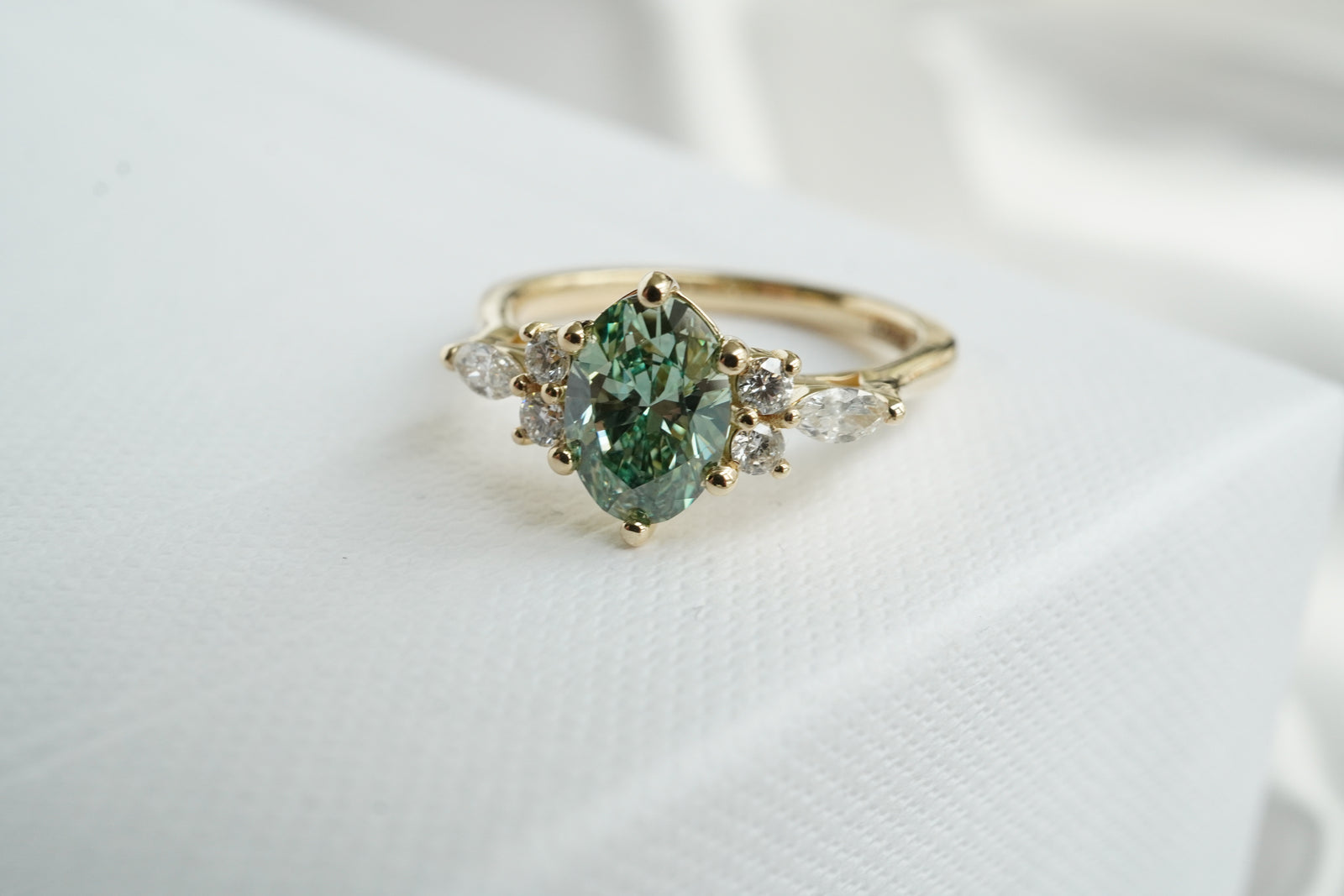
This rainbow of options makes sapphires a compelling choice for couples who want a unique centre stone. A soft pink sapphire set in rose gold, or a vibrant teal sapphire in a halo or hidden halo setting, creates a ring that genuinely can't be mistaken for anyone else's.
Diamond and Moissanite Colour Options
Diamonds also come in a wide range of natural colours, including yellow, brown, pink, blue, and extremely rare red. However, the most valued and popular engagement ring diamonds are colourless (graded D through F on the GIA colour scale).
Both lab-grown diamonds and moissanite are predominantly available in colourless or near-colourless grades, producing that clean, icy-white appearance that most couples envision when they picture an engagement ring.
Colour winner: Tie. Sapphires win for variety and uniqueness. Diamonds and moissanite win for the classic colourless look.
Choosing the Right Ring Setting for Your Centre Stone
The setting is where your ring's personality takes shape. It determines how light interacts with your stone, how the ring feels on your finger, and whether your design leans classic, modern, or somewhere in between.
Here's how popular engagement ring settings work with different centre stones:
Solitaire Settings
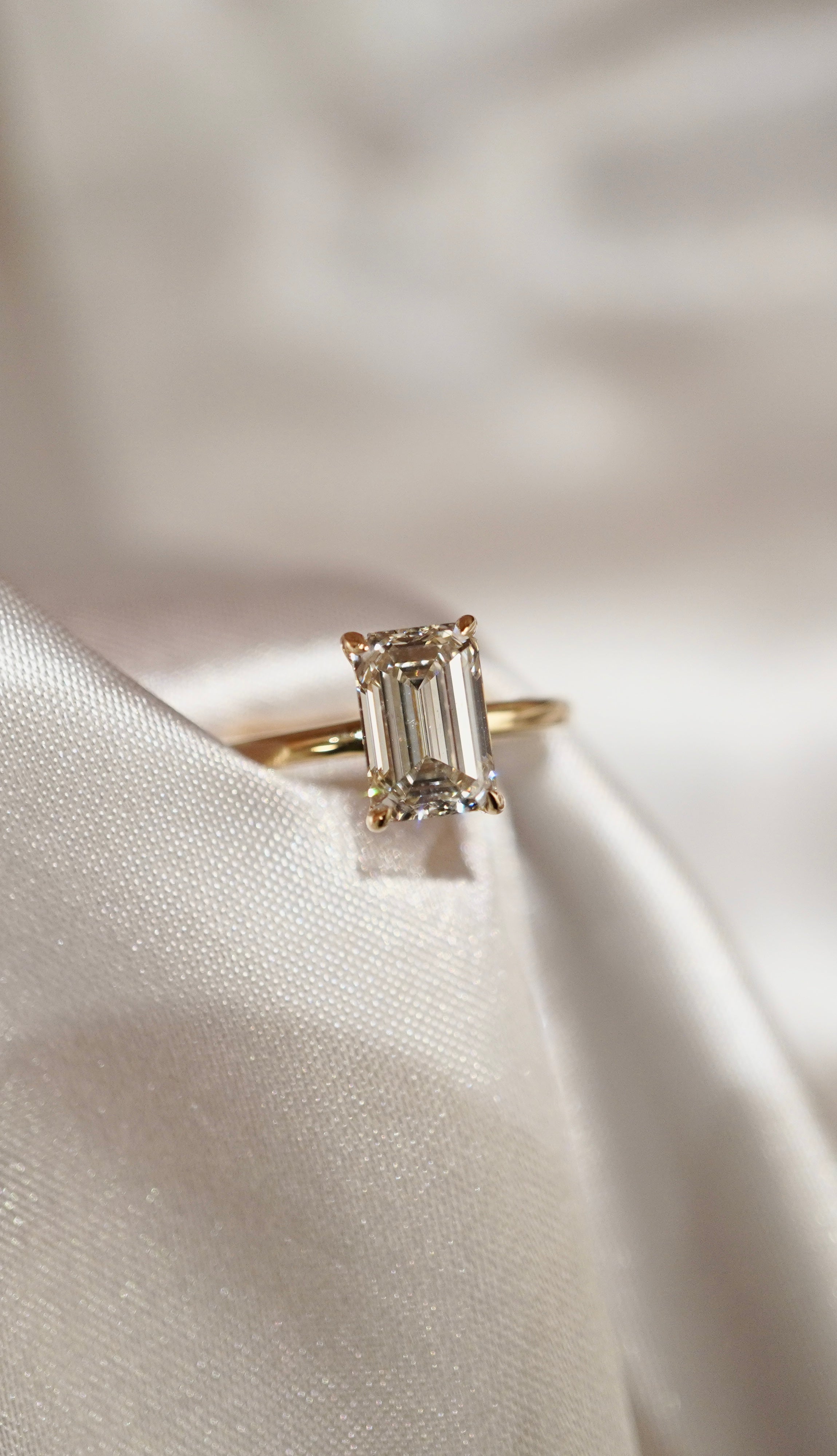
A solitaire engagement ring places all the focus on the centre stone. This works beautifully with diamonds, moissanite, and sapphires alike. Because there are no accent stones to compete for attention, the solitaire is the purest way to showcase your chosen gem. It's timeless, understated, and endlessly elegant.
Halo and Hidden Halo Settings
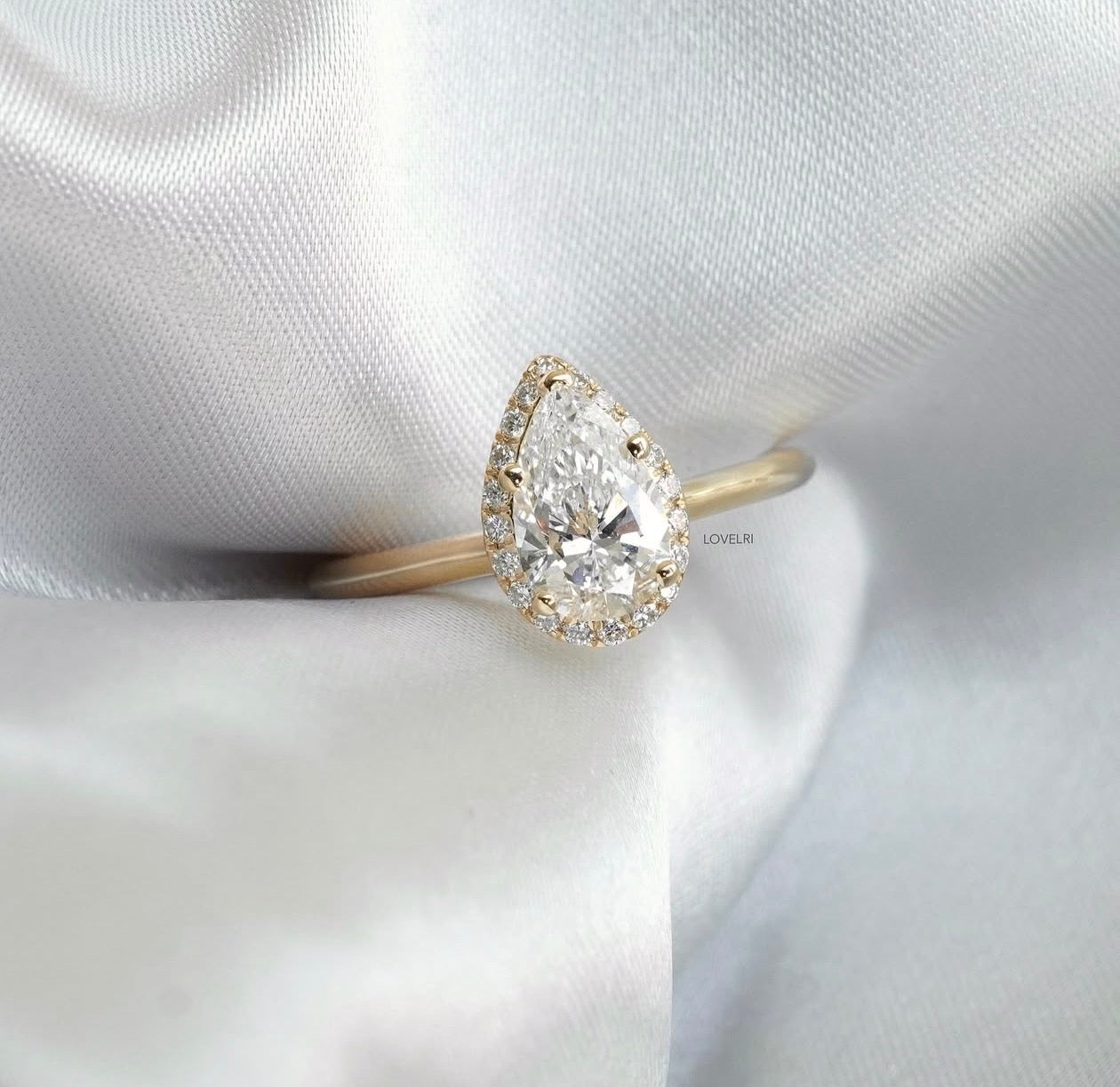
Halo and hidden halo settings surround the centre stone with a ring of smaller diamonds, amplifying sparkle and making the centre appear larger. A sapphire with a diamond halo is a particularly striking combination, the contrast between deep colour and white brilliance creates extraordinary visual depth. The same concept works beautifully with moissanite and lab diamond centres.
Cathedral Settings
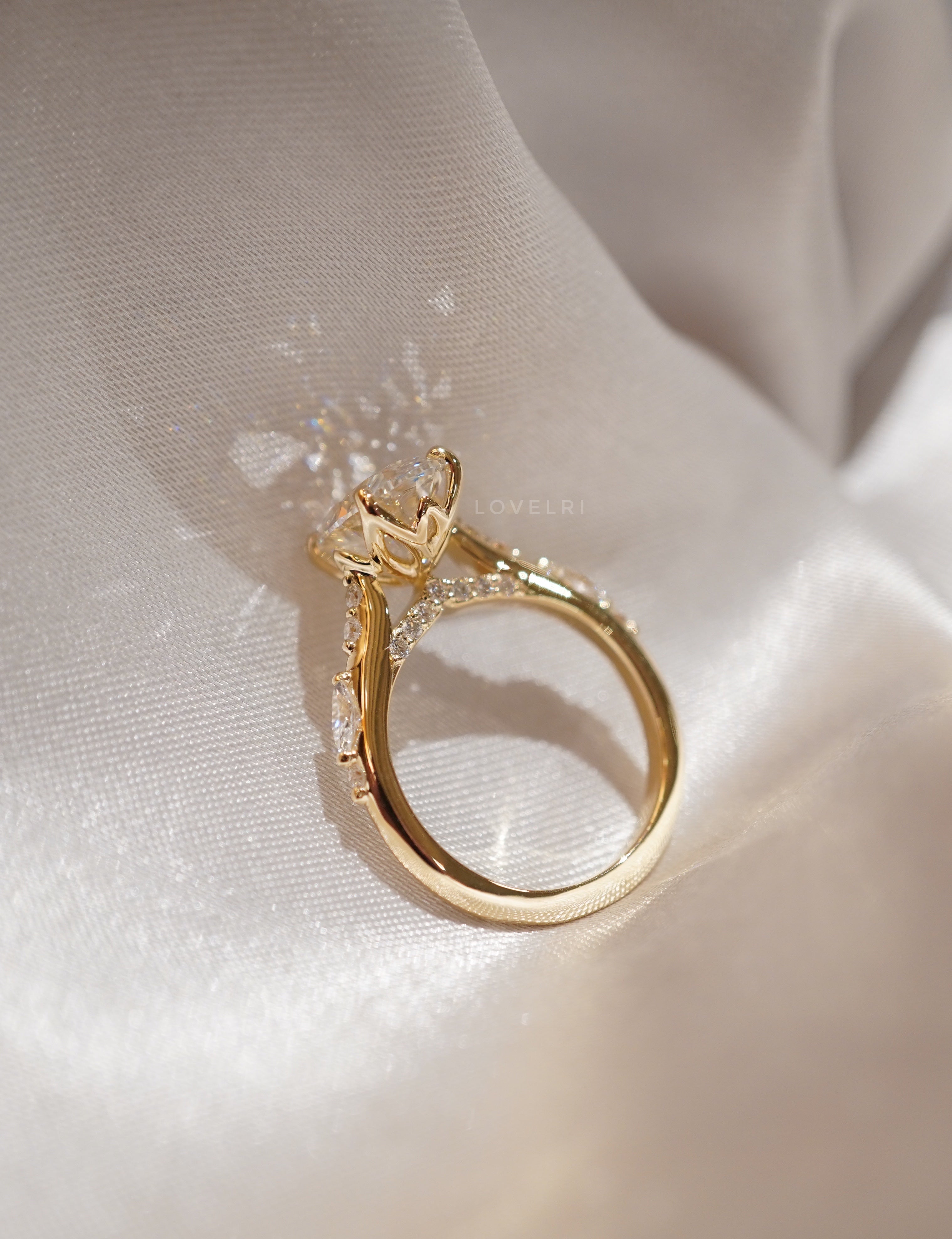
Cathedral engagement rings feature arched metalwork that rises to cradle the centre stone, inspired by the graceful arches of gothic architecture. This setting provides excellent protection for the gem while creating an elevated, regal profile. Both sapphires and diamonds sit beautifully in cathedral designs.
Pavé Band Designs
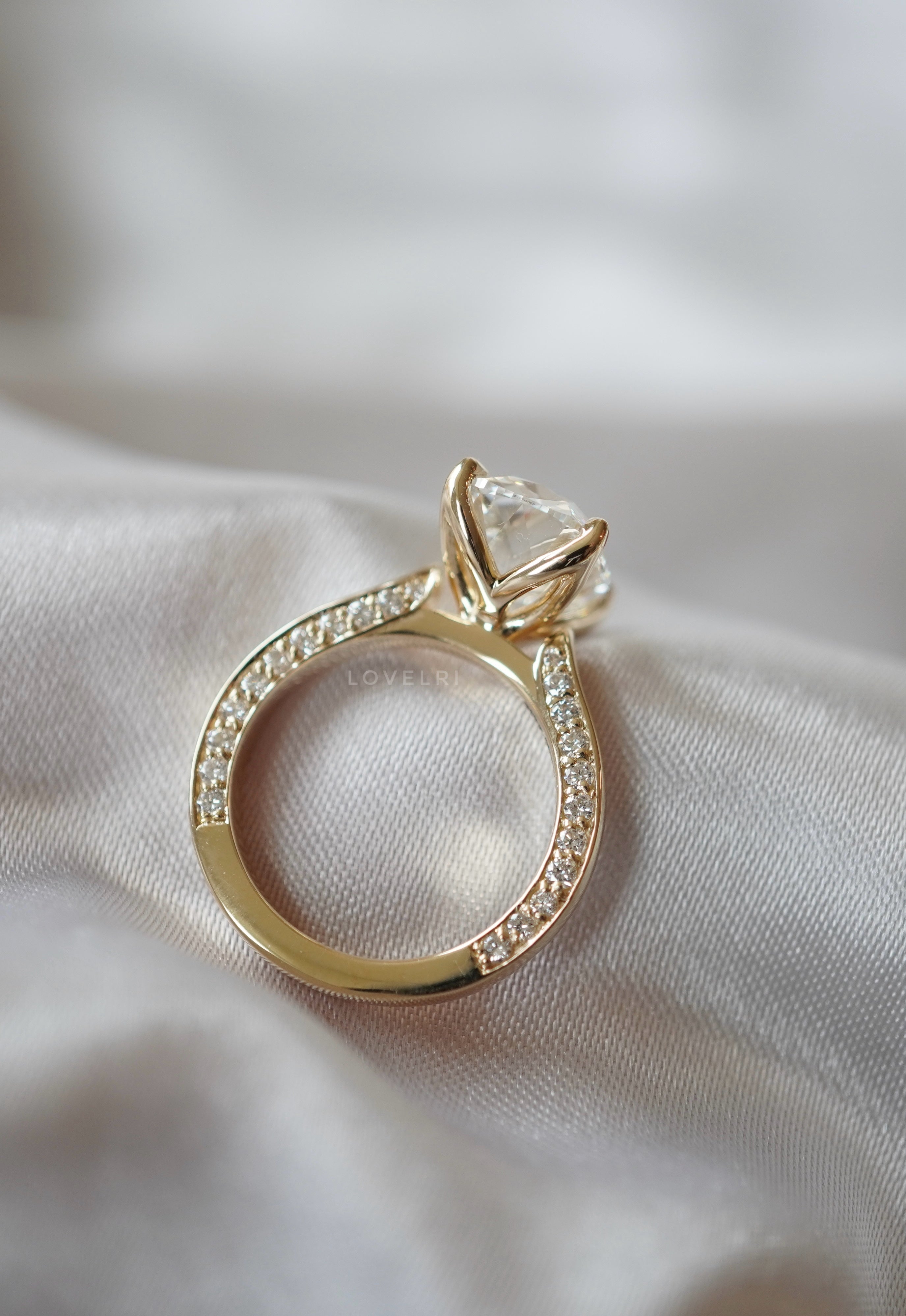
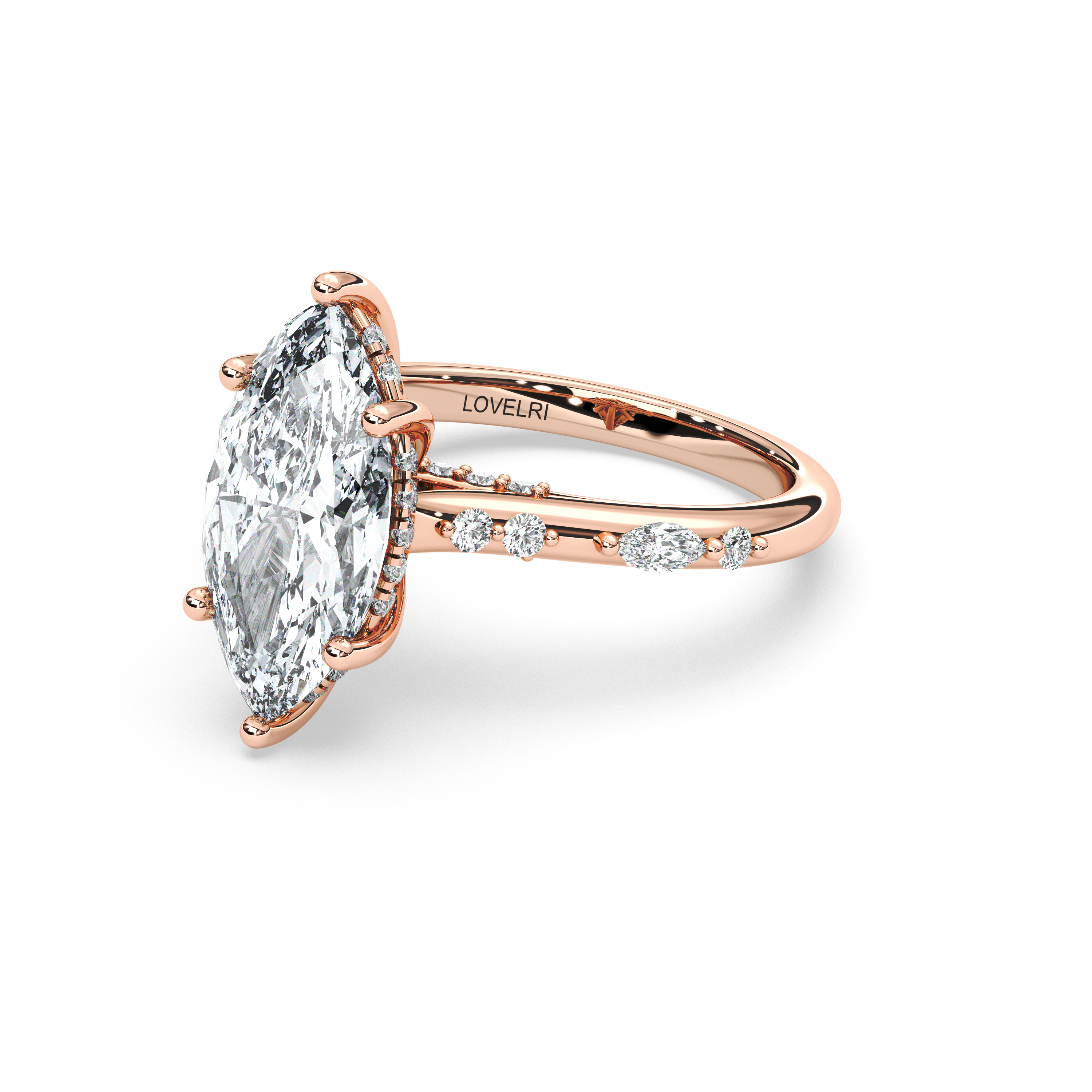
A pavé engagement ring features tiny diamonds set closely along the band, creating a continuous ribbon of shimmer. When paired with a colourless moissanite or lab diamond centre, the effect is breathtaking. The micro-set stones draw the eye from every angle, even in low light.
Side-Stone Settings
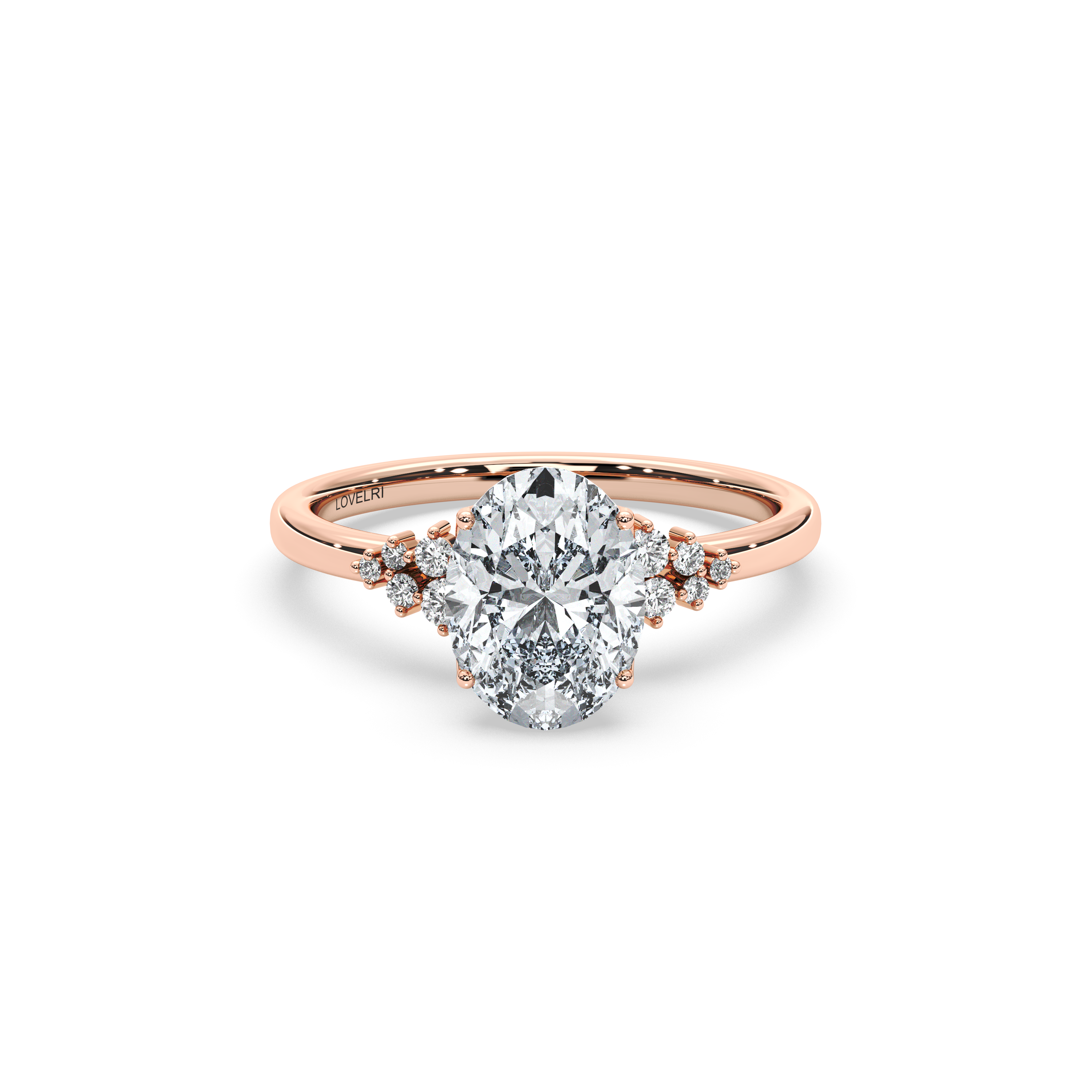
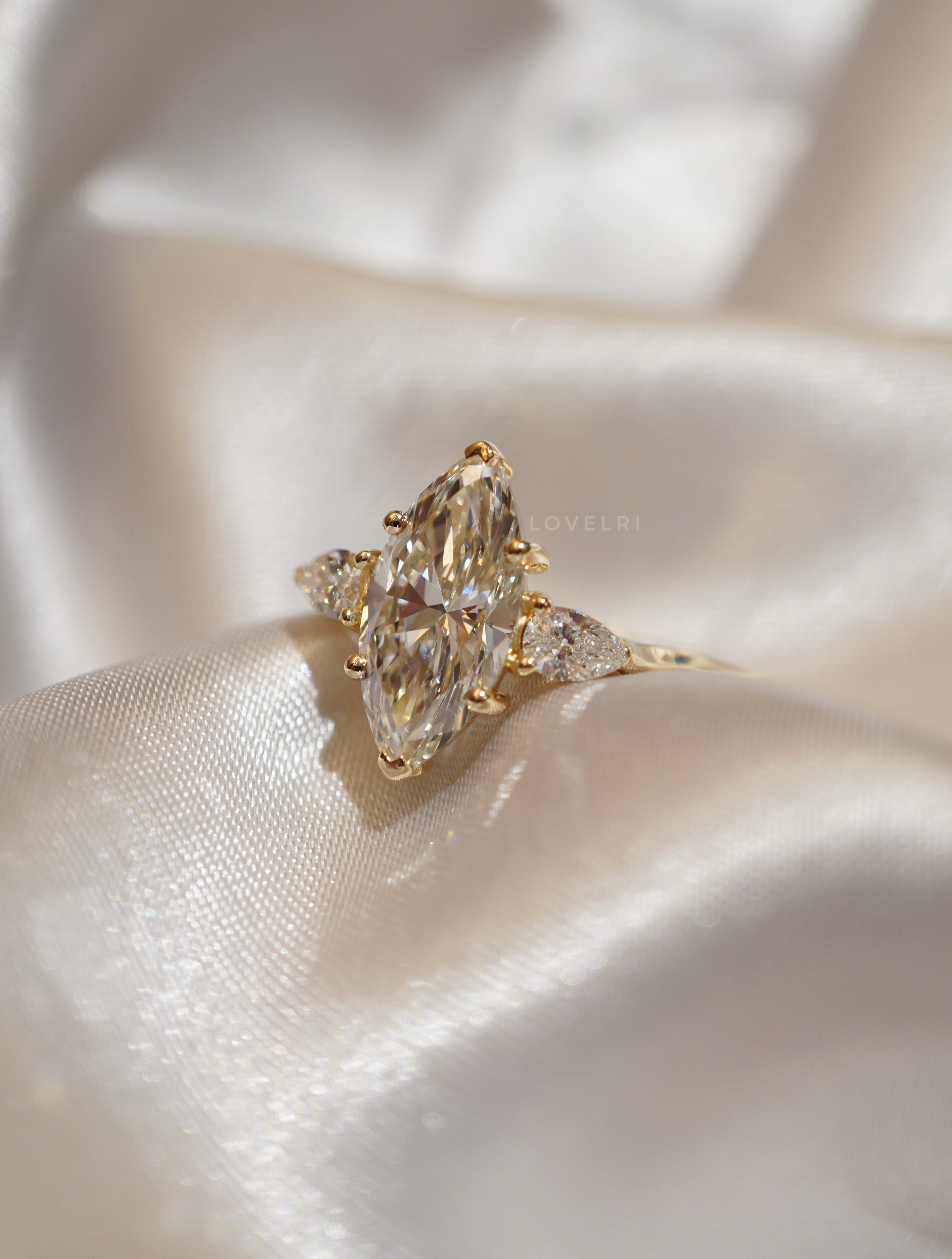
Side-stone engagement rings place accent diamonds alongside the centre stone, adding width, sparkle, and a sense of symmetry. Three-stone designs, where each stone represents past, present, and future, are a meaningful variation that pairs equally well with sapphire or diamond centres.
Modern and Unique Designs
For couples who prefer something unexpected, modern engagement ring designs incorporate clean lines, asymmetric details, and minimalist silhouettes. Lovelri's Botanical Garden collection takes this a step further with nature-inspired, floral-sculpted rings that feel like wearable art.
The History and Symbolism Behind Sapphire Engagement Rings
Sapphires carry a rich history that adds emotional weight to any engagement ring. Ancient Persian civilizations believed the earth rested upon a giant sapphire whose reflection painted the sky blue. The word itself derives from the Latin sapphiru, meaning blue.
Throughout history, sapphires have been associated with:
- Wisdom and clarity of thought
- Loyalty and trust between partners
- Royalty and nobility, reinforced by the British royal family's famous sapphire pieces
- Protection, as ancient cultures believed the stone guarded against harm
Perhaps the most iconic sapphire engagement ring belongs to the British monarchy. Prince Charles presented Princess Diana with an 18-carat oval blue sapphire ring in 1981, a piece now worn by Catherine, Princess of Wales. That single ring reignited global interest in sapphire engagement rings and continues to inspire couples today.
Sapphires are also the September birthstone and the traditional gemstone for fifth-anniversary gifts, making them a meaningful choice for couples with a connection to those milestones.
Beyond the Classic Debate: Why Moissanite and Lab Diamonds Deserve Your Attention
The sapphire vs diamond conversation is valuable, but it doesn't capture the full picture of what's available to modern couples. Two alternatives have reshaped the engagement ring market, and they're worth serious consideration.
Moissanite Engagement Rings
Originally discovered in a meteor crater by Nobel Prize-winning chemist Dr. Henri Moissan in 1893, moissanite is now lab-created to the highest standards. It offers:
- More fire and brilliance than diamond
- A 9.25 Mohs hardness rating (harder than sapphire)
- Ethical, conflict-free origins
- Exceptional value, with larger stones available at a fraction of diamond prices
Lovelri's moissanite engagement ring collection features handcrafted designs across every setting style, from classic solitaires to intricate botanical-inspired pieces.
Lab-Grown Diamond Engagement Rings
Lab-grown diamonds are real diamonds. They share the same crystal structure, chemical composition (pure carbon), hardness, and optical properties as mined stones. The difference? They're grown in controlled environments using advanced technology, which eliminates the environmental and ethical concerns associated with traditional mining.
Lab diamonds are graded by the same independent laboratories (GIA, IGI) using the same 4C criteria: cut, colour, clarity, and carat weight. Browse Lovelri's lab diamond engagement rings to see how these stones perform in beautifully crafted settings.
How to Care for Your Engagement Ring (Regardless of the Stone)
Proper care extends the life and beauty of any engagement ring. Here are some practical guidelines that apply whether your centre stone is sapphire, diamond, moissanite, or lab diamond:
- Clean regularly. Soak your ring in warm water with a few drops of mild dish soap for 20–30 minutes. Gently brush with a soft toothbrush, focusing on the underside of the stone where oils and debris collect. Rinse and pat dry with a lint-free cloth.
- Remove before physical activity. Take your ring off before gym workouts, gardening, swimming, and heavy lifting. Chlorine and salt water can damage metal settings over time.
- Store properly. When you're not wearing your ring, place it in a lined jewellery box or soft pouch, separate from other pieces to prevent scratching.
- Schedule professional cleanings. Visit your jeweller once or twice a year for a thorough cleaning and prong inspection. This ensures your centre stone remains secure in its setting.
- Remove before bed. Sleeping with your ring on can bend prongs and create pressure on the setting over time.
Lovelri offers a Limited Lifetime Warranty against manufacturing defects and a complimentary one-time resize within the first year, giving you peace of mind long after the proposal.
How to Choose the Perfect Engagement Ring: A Step-by-Step Approach
With so many options available, narrowing your decision can feel overwhelming. Here's a structured approach that our team recommends to every couple:
Set Your Budget
Be honest about what you're comfortable spending. Moissanite and lab diamonds make it possible to get a larger, more brilliant stone at every price point, so you don't have to compromise on beauty to stay within your means.
Choose Your Stone
Do you want the classic colourless brilliance of a diamond or moissanite? The rich colour of a sapphire? The ethical confidence of a lab-grown stone? Each path leads to a stunning ring.
Select Your Setting Style
Browse solitaire, halo, cathedral, pavé, side-stone, and modern designs to see which silhouette resonates with your personal aesthetic.
Pick Your Metal
White gold, yellow gold, rose gold, and platinum all pair differently with various stones. Cool-toned sapphires and colourless stones look particularly striking in white gold or platinum. Warmer sapphire shades glow in rose or yellow gold.
Consider a Custom Design
If nothing off the shelf captures your vision, Lovelri's custom engagement ring service lets you collaborate directly with master jewellers in Toronto. From a complimentary consultation through 3D rendering and handcrafting, every detail is shaped around your story.
Sapphire vs Diamond: The Final Verdict
There's no single "right" answer in the sapphire vs diamond debate, and that's actually good news. It means you have the freedom to choose a ring that reflects your values, your aesthetic, and your relationship.
Choose a sapphire if you want a distinctive centre stone with rich colour, meaningful symbolism, and a more accessible price point. Sapphires are hard enough for everyday wear, available in nearly every colour, and carry a legacy of royalty and romance.
Choose a diamond if you value the unmatched hardness, classic colourless brilliance, and timeless tradition that diamonds represent. And remember: lab-grown diamonds give you everything a mined diamond offers, at a more thoughtful price and with a cleaner ethical footprint.
Choose moissanite if you want maximum sparkle and fire, exceptional durability, ethical sourcing, and the best value in fine jewellery. Moissanite engagement rings have earned their place alongside diamonds and sapphires as a premier centre stone choice.
The most important thing? The ring you choose should make you feel something every time you look at your hand. That's what transforms a piece of jewellery into an heirloom.
Frequently Asked Questions
What is the difference between moissanite and diamond engagement rings?
Moissanite scores 9.25 on the Mohs hardness scale compared to diamond's 10, making it extremely durable for daily wear. Moissanite actually produces more fire and rainbow brilliance than diamonds, while costing 80–90% less for the same carat size. Both are colourless and beautiful in engagement ring settings. The two stones are visually distinct only under gemological testing equipment. For most couples, moissanite offers an exceptional combination of beauty, durability, and value.
Are lab-grown diamonds real diamonds?
Yes. Lab-grown diamonds are chemically, physically, and optically identical to mined diamonds. They're created using advanced technology (HPHT or CVD methods) that replicates the natural diamond formation process. Lab diamonds receive the same independent grading for cut, colour, clarity, and carat weight. The only difference is origin, and they typically cost 30–50% less than mined equivalents of the same quality.
What is the best engagement ring setting for a sapphire?
Halo settings, cathedral settings, and side-stone designs all complement sapphires beautifully. A halo of clear diamonds around a centre sapphire adds maximum brilliance and visual contrast. Cathedral settings provide graceful structural protection. The best setting ultimately depends on your personal style and how much sparkle you prefer surrounding the coloured stone.
How do I customize an engagement ring with Lovelri?
Lovelri's custom ring process begins with a complimentary consultation, either in-person at their Toronto showroom or virtually. You'll discuss your vision, stone preference, setting style, and budget with their design experts. The team then creates a 3D digital rendering for your review and approval. Once finalised, master jewellers in Toronto handcraft your piece in approximately four weeks, with expedited timelines available upon request.
Find the Ring That Tells Your Story
Every love story is unique, and your engagement ring should be too. Whether you're drawn to sapphire, diamond, moissanite, or a completely custom creation, Lovelri's master jewellers in Toronto are here to bring your vision to life.