
Diamond: The April Birthstone Guide
The Complete Guide to Diamond as April's Birthstone: History, Alternatives & Ring Styles
From ancient healing lore to modern engagement rings, discover everything you need to know about April's beloved gemstone and the brilliant alternatives that rival its sparkle.
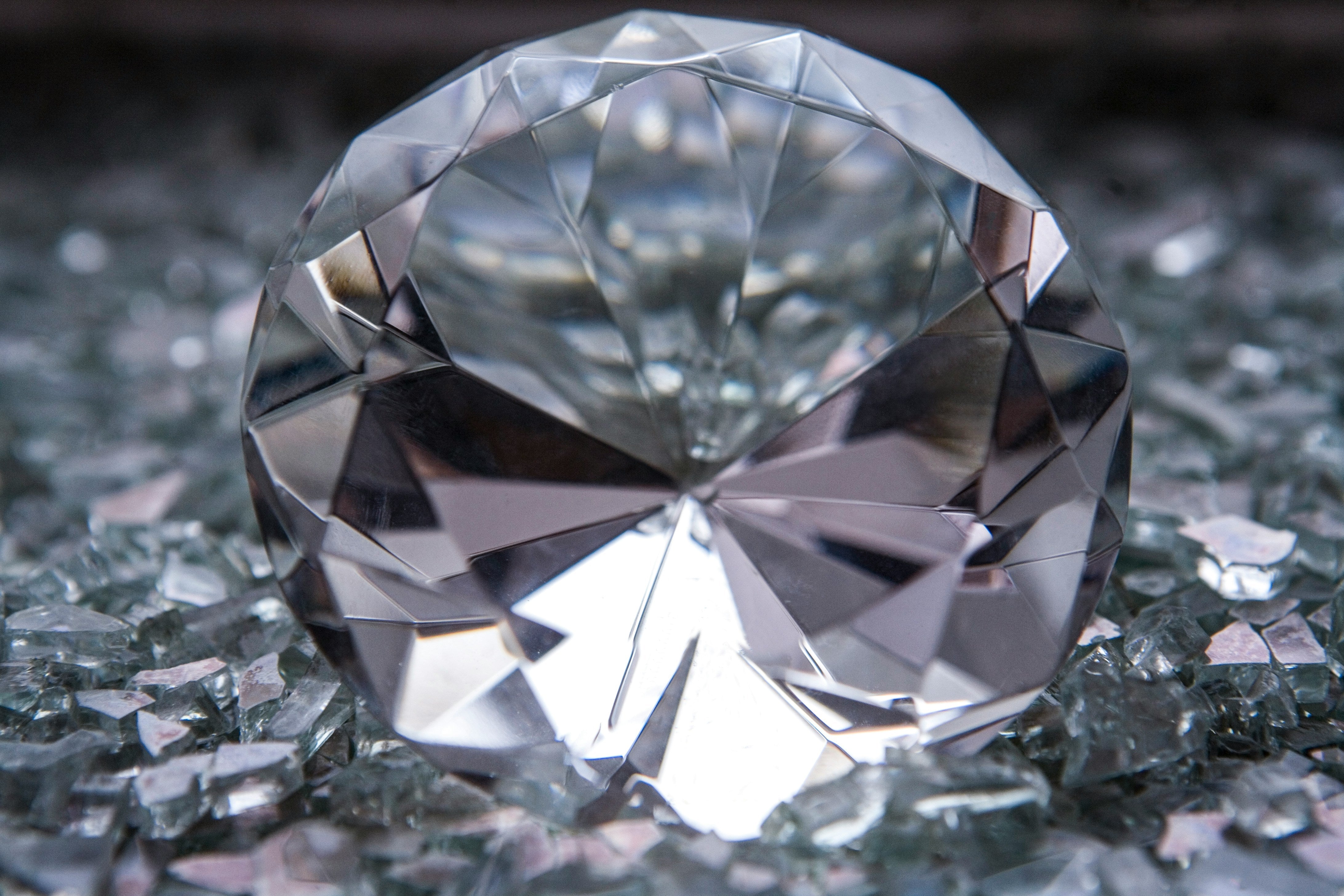
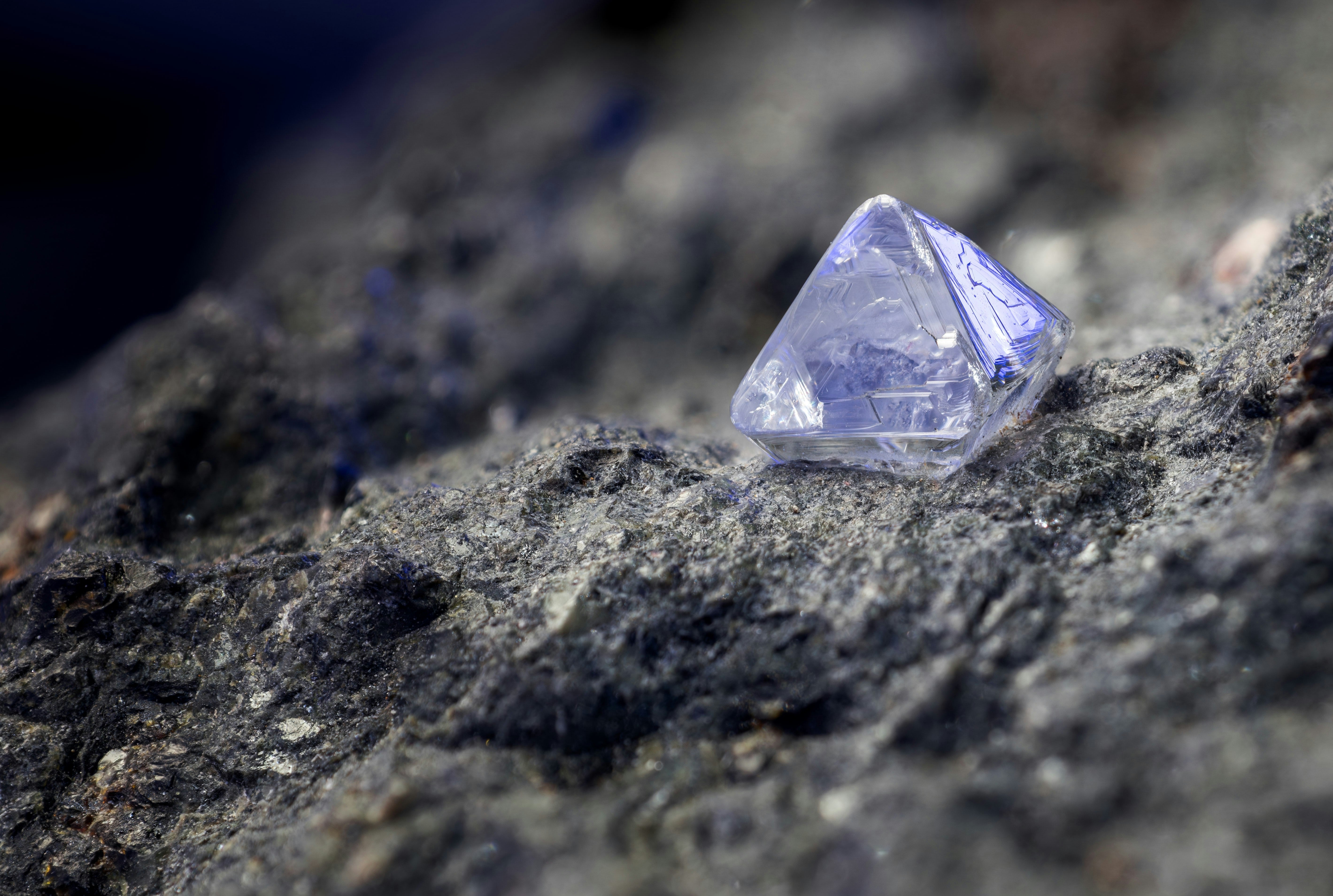
If you were born in April, you've got the most coveted gemstone in the world as your birthstone. Diamond has captivated civilizations for thousands of years with its unmatched brilliance, extraordinary durability, and deep symbolic meaning. But here's something many people don't realize: the world of "diamond-quality" gemstones has expanded far beyond what nature produces underground.
Today, lab-grown diamonds and moissanite offer April babies (and anyone who loves that diamond sparkle) the same breathtaking beauty with added benefits like ethical sourcing, greater affordability, and in some cases, even more fire and brilliance than a mined stone.
Whether you're shopping for an April birthday gift, searching for the perfect engagement ring, or simply curious about this legendary gem, this guide covers everything: diamond's fascinating history, the science behind its sparkle, how it compares to moissanite and lab diamonds, and which ring settings will make your stone truly shine.
The History and Meaning Behind Diamond as April's Birthstone
The tradition of birthstones traces back to the Breastplate of Aaron described in the Book of Exodus, which featured twelve gemstones representing the twelve tribes of Israel. Over centuries, these stones became associated with zodiac signs and eventually with calendar months. Diamond claimed its place as April's birthstone through a combination of ancient tradition and the gem trade standardizations of the early 20th century.
Ancient Beliefs and Symbolism
The word "diamond" comes from the Greek adamas, meaning "invincible" or "unconquerable." Ancient Greeks believed diamonds were tears of the gods or splinters from falling stars. Roman soldiers wore diamond talismans into battle, convinced the stones would grant them strength and courage.
During the Middle Ages, diamonds were prized not just for their beauty but for their supposed healing powers. Medieval physicians prescribed diamonds as remedies for ailments ranging from fatigue and mental illness to stomach conditions. Worn as an amulet during sleep, a diamond was thought to ward off nightmares, poison, and disease.
In Hindu mythology, diamonds were associated with the planet Venus and believed to attract abundance. The ancient Indians even classified diamonds by caste: the Brahmin (white), Kshatriya (red), Vaishya (yellow), and Shudra (black or grey).
What Diamond Symbolizes Today
Modern symbolism centers on diamond's association with:
- Eternal love and commitment — the reason it dominates engagement ring culture
- Strength and resilience — reflecting its status as the hardest natural material on Earth
- Clarity and truth — linked to its transparent, light-refracting nature
- Abundance and prosperity — a tradition rooted in ancient Indian beliefs
Diamond is also the traditional gift for 60th and 75th wedding anniversaries, making it a gemstone that marks life's most significant milestones.
What Makes Diamonds Special: Properties and the 4Cs
Beyond their symbolic weight, diamonds possess extraordinary physical properties that justify centuries of fascination.
Physical Properties of Diamond
- Hardness: 10 on the Mohs scale — the maximum possible rating, making diamond the hardest naturally occurring mineral known
- Brilliance: A refractive index of 2.42, which creates that signature white sparkle
- Fire: A dispersion rate of 0.044, splitting white light into spectral colors
- Durability: Resistant to scratching from any other material, ideal for everyday wear
- Composition: Pure carbon atoms arranged in a cubic crystal structure
Understanding the 4Cs
Every diamond's value is assessed using four standard parameters known as the 4Cs:
Cut
The most important factor influencing brilliance. Cut refers to how well a diamond's facets interact with light. An excellent cut maximizes fire, sparkle, and scintillation regardless of carat size.
Color
Graded on a D (colorless) to Z (light yellow) scale. While most people picture diamonds as colorless, they naturally occur in nearly every shade — including pink, blue, green, yellow, brown, grey, and black.
Clarity
Measures internal inclusions and surface blemishes. Grades range from Flawless (FL) to Included (I3). Many inclusions are invisible to the naked eye, so choosing "eye-clean" stones offers excellent value.
Carat
Refers to weight, not size. One carat equals 0.2 grams. Two diamonds of the same carat weight can appear different sizes depending on their cut and shape.
Understanding these four factors empowers you to make a confident, informed purchase — whether you're choosing a natural diamond, a lab-grown diamond, or a moissanite engagement ring.
Lab-Grown Diamonds: The Ethical, Identical Alternative
If you love the idea of a real diamond but want a more conscious choice, lab-grown diamonds deserve your attention. They're not imitations or simulants — they are genuine diamonds in every measurable way.
How Lab Diamonds Are Created
Lab diamonds are produced using two primary methods:
- High Pressure High Temperature (HPHT): Mimics the natural conditions under which diamonds form deep within the earth, using extreme pressure and heat to crystallize carbon
- Chemical Vapor Deposition (CVD): Places a diamond seed in a chamber filled with carbon-rich gas, which deposits carbon atoms layer by layer onto the seed, growing a diamond over several weeks
Why Lab Diamonds Are Gaining Popularity
- Chemically identical: Same carbon crystal structure, same hardness (10 on Mohs), same optical properties
- Ethically sourced: No mining required, eliminating concerns about environmental destruction or conflict stones
- More affordable: Typically 30–50% less expensive than comparable mined diamonds
- Certified and graded: Evaluated using the same 4Cs criteria by leading gemological labs
- Environmentally friendlier: Significantly smaller carbon footprint compared to traditional mining operations
For April-born individuals who value both tradition and sustainability, a lab diamond engagement ring offers the best of both worlds. You get the real thing — the hardness, the sparkle, the prestige — without the ethical compromises that can come with mined stones.
Lovelri's Lab Diamond Collection:Every lab diamond engagement ring at Lovelri is handcrafted by master jewellers in Toronto, available in premium metals, and designed to celebrate your unique story.
Moissanite: April's Most Brilliant Alternative
Here's a gemstone that even most April babies don't know about — and once you see it, you might prefer it to diamond.
The Origin Story of Moissanite
In 1893, Nobel Prize-winning chemist Dr. Henri Moissan discovered tiny crystals of silicon carbide in an Arizona meteor crater. He initially thought he'd found diamonds. What he'd actually discovered was a new mineral — one that would eventually bear his name and rival diamond's legendary brilliance.
Natural moissanite is extraordinarily rare, found only in meteorites and a handful of geological formations. The moissanite used in today's fine jewellery is lab-created, producing flawless stones with consistent quality and remarkable optical performance.
Why Moissanite Outshines Diamond in Key Areas
- More fire: Moissanite has a dispersion rate of 0.104 — more than double that of diamond (0.044) — creating more rainbow flashes and spectral colour
- More brilliance: With a refractive index of 2.65 (vs. diamond's 2.42), moissanite bends and reflects more light
- Exceptional hardness: At 9.25 on the Mohs scale, moissanite is harder than sapphire, ruby, and every other gemstone except diamond
- Fraction of the cost: A high-quality moissanite typically costs 80–90% less than a comparable diamond
- Eco-conscious: Lab-created with minimal environmental impact
For April-born individuals — or anyone shopping for an engagement ring — moissanite engagement rings offer extraordinary beauty at a price point that leaves room in your budget for the setting, the metal, and the overall design you truly want.
Explore Lovelri's Moissanite Collection:From timeless solitaires to radiant halos, Lovelri's moissanite rings are handcrafted in Toronto with the same precision and care as our diamond pieces.
Diamond vs. Lab Diamond vs. Moissanite: An Honest Comparison
Choosing between these three brilliant stones is one of the most common decisions engagement ring shoppers face. Here's a straightforward comparison to help you decide.
| Property | Natural Diamond | Lab Diamond | Moissanite |
|---|---|---|---|
| Composition | Carbon | Carbon | Silicon Carbide |
| Hardness (Mohs) | 10 | 10 | 9.25 |
| Refractive Index | 2.42 | 2.42 | 2.65 |
| Fire (Dispersion) | 0.044 | 0.044 | 0.104 |
| Ethical Sourcing | Varies | Yes | Yes |
| Price (1ct equivalent) | $$$$ | $$$ | $ |
| Suitable for Daily Wear | Yes | Yes | Yes |
Which Stone Is Right for You?
Choose a natural diamond if: You value tradition, rarity, and the knowledge that your stone was formed billions of years ago deep within the earth.
Choose a lab-grown diamond if: You want the exact same stone — chemically, optically, physically — without the environmental and ethical concerns of mining, and at a more accessible price.
Choose moissanite if: You want maximum sparkle and fire, exceptional durability, and a significantly lower price that lets you invest more in the setting design and metal quality of your ring.
Best Ring Settings for Your April Birthstone
The stone you choose is only half the story. The setting determines how your diamond, lab diamond, or moissanite catches the light, sits on your finger, and expresses your personal style. Here are the most popular engagement ring settings and what makes each one special.
Solitaire Settings
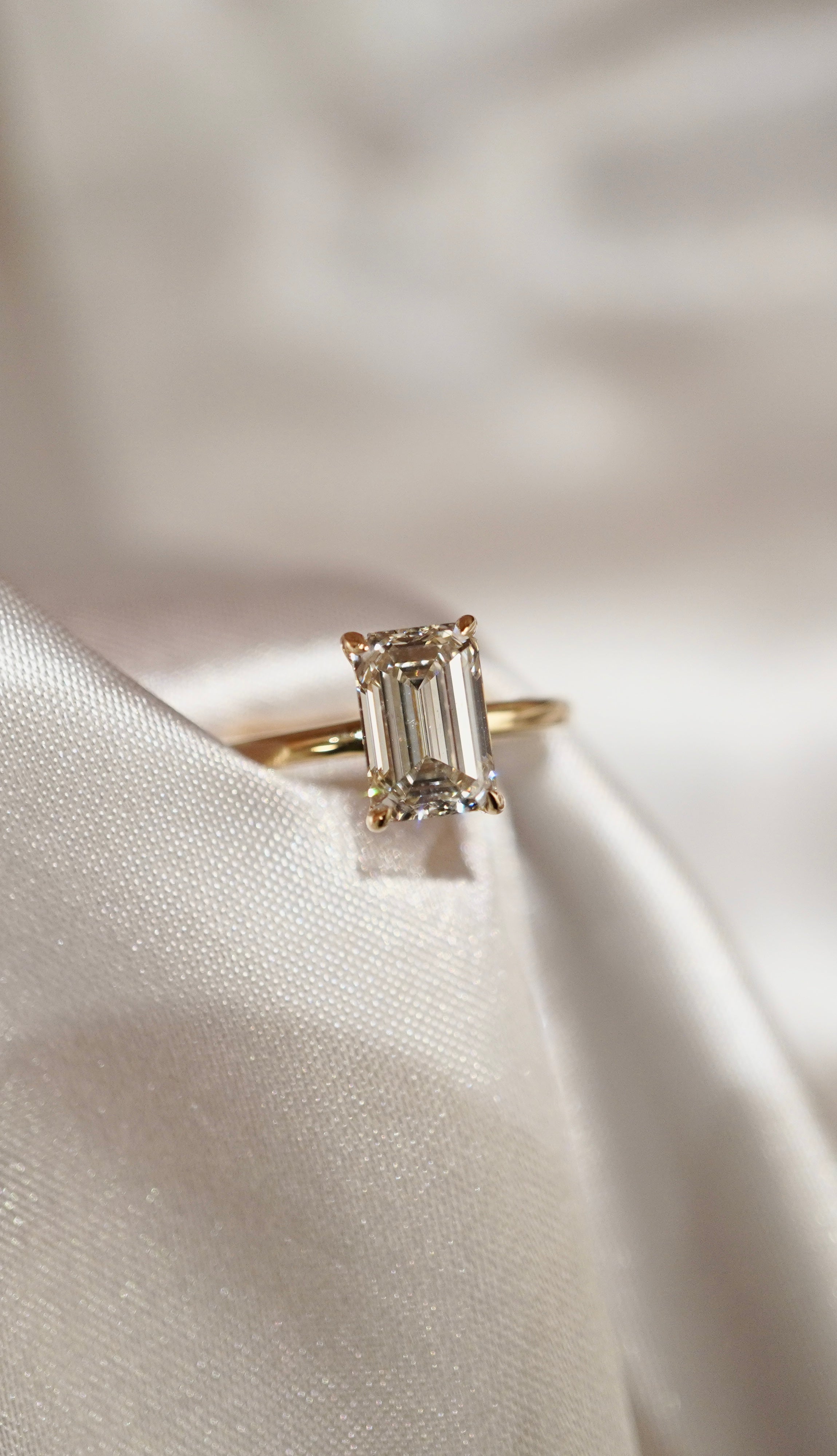
The solitaire setting is the gold standard of engagement ring design. A single stone mounted on a clean, unadorned band puts all the attention on your center gem. It's timeless, versatile, and flattering on every hand shape.
- Best for: Those who prefer understated elegance and classic design
- Works beautifully with: Round brilliant, oval, pear, and emerald-cut stones
- Ideal stone: Any — solitaires let the stone speak for itself
Halo and Hidden Halo Settings
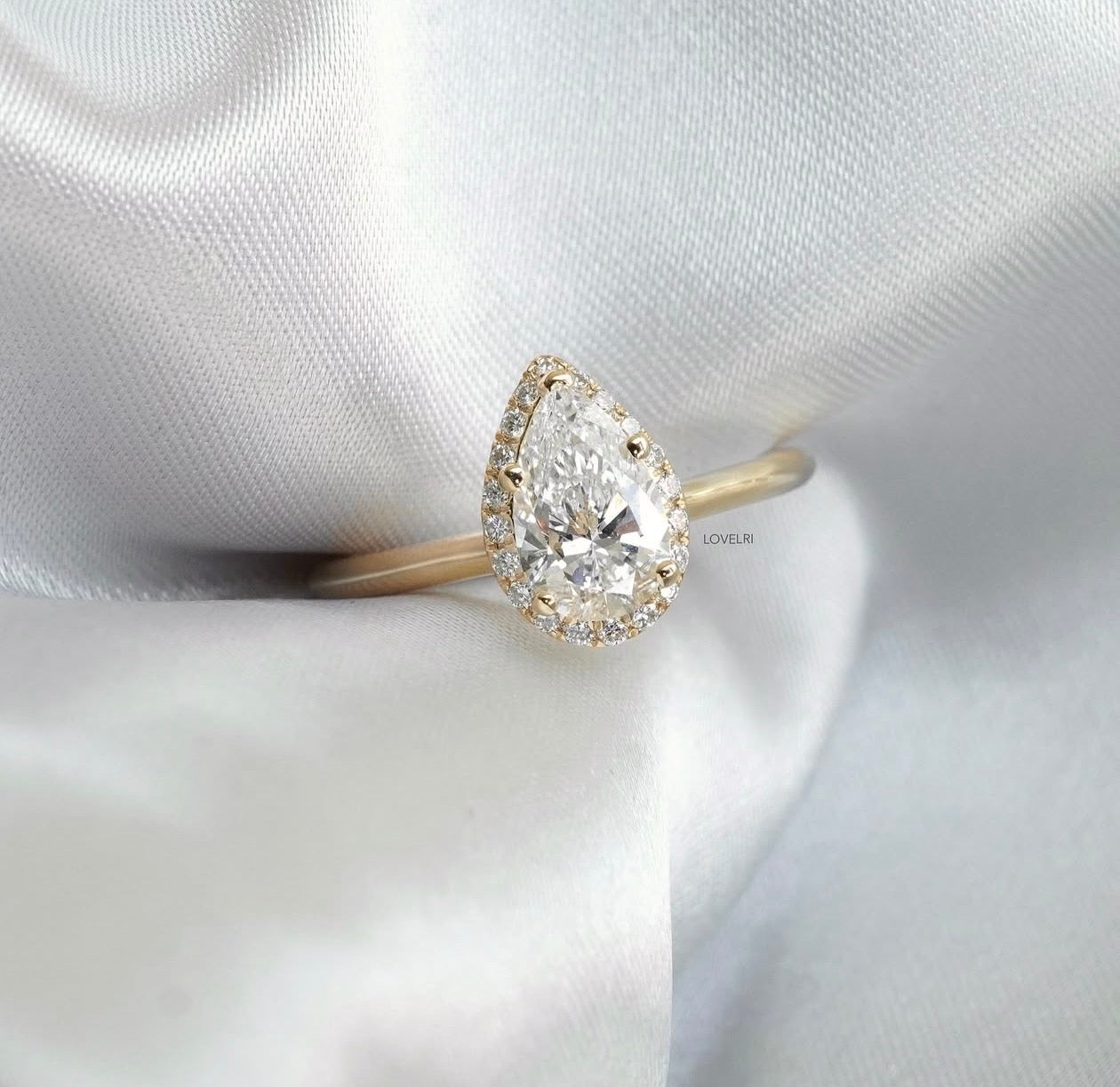
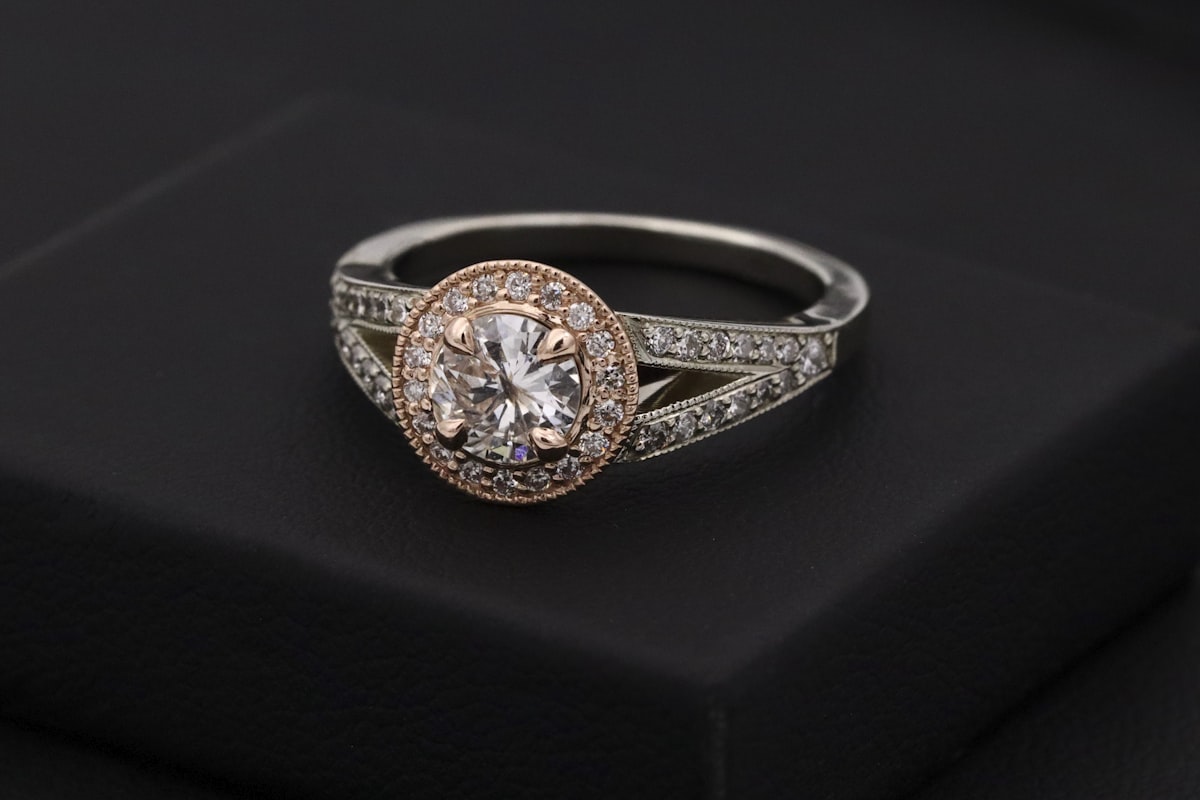
A halo setting encircles the center stone with a ring of smaller diamonds or moissanite, amplifying its perceived size and creating a dazzling frame of light. Hidden halos tuck these accent stones beneath the center gem for a subtle surprise visible from the side.
- Best for: Maximizing sparkle and making the center stone appear larger
- Works beautifully with: Round, cushion, and oval cuts
- Ideal stone: Moissanite and lab diamonds both look stunning in halo settings
Cathedral Settings
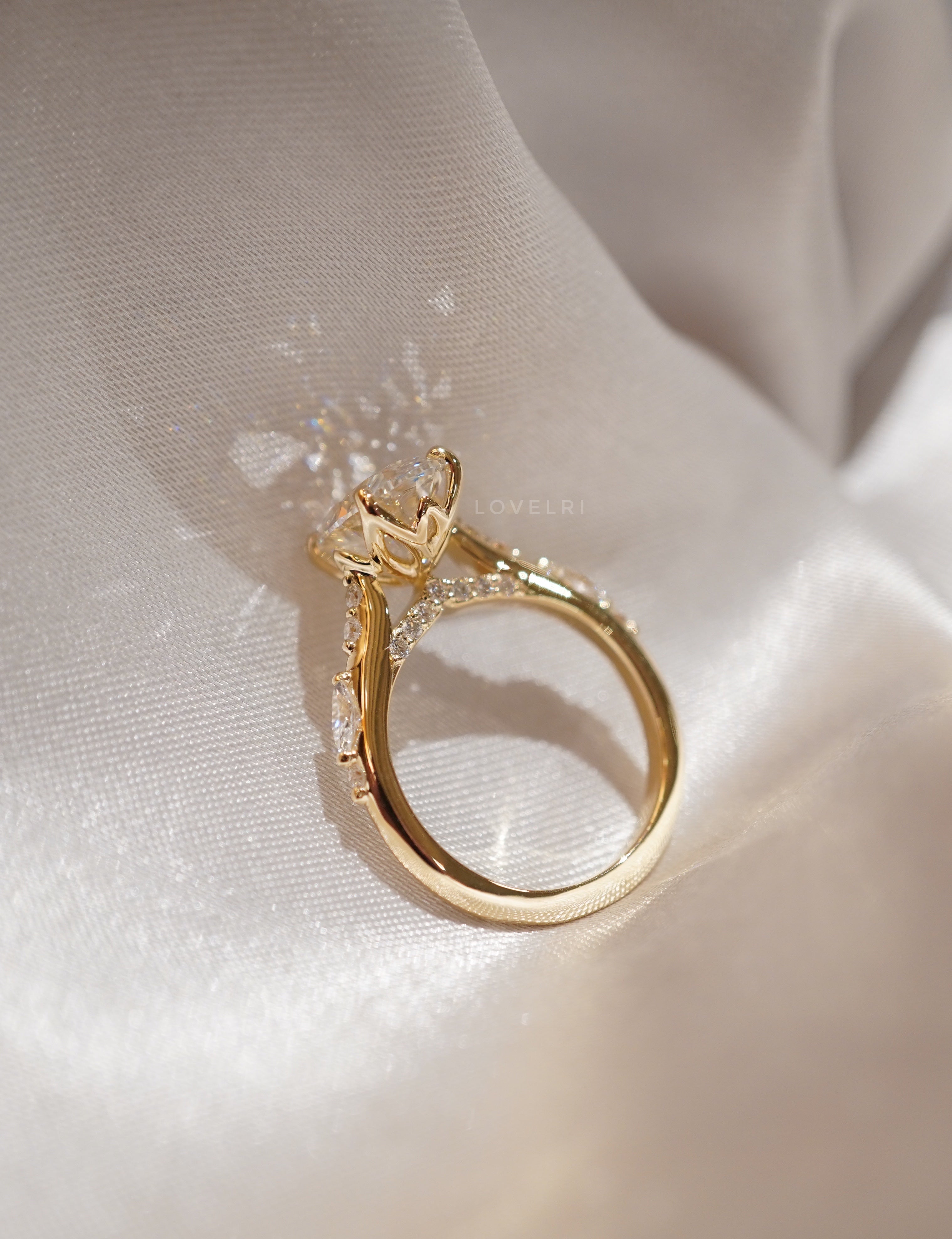
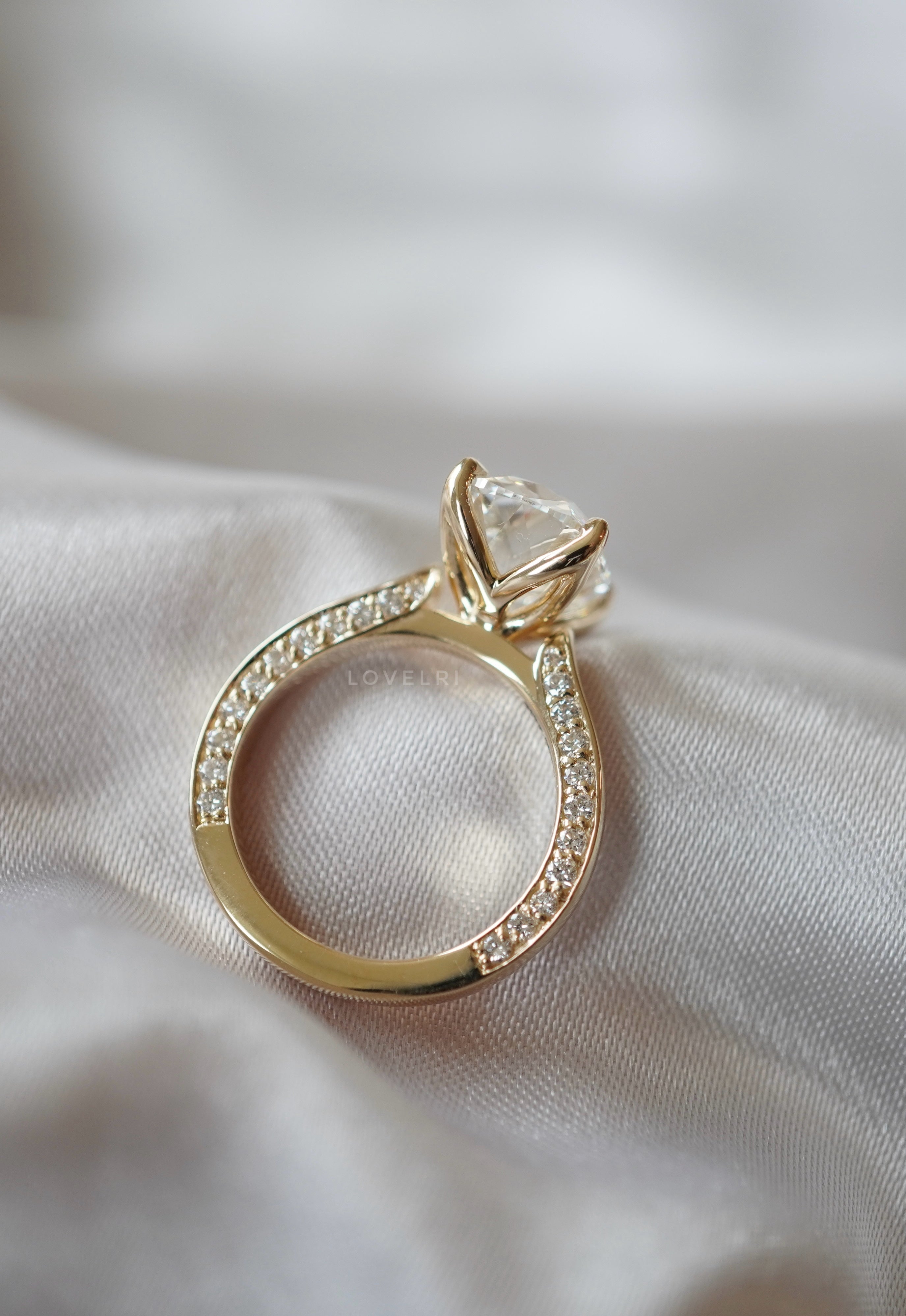
Cathedral settings use arching metal supports that rise from the band to cradle the center stone, inspired by the soaring arches of Gothic architecture. This design elevates the stone, allowing light to enter from more angles while adding structural integrity.
- Best for: Those who appreciate architectural beauty and a lifted profile
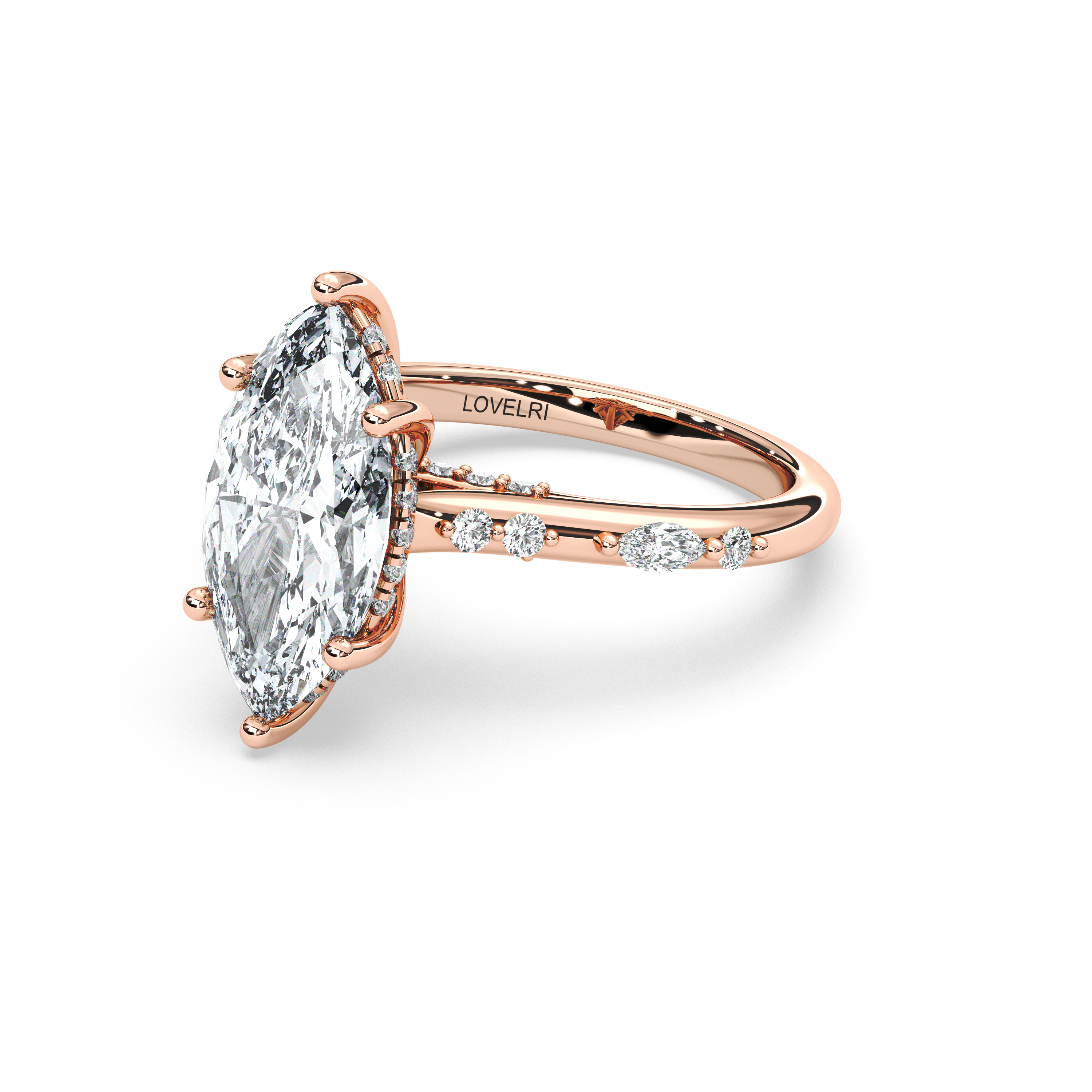
- Works beautifully with: Princess, round, and marquise cuts
- Ideal stone: Lab diamonds and moissanite with excellent cut grades
Pavé Settings
Pavé bands feature tiny diamonds or moissanite stones set closely together along the band, creating a continuous surface of shimmer. The word pavé comes from the French word for "paved," and the effect is exactly that — a pathway of light.
- Best for: Maximizing overall ring sparkle and adding luxurious detail
- Works beautifully with: Any center stone shape
- Ideal stone: Pairs exceptionally well with moissanite centers, as the added fire complements the pavé accent stones
Side-Stone Settings
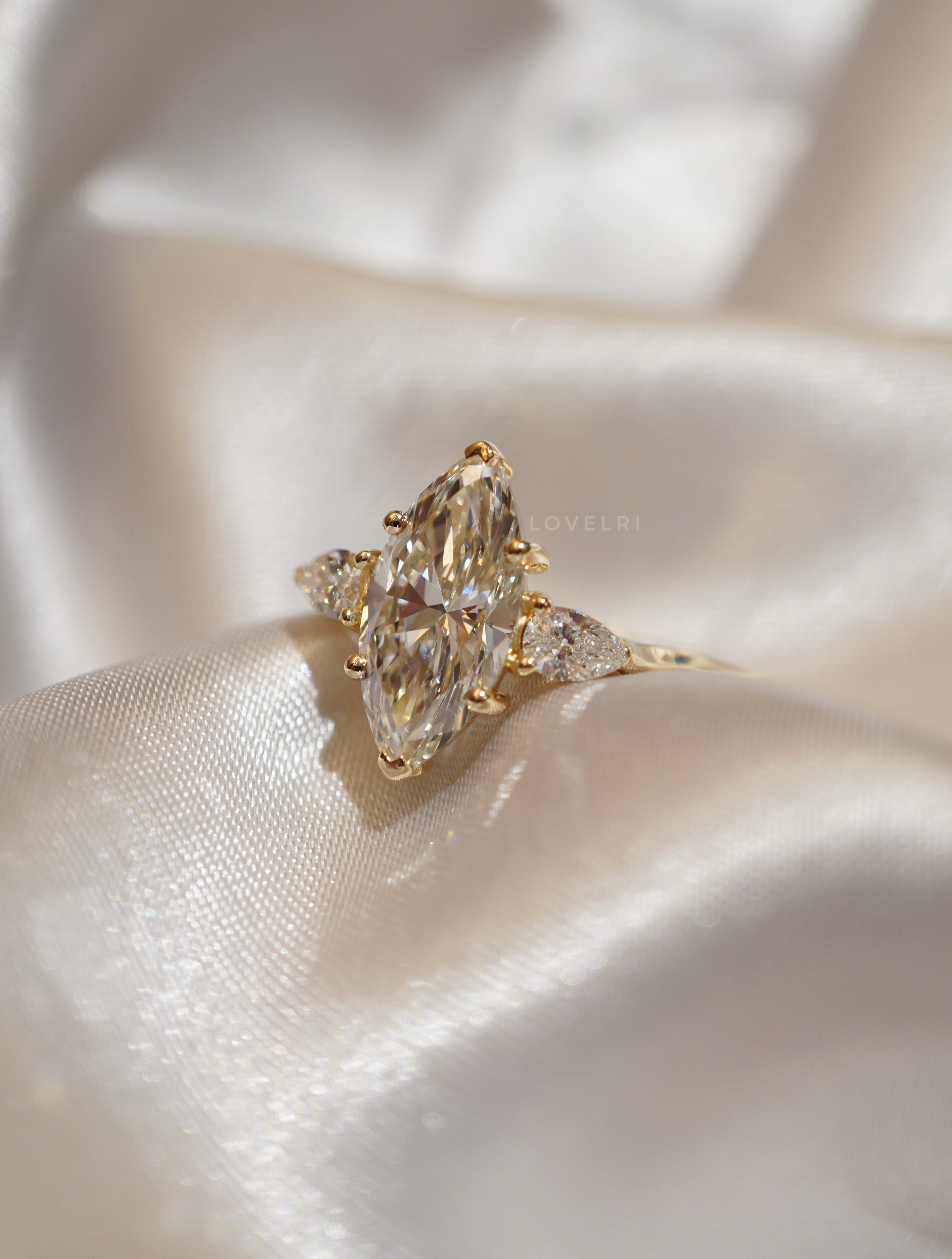
Side-stone settings place accent gems alongside the center stone, framing it with balanced, symmetrical brilliance. These can range from classic three-stone designs to more elaborate arrangements with tapered baguettes or round accents.
- Best for: Adding visual weight and a sense of refined harmony
- Works beautifully with: Emerald, oval, and round center stones
- Ideal stone: Lab diamonds and moissanite both create gorgeous contrast in side-stone arrangements
Modern and Nature-Inspired Designs
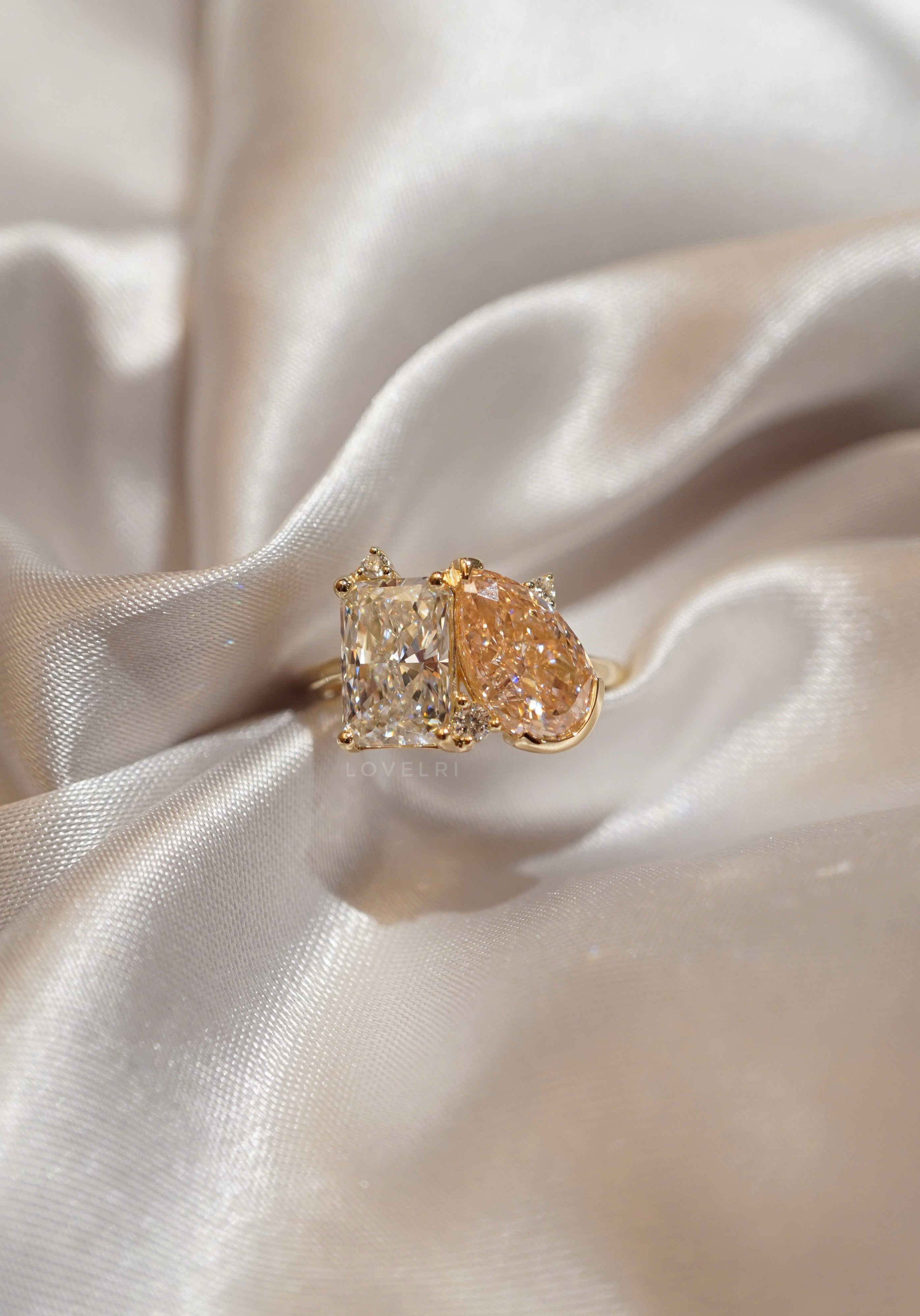
For those drawn to something different, modern ring designs break from convention with asymmetric lines, mixed metals, and innovative silhouettes. Lovelri's Botanical Garden collection takes this further with floral-inspired rings sculpted as wearable heirlooms from a garden that never fades.
- Best for: Individuals who want their ring to be a true conversation piece
- Works beautifully with: Pear, marquise, and unique stone shapes
- Ideal stone: Moissanite's exceptional fire makes modern and nature-inspired settings absolutely come alive
How to Choose the Perfect April Birthstone Ring
With so many options in stones and settings, narrowing down the right combination can feel overwhelming. Here's a step-by-step approach to simplify your decision.
Set Your Budget
Knowing your budget first helps determine whether a natural diamond, lab diamond, or moissanite is the right fit. Remember: choosing moissanite or lab-grown diamonds frees up budget for a more elaborate setting or a larger stone.
Choose Your Stone
Consider what matters most to you — tradition, maximum brilliance, ethical sourcing, or value. All three options (natural diamond, lab diamond, moissanite) are suitable for daily wear and will last a lifetime.
Select Your Setting Style
Think about the wearer's lifestyle and aesthetic. A nurse or someone who works with their hands might prefer a low-profile solitaire or cathedral setting. Someone who loves glamour might gravitate toward a halo or pavé design.
Pick Your Metal
White gold and platinum create a sleek, modern look that complements colourless stones. Yellow gold adds warmth and vintage charm. Rose gold offers a romantic, contemporary feel. Consider the wearer's existing jewellery collection for clues.
Consider Customization
If no ready-made design captures exactly what you're looking for, custom engagement ring design allows you to collaborate with master jewellers to create something entirely yours. Lovelri's bespoke process includes complimentary consultations and 3D renderings before your ring is handcrafted.
Designing a Custom April Birthstone Ring
There's something deeply meaningful about wearing a ring that was designed specifically for you — especially when it features your own birthstone. Custom engagement rings allow you to choose every element: the stone, the setting, the metal, and the finishing details.
Lovelri's Custom Ring Process
At Lovelri, the custom journey unfolds in four thoughtful stages:
- Complimentary Consultation: Meet with Lovelri's experts virtually or in-person at the Toronto showroom. Discuss your vision, preferences, stone selection, and budget.
- Concept Creation: Designers produce a 3D digital rendering of your ring, refining every detail until it feels exactly right.
- Master Craftsmanship: With over 40 years of fine jewellery expertise, Lovelri's master jewellers bring the design to life — sculpted in gold or platinum, meticulously set, and polished to perfection.
- Delivery: Your finished piece is carefully prepared and delivered within approximately four weeks, with expedited options available.
Custom doesn't have to mean complicated. It simply means your ring reflects your story, your taste, and the significance of the moment it represents.
Caring for Your Diamond, Lab Diamond, or Moissanite Ring
A beautiful ring deserves proper care. Whether you chose a natural diamond, lab diamond, or moissanite, these practices will keep your stone brilliant for decades.
Daily Care Tips
- Remove your ring before applying lotions, perfumes, or cleaning products
- Avoid wearing it during heavy exercise, gardening, or contact sports
- Store it separately from other jewellery to prevent scratching (especially important for softer metals like gold)
Cleaning at Home
- Soak in warm water with a few drops of mild dish soap for 20–30 minutes
- Gently brush with a soft-bristled toothbrush, paying attention to the underside of the stone where oils accumulate
- Rinse under warm running water and pat dry with a lint-free cloth
- For moissanite, this method works perfectly — it resists clouding and buildup even better than diamond
Professional Maintenance
Schedule a professional inspection once a year to check prong integrity, stone security, and overall ring condition. Lovelri offers a Limited Lifetime Warranty against manufacturing defects and a complimentary one-time resize within the first year, ensuring your ring remains perfect as your life evolves.
Where Diamonds Come From: Global Sources
For those curious about origins, the world's natural diamonds are primarily sourced from:
- Africa: South Africa, Botswana, the Democratic Republic of Congo, Angola, and Namibia remain the largest producing regions
- Russia: One of the world's top diamond producers by volume
- Australia: Known for producing rare fancy-coloured diamonds, including the famous pink diamonds from the now-closed Argyle mine
- Canada: Home to ethically regulated mines in the Northwest Territories, producing high-quality gems under strict environmental and labour standards
- Brazil: One of the earliest known diamond sources outside of India
This global supply chain is one reason many buyers are turning to lab-grown diamonds and moissanite — stones with transparent, traceable origins and no mining footprint.
Frequently Asked Questions About April's Birthstone
What is the difference between moissanite and diamond?
Moissanite and diamond differ in composition, brilliance, and price. Diamonds are pure carbon with a Mohs hardness of 10, while moissanite is silicon carbide with a hardness of 9.25. Moissanite actually produces more fire (rainbow brilliance) than diamond, with a dispersion rate more than double that of diamond. The most significant practical difference is cost: a high-quality moissanite typically runs 80–90% less than a comparable diamond. Both are excellent for engagement rings and daily wear. Explore Lovelri's moissanite rings to see the difference in person.
Are lab-grown diamonds real diamonds?
Absolutely. Lab-grown diamonds are chemically, physically, and optically identical to mined diamonds. They share the same carbon crystal structure, the same hardness (10 on Mohs), and the same sparkle. Even trained gemologists can't distinguish them without specialized equipment. The only difference is their origin: lab diamonds are grown in controlled environments, while natural diamonds form underground over billions of years. Browse Lovelri's lab diamond engagement rings to find yours.
What is the best ring setting for an April birthstone ring?
It depends entirely on personal style and lifestyle. Solitaire settings are perfect for those who love timeless simplicity. Halo settings maximize sparkle and make the stone appear larger. Cathedral settings offer elegant structure, while pavé bands add continuous shimmer. Side-stone designs provide refined symmetry. For something truly unique, explore modern designs or Lovelri's Botanical Garden collection.
How do I customize an engagement ring for someone born in April?
Start by choosing your center stone — natural diamond, lab diamond, or moissanite. Then select a setting style that matches the wearer's personality: solitaire for classic taste, halo for maximum brilliance, cathedral for architectural elegance, or pavé for all-over sparkle. Choose your metal (white gold, yellow gold, rose gold, or platinum) and work with a jeweller to refine the details. Lovelri offers complimentary custom consultations with 3D renderings, so you can see and approve your design before it's handcrafted.
Find Your Perfect April Birthstone Ring at Lovelri
Whether you're drawn to the timeless tradition of diamond, the ethical clarity of lab-grown gems, or the extraordinary fire of moissanite, Lovelri has a ring that tells your story. Every piece is handcrafted by master jewellers in Toronto using premium metals and stones selected for exceptional quality.