
Engagement Ring Styles Guide 2026: Modern, Halo, Gold, and Every Setting You Should Know
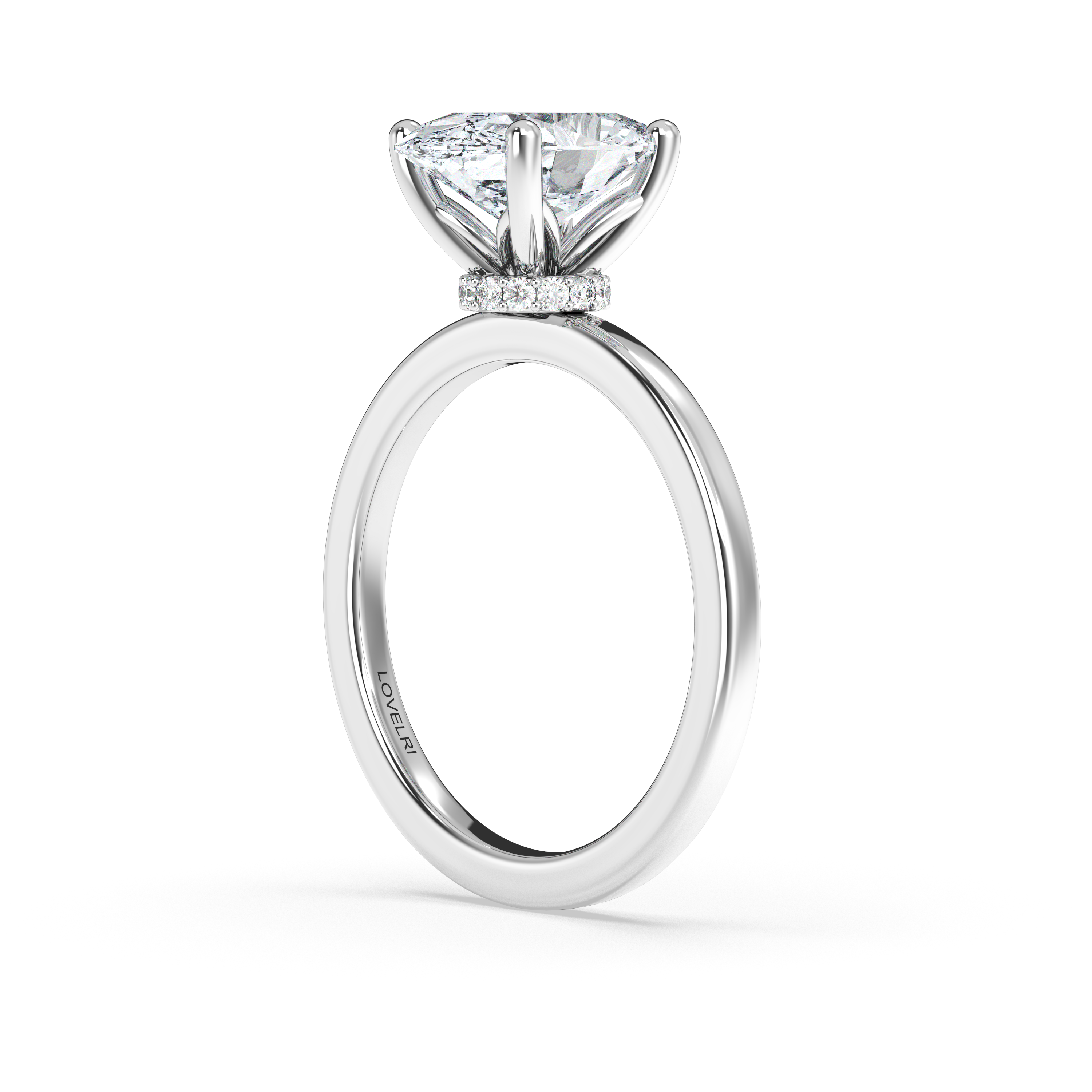
Choosing an engagement ring used to mean picking between round or princess, gold or platinum, and calling it a day. That era is over. In 2026, engagement ring styles span a spectrum so wide that the decision itself has become part of the romance: a reflection of personal taste, lifestyle, and the story two people are building together.
The sheer variety can feel overwhelming. Halo engagement rings, cathedral settings, flat-profile bands, thin band engagement rings, modern engagement rings with architectural geometry, and center stones in every variation. Each style creates a different visual statement, carries different practical considerations, and suits different hands, budgets, and aesthetics.
This guide breaks down every major engagement ring style worth considering this year. You will find honest assessments of what each style does well, who it suits, and how to match a setting to your diamond, your hand, and your life. Lovelri's design team curates each of these styles with the same precision they bring to stone selection: nothing makes it into a collection unless it performs beautifully in real light, on a real hand.

What Defines an Engagement Ring Style?
Before exploring individual styles, it helps to understand what actually makes one ring look different from another. Four structural elements make up the very essence of an engagement ring:
The setting refers to the entire ring design that holds the centre stone in place, including the band and all structural elements surrounding the stone. Prongs, bezels, cathedrals, and channel settings, etc., each affect how much of the diamond is visible and how light enters the stone. As an example, a four-prong setting exposes more of the diamond's surface area. A bezel wraps metal around the entire perimeter, creating a sleek, protective frame.
The band is the ring itself, the metal that wraps around the finger. From band width and profile, like flat, domed, and knife-edge, to surface treatment, such as polished, brushed, and hammered, all influence the ring's visual appearance. A band thinner engagement ring feels delicate and airy, while a wider band has more personality and substance.
Stone placement describes where the diamond sits relative to the band. A high-setting engagement ring lifts the centre stone above the finger, creating drama and maximizing light entry from all angles. On the other hand, a low-profile setting tucks the diamond closer to the hand, offering a more practical silhouette for active lifestyles.
Visual proportions tie everything together. The ratio of diamond size to band width, the height of the setting, the spacing of accent stones: these proportions determine whether a ring feels balanced or top-heavy, refined or bold.
Modern engagement ring styles tend to play with these elements more adventurously than classic designs. Where traditional rings favour symmetry and convention, contemporary styles experiment with asymmetry, negative space, mixed metals, and unexpected geometric forms. Although neither approach is superior, they both serve different tastes.
Core Engagement Ring Styles
Each of the following styles represents a distinct design philosophy. Understanding the differences will help you identify which direction feels right, long before you look at a single diamond.
Solitaire Rings
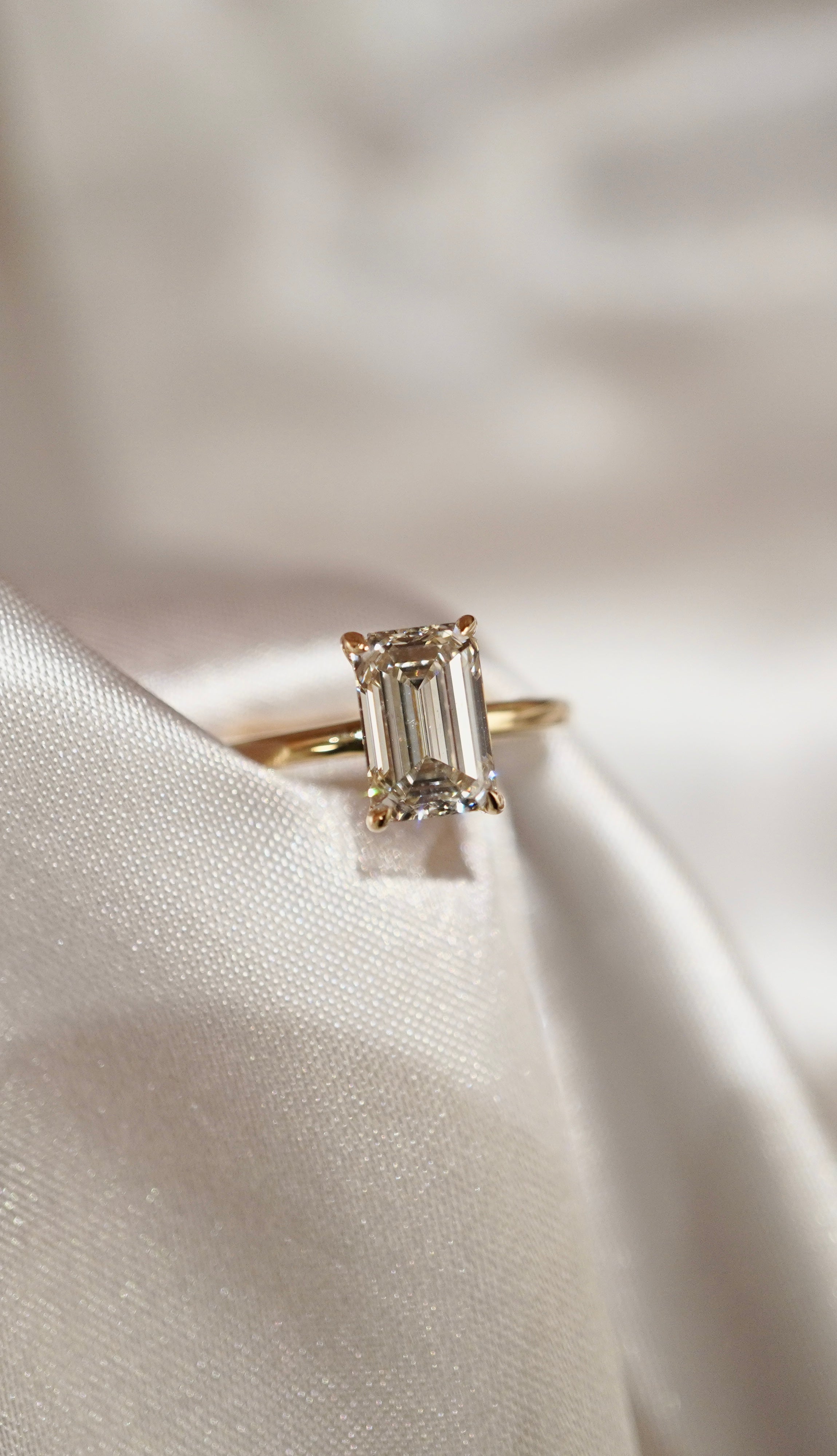
A solitaire is the purest expression of an engagement ring: one diamond, one setting, nothing competing for attention. The entire design exists to showcase the centre stone.
Who it's for: People who gravitate toward clean lines and timeless aesthetics. If you believe a well-chosen diamond shouldn't need any supporting cast, a solitaire validates that instinct. It's also the most versatile style for pairing with different wedding bands, since the simple profile leaves room for stacking and mixing.
Design characteristics: From beaded prongs to tiger claws, half bezels to full bezels, there are many characteristics that make a ring feel truly unique. Band thickness can range from ultra-thin (1.5mm) to more substantial (2.5mm+), while profiles like knife-edge, rounded, flat, or softly curved bands all affect how the ring looks and feels on the finger without compromising its minimal aesthetic.
Visual feel: Elegant, understated, and timeless. A solitaire draws the eye directly to the diamond.
Price positioning: Solitaires tend to sit at the more accessible end of the style spectrum for the setting itself, since less metalwork and no accent stones are required. The centre diamond and gold pricing will represent the vast majority of the total investment.
Explore Lovelri's full range of solitaire engagement rings, each handcrafted with stones vetted for exceptional light performance.

Halo Engagement Rings
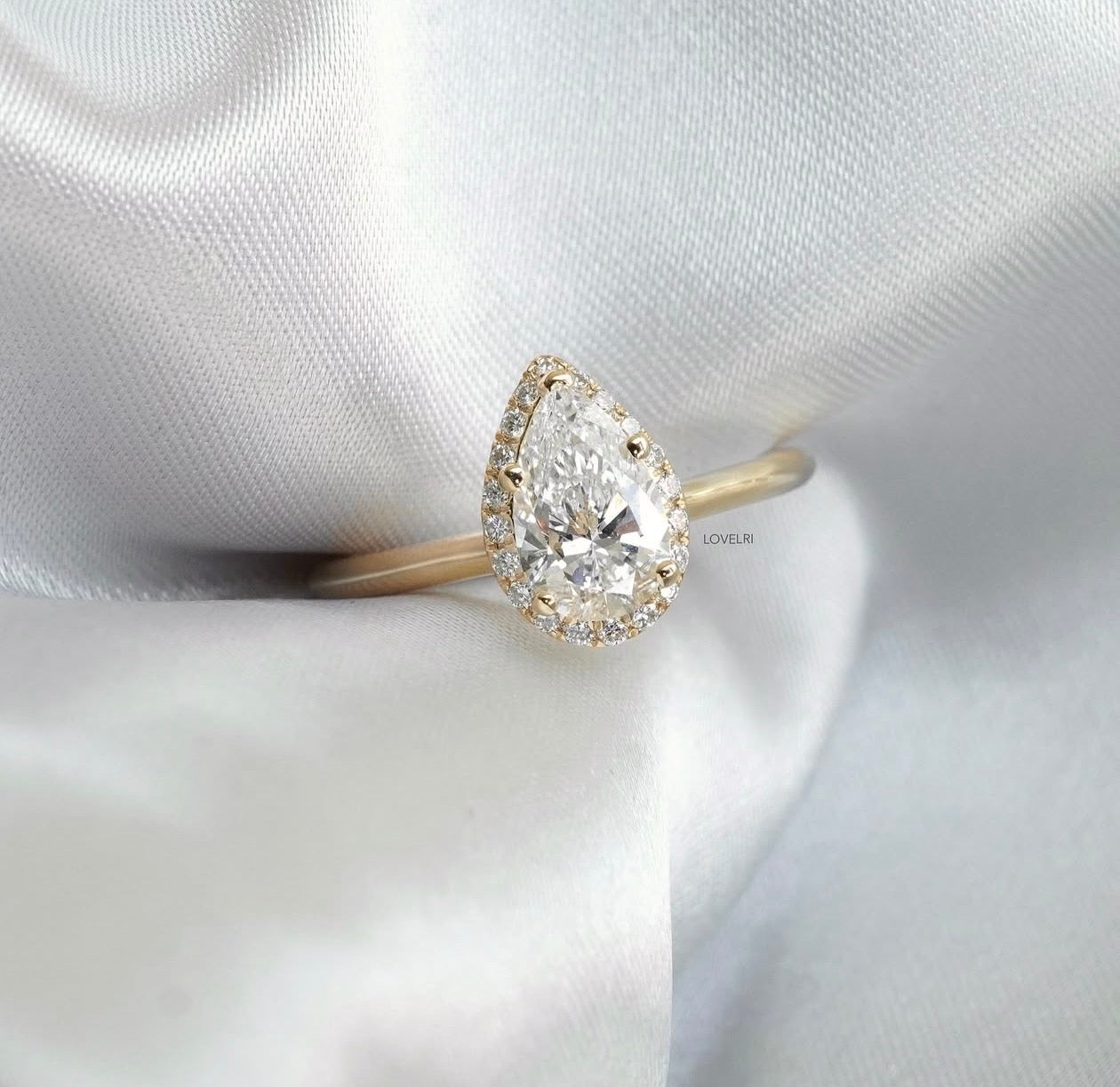
A halo ring surrounds the centre stone with a border of smaller accent diamonds. The effect is immediate: the centre focus appears larger, the ring catches more light, and the overall design feels more substantial than a solitaire of comparable carat weight.
Who it's for: Anyone who wants maximum visual impact. Halo engagement rings are a smart choice if you love sparkle but want to stay within a specific carat budget, since the accent stones amplify perceived size. They also suit those who prefer a more decorative, vintage-influenced aesthetic.
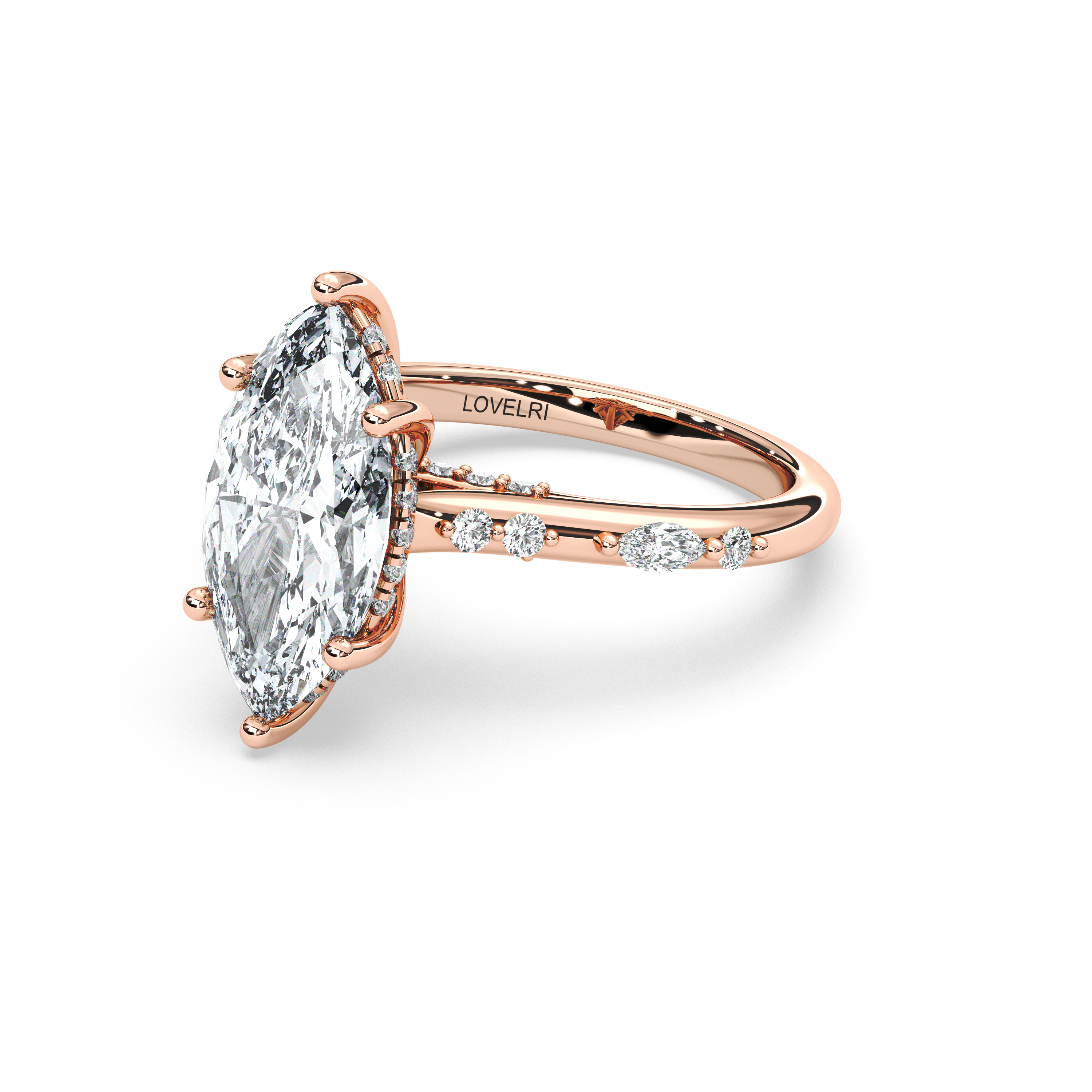
Design characteristics: A frame of micro-set diamonds encircles the centre stone. Variations include single halos, double halos (two concentric rings of diamonds), and hidden halos, where the accent diamonds sit beneath the centre stone and are visible only from the side profile. Hidden halos offer a clever middle ground: extra sparkle without changing the top-down silhouette.
Visual feel: Radiant, romantic, and statement-making. A halo ring commands attention on the hand. The continuous shimmer from accent stones creates a ring that looks alive in any lighting condition.
Price positioning: The accent stones add cost relative to a solitaire, but the visual size amplification often means you can choose a slightly smaller centre diamond and achieve a more impressive look for the same budget. Many clients find halo engagement rings offer the strongest perceived value across all styles.
Browse Lovelri's halo and hidden halo engagement rings, designed to maximize brilliance around every centre stone.
Cathedral Settings
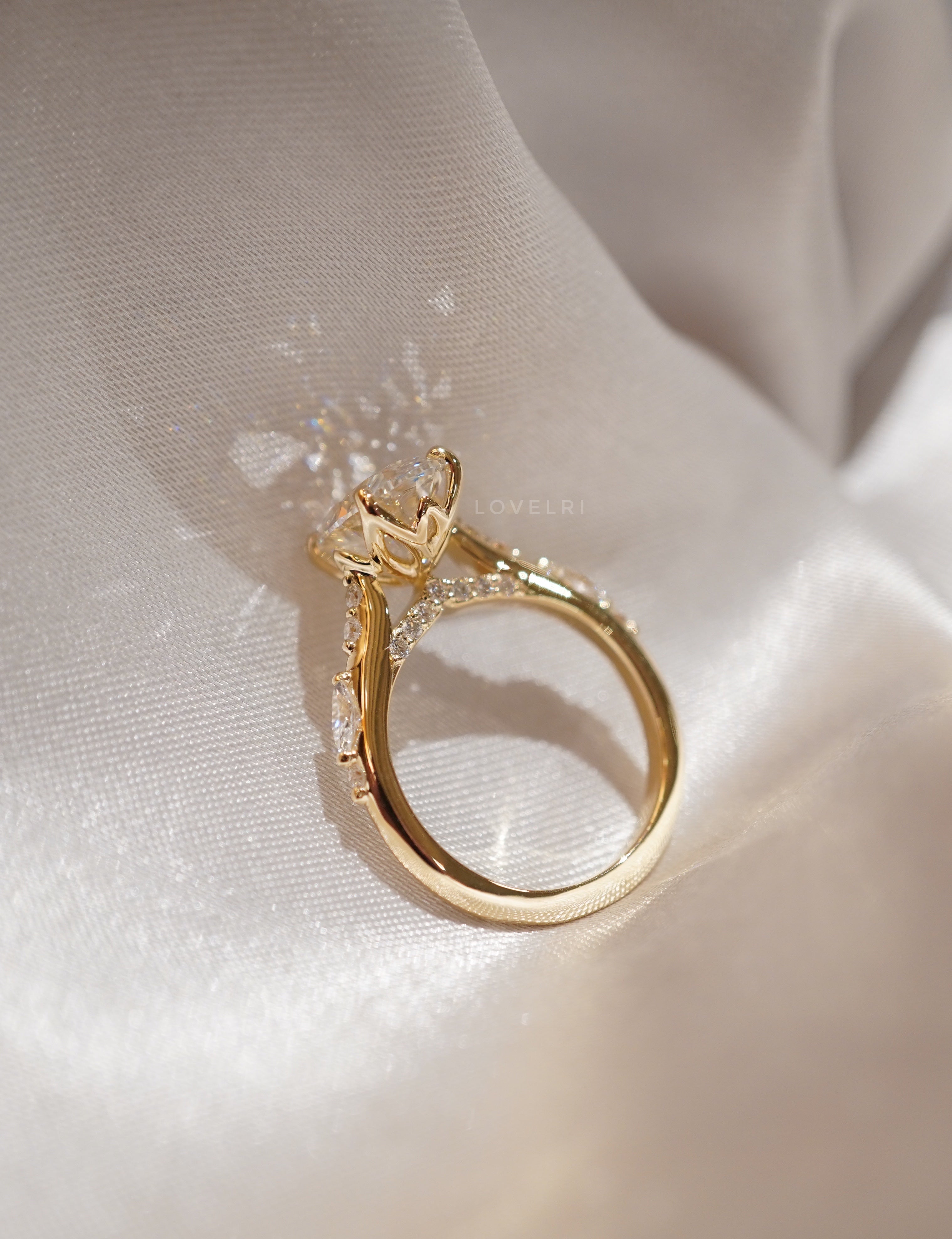
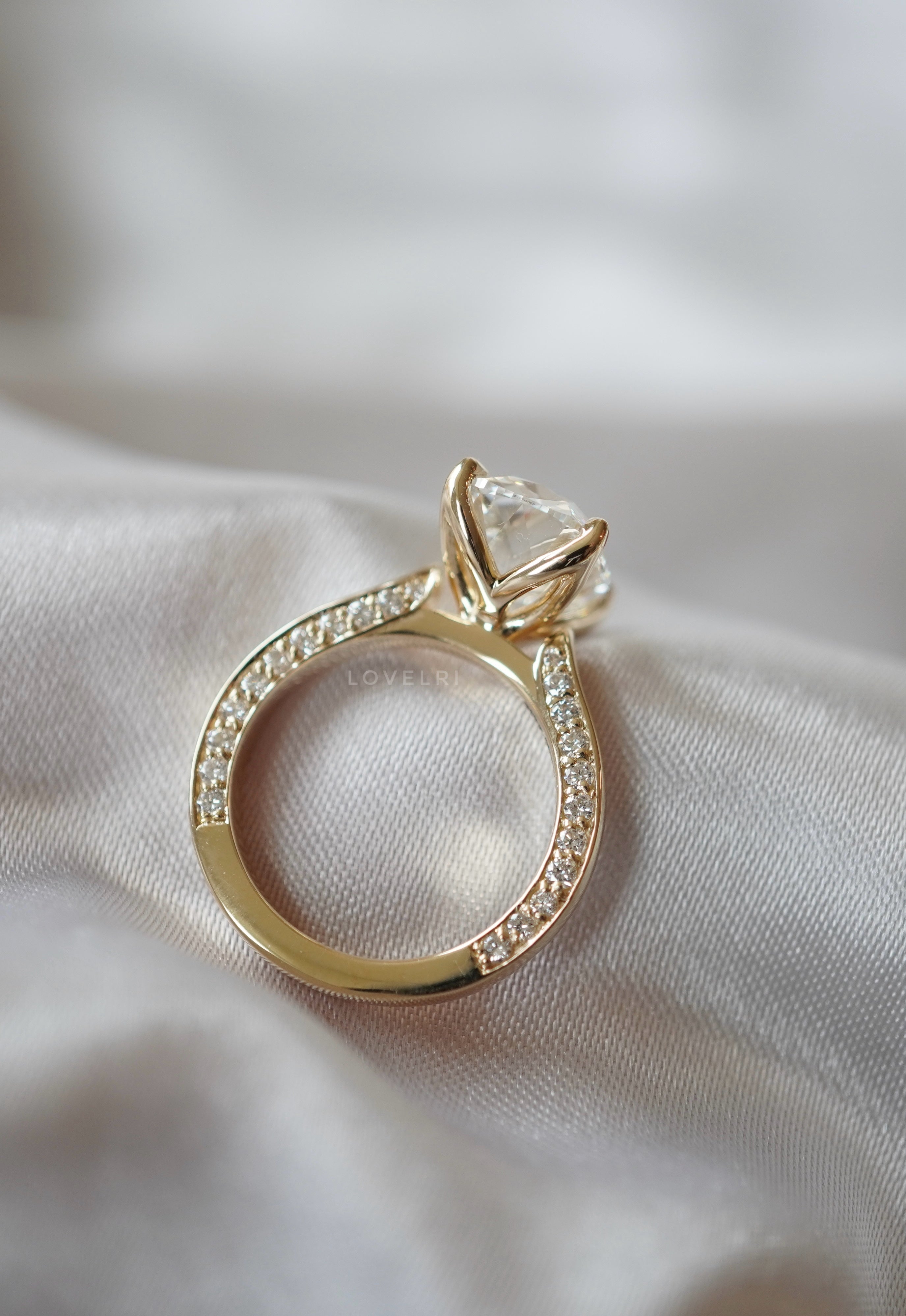
Cathedral rings borrow their name from the arched supports. Two graceful metal arches rise from the band to cradle the centre stone, lifting it above the finger while creating a distinctive profile from every angle.
Who it's for: People who appreciate structural elegance and want their diamond to sit higher on the hand. The cathedral setting adds vertical presence without relying on accent stones, making it ideal for those who want drama through architecture rather than extra diamonds.
Design characteristics: The defining feature is the pair of arched supports, often called shoulders, that elevate the centre stone. These arches can be clean and minimal or incorporate additional detailing like small accent stones. The higher setting allows more light to enter the diamond from below, which can enhance its brilliance and make it sparkle more.
Visual feel: Regal, structured, and intentional. A cathedral setting makes the ring look purposefully designed rather than simply assembled. The profile view is particularly striking, with visible architecture that rewards close inspection.
Price positioning: Mid-range for the setting. The additional metalwork, setting work, and structural engineering add modest cost relative to a plain solitaire, but cathedral settings don't require accent diamonds unless you choose to add them.
See how Lovelri's master jewellers interpret the cathedral form in their cathedral engagement ring collection.
Pave Rings
Pave (pronounced "pah-vay") settings feature tiny diamonds set closely together along the band, creating a continuous surface of sparkle. The word comes from the French pave, meaning "paved," and the effect genuinely resembles a path paved with light.
Who it's for: For people who want the extra sparkle and embellishments that catch the light in many ways.
Design characteristics: Small diamonds, 1mm to 1.5mm each, are set into the band using tiny prongs or beads of metal. There are three types of pavé diamonds: the full pavé extends around the entire circumference, the half pavé covers only the visible top portion, and the micro-pavé uses even smaller stones for a more delicate effect. The pave technique can be applied to almost any band style: straight, tapered, split-shank, or twisted.
Visual feel: Luxurious, detailed, and continuously brilliant. A pave band transforms the ring from a setting with a stone into a complete jewellery piece. Even when the centre diamond faces away from the viewer, the band keeps sparkling.
Price positioning: Higher than plain bands due to the additional diamonds and the labour-intensive setting process. Each small stone must be individually placed and secured. The investment is visible, though: a well-executed pave band elevates the entire ring.

Side Stone Rings
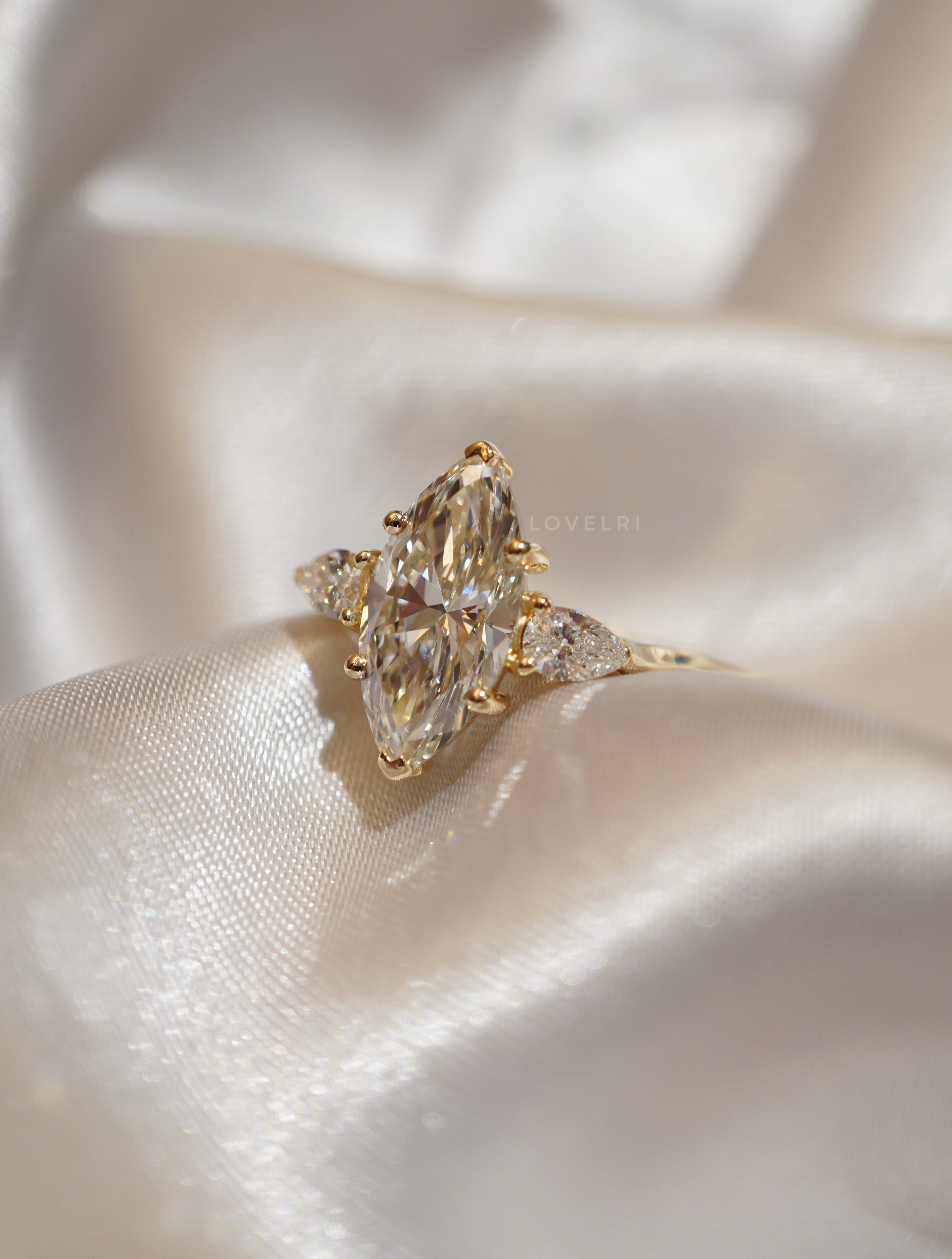
Side stone rings flank the centre diamond with one or more accent stones, creating a balanced and symmetrical composition. Unlike pave, which uses many tiny stones, side stone designs feature fewer but larger accent diamonds or gemstones that act as deliberate design elements.
Who it's for: People who want a more detailed look than a simple solitaire, but prefer a clean, structured design instead of the distinctive sparkle of pavé. Three-stone designs, in particular, carry symbolic weight: the stones can represent past, present, and future.
Design characteristics: Common configurations include three-stone: a centre diamond flanked by two matching stones, five-stone, and graduated designs where accent stones decrease in size as they move away from the centre. Side stones can be round brilliants, baguettes, trillions, or tapered shapes, and mixing shapes, such as a round centre with tapered baguette sides, creates especially distinctive compositions.
Visual feel: Balanced and thoughtful, with a sense of story. Side stone engagement rings feel more intentionally designed than simple solitaires. The smaller stones add structure, giving the ring a composed and almost architectural look.
Price positioning: Can vary a lot depending on the size and quality of the side stones. Smaller stones add a bit to the cost, while larger and high-quality matching stones can make the ring much more expensive.
Modern Engagement Rings
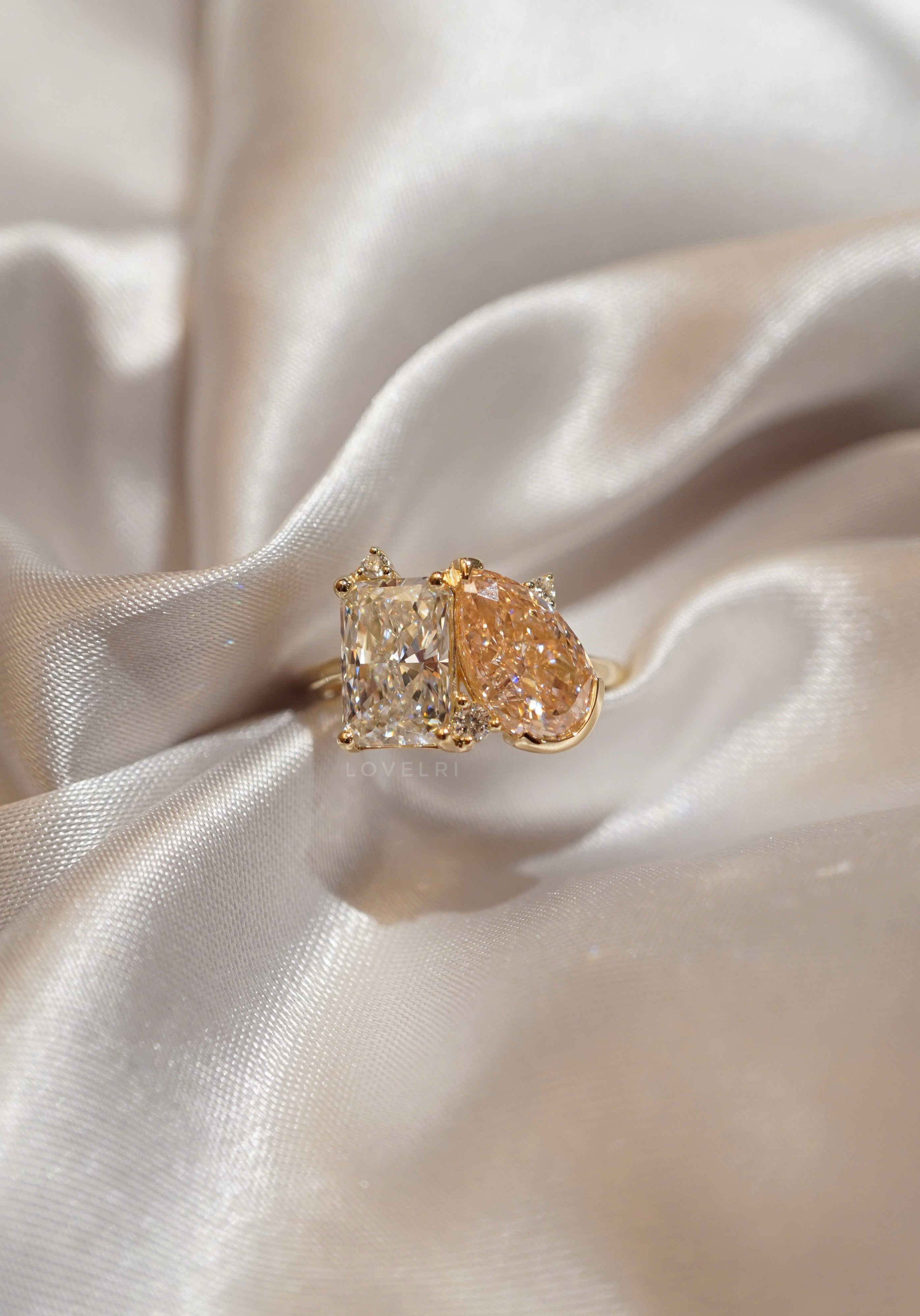
Modern engagement rings reject the idea that fine jewellery must follow traditional forms. These are designs that borrow from contemporary architecture, sculpture, and industrial design, resulting in rings that look nothing like what you'd find in a conventional jewellery store.
Who it's for: Design-conscious individuals who view their engagement ring as a wearable art piece. If you're drawn to clean minimalism, geometric precision, or sculptural forms, modern styles speak your language. The modern engagement ring collection suits people who want their jewellery to feel current rather than inherited.
Design characteristics: The category is broad by nature, but common threads include asymmetric stone placement, geometric band shapes, east-west stone orientation, where an elongated diamond sits horizontally rather than vertically, open-gallery designs that reduce metal and maximize airflow around the stone, and bezel settings that frame the diamond in a clean metal border.
Visual feel: Bold and confident. Modern engagement rings don't announce themselves with excessive sparkle. They make their statement through their shape and clean design.
Price positioning: Wide range. Some modern designs are actually more affordable than traditional styles because they use less metal and fewer accent stones. Others, particularly those with complex designs or unusual stone cuts, command premium pricing.
Gold Engagement Rings
Gold has reclaimed its position as the dominant metal choice for engagement rings in 2026. After years of platinum and white gold dominance, warm-toned metals are everywhere: on runways, in editorial shoots, and on the hands of style-forward couples worldwide.
Who it's for: Anyone who responds to warmth, richness, and a slightly less conventional look. Gold engagement rings suit a wide range of skin tones and pair beautifully with both classic and contemporary settings. Yellow gold feels heritage and luxurious, rose gold reads romantic and distinctive, and white gold offers platinum's cool tone at a more accessible price point.
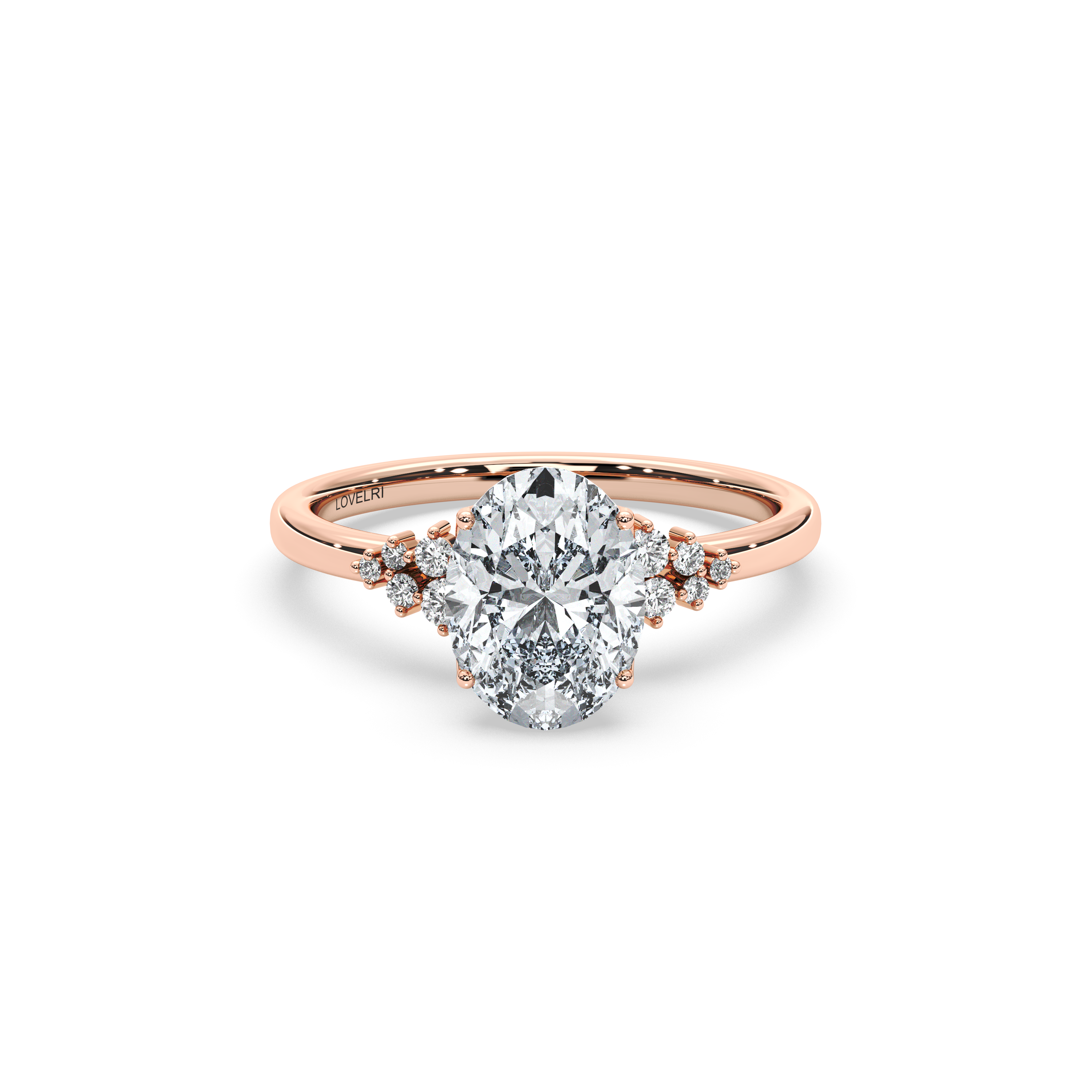
Design characteristics: The metal colour profoundly affects a ring's personality. Yellow gold in a solitaire setting creates an entirely different mood than the same design in white gold. Rose gold adds a blush warmth that softens angular designs, while mixed-metal combinations, such as a rose gold band with white gold prongs to keep the diamond looking bright, have become increasingly popular.
Key considerations for gold engagement rings:
- 18K gold contains 75% pure gold. It's richer in colour and slightly softer, making it the luxury standard for fine engagement rings.
- 14K gold contains 58.3% pure gold. It's more durable due to higher alloy content and sits at a lower price point. Colour is slightly less saturated.
- Rhodium plating: White gold is usually plated with rhodium for brightness. This plating wears over time and requires occasional reapplication, something worth knowing before committing to white gold.
Visual feel: Warm, personal, and grounded. Gold engagement rings carry a sense of heritage that platinum simply doesn't match. There's a reason gold has been the material of choice for significant jewellery across nearly every culture for thousands of years.
Price positioning: Gold is generally more accessible than platinum. The price difference between 14K and 18K is moderate. Rose gold and yellow gold are typically priced identically within the same karat tier.
Lovelri offers every ring in multiple gold options. Browse the full collection to see how different gold tones transform each design across solitaire, halo, and modern settings.

Lovelri's Botanical Garden Designs
For those who find conventional ring styles too predictable, botanical and artistic designs offer something genuinely different. These rings draw inspiration from natural forms: petals, vines, leaves, and organic textures that transform a ring into a miniature sculpture.
Who it's for: Creatives, nature lovers, and anyone who wants their ring to feel like a one-of-a-kind art piece. Botanical designs appeal to people who notice the curve of a fern frond or the geometry of a flower and want that sensibility reflected in their jewellery.
Design characteristics: Expect flowing lines rather than rigid geometry. Petal-shaped prong clusters, vine-like bands with trailing accent diamonds, leaf motifs worked into the gallery, and organic textures on the metal surface. Some designs blur the line between the setting and the band, creating a continuous sculptural form from one end to the other.
Visual feel: Romantic, artistic, and deeply personal. The rings from the botanical garden collection spark conversation. They reward close inspection, revealing details that aren't visible at arm's length, and each angle offers a different view.
Price positioning: Typically at the higher end due to the hand-fabrication required. Mass production can't replicate the intricate metalwork in a true botanical design. The craftsmanship investment is significant, and it shows.
Modern Engagement Ring Trends Worth Watching in 2026
Beyond the main styles, a few key trends are shaping how engagement rings look this year. These aren’t just short-term trends, but reflect how people’s tastes in fine jewelry are changing.
Thin Band Engagement Rings
Bands are getting narrower. Where 2mm to 2.5mm was once standard, many 2026 designs feature bands as slim as 1.5mm or even 1.2mm. The effect is striking: a thin band engagement ring makes the centre diamond appear proportionally larger and gives the entire ring an airy, delicate quality.
A practical note: thinner bands require higher-quality metalwork to maintain structural integrity. Cheap thin bands can warp, bend, or lose stones. Lovelri's thin-band designs are engineered for daily wear, with metal profiles and prong placements calibrated to maintain strength at reduced widths.
High-Setting Engagement Rings
A high setting engagement ring lifts the diamond further above the band, creating vertical presence and allowing maximum light entry from below. The result is a diamond that appears to float above the hand, with brilliance visible from virtually every angle.
High settings suit people who want their ring to be a noticeable statement. The trade-off is practical: a taller profile is slightly more likely to catch on clothing or bump against surfaces. For those who prioritize visual impact, though, the extra height is worth-it.
Flat Profile Rings
Flat engagement rings sit flush against the finger with a low, even profile. Unlike domed or rounded bands, a flat profile creates clean geometric lines that suit minimalist and modern aesthetics. These rings are popular among people who work with their hands, since the smooth, low-sitting design reduces snagging risk.
The flat profile also pairs exceptionally well with wide bands, creating a bold, contemporary look that feels more like an art object than a conventional engagement ring.
Architectural and Geometric Aesthetics
The intersection of jewellery design and architecture continues to produce remarkable rings. Think hexagonal bezels, split-shank bands that create negative space beneath the stone, angular prong arrangements, and settings that look like they were designed by an architect rather than a jeweller. These pieces appeal to people who see their ring as a design object first and a piece of jewellery second.
Minimalist Solitaires with Hidden Details
One of the most appealing 2026 trends is the "minimalist from the outside, detailed on the inside" approach. A ring that appears to be a simple solitaire from the top reveals a hidden halo, engraved gallery, or coloured gemstone accent when viewed from the side or underneath. It's a private detail, an element shared only between the wearer and those who look closely enough to discover it.

Lovelri's Design Philosophy: Quality Beyond the Certificate
Every jeweller claims quality, but very few can explain exactly what their quality process involves. Lovelri's approach to engagement ring design goes further than selecting certified diamonds and setting them in well-cast metal.
The process starts with stone selection. Every diamond considered for a Lovelri ring passes through a multi-team evaluation that goes well beyond the standard 4Cs (cut, colour, clarity, carat weight). Trained evaluators assess light performance: how efficiently the stone returns white light (brilliance), disperses coloured light (fire), and creates dynamic sparkle patterns as it moves (scintillation). Symmetry is examined at the facet level. Optical balance, the evenness of light distribution across the stone's face, is tested to ensure no dead zones, dark spots, or light leakage compromise the visual result.
A diamond that earns an "Excellent" cut grade on a lab report can still exhibit uneven light distribution in person. Lovelri's evaluation catches those discrepancies. Multiple independent team members must sign off on a stone before it's approved, which means every diamond in a Lovelri ring has been physically evaluated by several experts, not just scanned by a machine.
This matters especially for elongated shapes. Oval diamonds, for example, require particularly careful selection to ensure balanced light distribution across the entire face. The best specimens are chosen specifically for their optical performance: even, bright, and free of the dark patterns that plague poorly proportioned stones. The same precision applies to pear-shaped diamonds, where asymmetric geometry makes balanced light return even harder to achieve. Only stones with proportions that distribute light evenly across the full silhouette make the cut.
On the metalwork side, Lovelri's rings are produced in-house by master jewellers instead of being outsourced. Hand-set stones, precision-cast settings, and meticulous finishing ensure that the structural quality matches the diamond quality. Every ring ships with a limited lifetime warranty and a complimentary resize within the first year, because confidence in craftsmanship should extend well beyond the point of sale.
Interested in seeing how this philosophy translates into finished rings? Start a custom design consultation or browse any of Lovelri's curated collections to see the standard in person.
How to Choose the Right Engagement Ring Style
With so many options, the decision to choose the perfect engagement ring style can feel paralyzing. A few practical guidelines can narrow the field quickly:
Consider lifestyle first. If the wearer works with their hands, exercises frequently, or prefers low-maintenance jewellery, a low-profile setting with a protective bezel or flush mount will serve better than a tall cathedral with exposed prongs. Active lifestyles pair well with flat engagement rings and bezel-set modern designs.
Match the style to the wardrobe. A person who dresses in clean, minimal lines will likely feel at home with a solitaire or modern ring. Someone who layers jewellery, favours vintage clothing, or gravitates toward ornate accessories may prefer a halo, pave, or botanical design.
Think about what they notice. Pay attention to the jewellery your partner already wears. Do they favour gold or silver tones? Delicate pieces or bold ones? Do they tend to gravitate towards simple rings or detailed ones? These existing preferences are the strongest indicator of which engagement ring style will feel right.
Don't choose based on trends alone. Trends inform, but should not dictate your final choice because a ring is worn for decades. Choose a style that feels right today and will still feel right in twenty years. The core styles, solitaire, halo, cathedral, and pave, have persisted for generations precisely because they are built on sound design principles rather than passing fashion trends.
Frequently Asked Questions About Engagement Ring Styles
Which engagement ring style is most popular in 2026?
Solitaire and halo engagement rings continue to lead in overall popularity. Solitaires appeal for their timeless simplicity and versatility with wedding bands. Halo styles attract buyers who want maximum visual presence. That said, modern engagement rings and thin band designs are gaining significant ground, especially among younger couples who prioritize contemporary aesthetics.
What makes a ring a "modern" engagement ring?
Modern engagement rings break from traditional design conventions. They feature elements like geometric settings, east-west stone orientations, bezel mounts, asymmetric compositions, and minimalist profiles. The defining quality is intentional design restraint: letting form and proportion create impact rather than relying on accumulated sparkle. Browse Lovelri's modern collection for examples.
What exactly is a halo ring?
A halo ring features a centre diamond encircled by a frame of smaller accent diamonds. This border amplifies the perceived size of the centre stone and adds continuous sparkle. Hidden halo rings place the accent diamonds beneath the centre stone, visible only from the side, for a more subtle effect.
Are thin band engagement rings durable enough for everyday wear?
Yes, when properly engineered. The key is metal quality and structural design. A thin band crafted from high-quality 18K gold or platinum with appropriate cross-sectional thickness will hold up to daily wear without bending or warping. Problems arise with cheaply made thin bands that sacrifice structural integrity for appearance. Lovelri's thin band designs are specifically engineered for long-term durability.
Which ring setting makes a diamond look bigger?
Halo settings are the most effective at amplifying perceived diamond size, since the surrounding accent stones extend the visual footprint of the centre stone. Thin band engagement rings also make a centre diamond appear larger by contrast, since the slimmer band creates a more dramatic size differential. High settings lift the stone into prominence, which adds to its visual impact without changing its actual dimensions.
What are the differences between gold and platinum for engagement rings?
Platinum is denser, heavier, and naturally white, so it never requires rhodium plating. It's hypoallergenic and extremely durable, though it develops a patina over time that some people love and others prefer to have polished away. Gold is lighter, available in yellow, rose, and white variations, and generally more affordable. White gold requires periodic rhodium replating. Yellow and rose gold maintain their colour permanently. Both metals are excellent choices; the decision comes down to colour preference, weight preference, and budget.
Can I combine different engagement ring styles?
Absolutely. Some of the most striking rings blend elements from multiple styles: a cathedral setting with pavé shoulders, a modern bezel with a thin band, or a solitaire with a hidden halo beneath. Lovelri's custom design service exists precisely for this purpose, letting you combine your favourite elements into a cohesive, original design.